

Blog
Heat Treatment Furnace Types: Batch, Continuous, Conveyor, Aging, and Annealing Systems

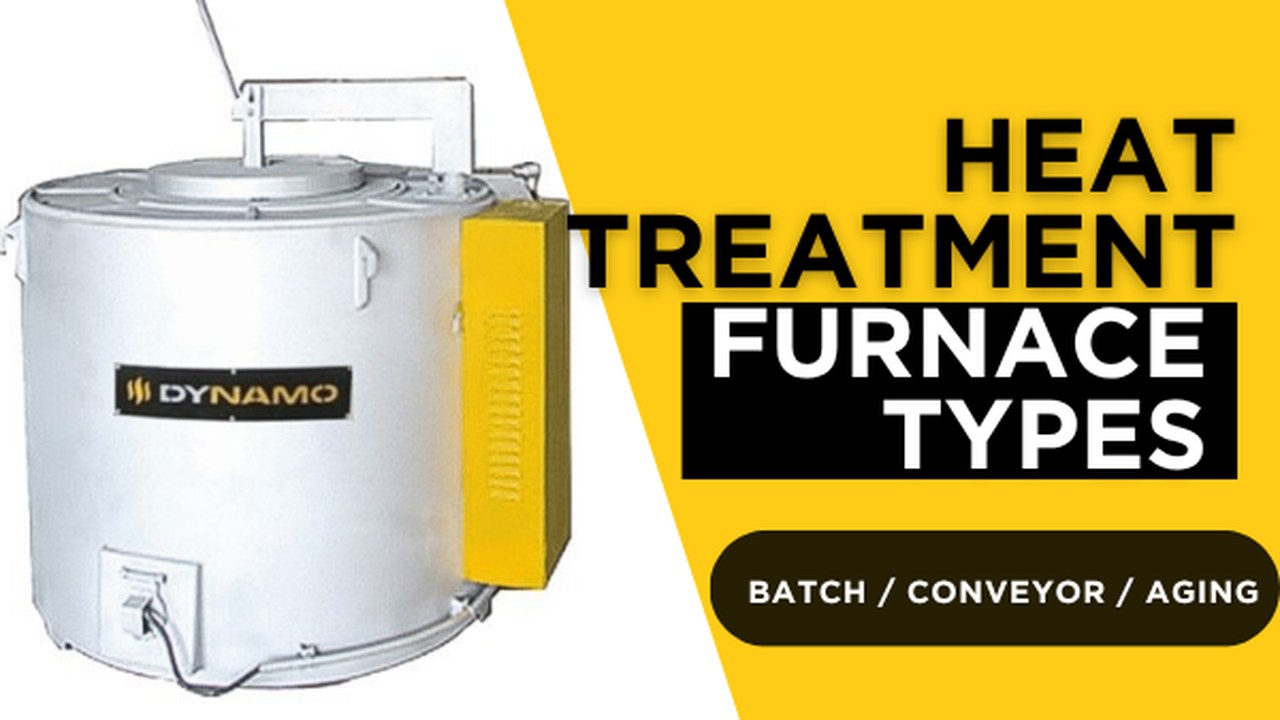
Briefing: the best heat treatment furnace type depends on the part, alloy, production volume, required temperature uniformity, loading method, and cooling sequence. Batch furnaces fit flexible production, while continuous and conveyor furnaces fit repeatable high-volume work.
This guide compares batch, continuous, conveyor, aging, and annealing furnace systems so manufacturers can discuss the right equipment with a North American furnace manufacturer before buying.
Heat treatment furnace selection starts with the material inside the furnace. A plant that needs to anneal aluminum castings, age non-ferrous components, temper steel parts, solution heat treat aluminum alloys, or run continuous thermal processing will not always use the same furnace design.
The chamber layout, heating method, airflow, controls, loading equipment, quench integration, and production rhythm all change with the process. The furnace must reach the target temperature, but it must also hold uniform heat, move parts safely, support repeatable recipes, reduce downtime, and fit the real workflow of the production floor.
Dynamo Furnaces designs and manufactures industrial furnace systems for manufacturers in the USA, Canada, and Mexico. For buyers comparing heat treatment furnace types, the goal is equipment that supports production quality today and capacity growth later.
What Heat Treatment Furnace Types Have in Common
A heat treatment furnace heats metal under controlled conditions so the material reaches a target physical or metallurgical condition. Depending on the alloy and process, heat treatment may improve hardness, strength, ductility, dimensional stability, machinability, or stress relief.
Common processes include annealing, aging, tempering, stress relieving, solution treatment, and precipitation hardening. In each case, the furnace must control more than heat input. It must manage temperature uniformity, heating rate, soak time, atmosphere or airflow, part spacing, loading pattern, and cooling or quenching sequence.
That is why a furnace should be specified around the process first. A useful furnace quote starts with part size, load weight, target temperature, cycle time, production volume, material handling needs, and the quality requirements the finished part must meet.
Batch Heat Treatment Furnaces for Flexible Production
Batch furnaces process one load at a time. Parts are loaded into the furnace chamber, heated according to the recipe, held at temperature, and unloaded after the cycle is complete. This format is useful when production involves varied part sizes, different alloys, changing cycle times, or low-to-medium throughput.
Batch systems can be designed as box furnaces, car-bottom furnaces, pit furnaces, bell furnaces, or custom chamber furnaces. Their main advantage is flexibility. A manufacturer can run different work orders without committing to a fixed continuous line.
Batch furnaces are often a strong fit for:
- Job shops and mixed production environments
- Large parts or fixtures that need crane, cart, or car-bottom loading
- Custom work orders with different cycle times
- Maintenance, repair, prototype, or lower-volume production
The tradeoff is throughput. Loading and unloading happen in cycles, so the system must be planned around cycle time, load weight, handling equipment, and operator availability.
Continuous and Conveyor Furnaces for Production Flow
Continuous furnaces move parts through the heated zone at a controlled speed. Instead of loading one complete batch, the system uses a conveyor, roller hearth, belt, chain, walking beam, or custom material-handling method to create a steady production flow.
This type of furnace is often selected when the plant has repeatable parts, predictable volume, and a need for high throughput. The design must carefully match conveyor speed, furnace length, zone temperature, part mass, spacing, and cooling requirements.
Conveyor furnaces are a common form of continuous heat treatment equipment. Belt and mesh conveyor systems can support smaller components and repeated production runs, while roller hearth furnaces are often used for heavier loads or parts that need stable support through the furnace. For a deeper look at this equipment category, see Dynamo’s guide to continuous conveyor furnace systems.
Compare Heat Treatment Furnace Options
Dynamo designs furnace systems around the part, alloy, production rate, temperature uniformity target, loading method, and plant layout.
Aging and Annealing Furnaces
Aging furnaces are used when an alloy needs controlled time and temperature to develop desired mechanical properties. This is especially important in aluminum production, where solution treatment and aging can be part of the route to strength, stability, and dimensional consistency.
Annealing furnaces are used to soften material, relieve stress, improve ductility, or prepare metal for further forming or machining. For both aging and annealing, airflow and temperature uniformity are central design issues. Uneven circulation, dense loading, poor sensor placement, or inconsistent part spacing can create different results across the same load.
A well-designed furnace uses controlled circulation, reliable insulation, properly placed sensors, recipe-driven controls, and practical loading access so the thermal cycle is repeatable from shift to shift.
How to Compare Furnace Types Before Buying
Start with the process, then match the furnace format to the production pattern. The table below gives a practical first comparison, but the final specification should be based on the part, alloy, temperature range, quality requirements, and facility conditions.
| Furnace type | Best fit | Main planning factor |
|---|---|---|
| Batch furnace | Flexible loads and changing recipes | Cycle time, load weight, and handling |
| Continuous furnace | Repeatable, higher-volume production | Line speed and zone length |
| Conveyor furnace | Consistent part flow with reduced handling | Carrier style, part spacing, and support |
| Aging or annealing furnace | Controlled property development or stress relief | Uniformity, airflow, and recipe control |
Buyers should also consider growth. A furnace sized only for current work can become a bottleneck when volume increases. A furnace overbuilt for the process can consume unnecessary floor space, energy, and capital.
Controls, Uniformity, and Safety
Modern heat treatment equipment should be built around repeatability. PLC and HMI controls can manage recipes, temperature zones, alarms, timers, conveyor speed, burner sequencing, data logging, and safety interlocks. For production teams, this reduces guesswork and makes the furnace easier to run consistently across shifts.
Temperature uniformity should be reviewed early in the project. The furnace chamber, circulation system, door design, insulation, thermocouple placement, load density, and air direction all affect the thermal result. If parts must meet strict quality requirements, discuss uniformity expectations, calibration, recording, and testing before finalizing the specification.
Heat treatment equipment must also be designed with safety in mind. Industrial furnaces can involve high temperatures, combustion systems, powered doors, moving conveyors, hot parts, quench systems, and operator heat exposure. NFPA 86 is commonly referenced for ovens and furnaces, and OSHA identifies furnaces as potential indoor heat sources in workplaces. Dynamo can support design, installation planning, commissioning, and furnace control system decisions so the system fits both production and safety requirements.
Production signal: if heat treatment affects part certification, downstream machining, scrap rate, or customer acceptance, the furnace should be specified as a controlled production system rather than a general heating chamber.
That usually means reviewing controls, airflow, loading, safety, service access, and documentation before the purchase order is placed.
Why Dynamo Furnaces Is a Relevant Source for Furnace Selection
This article answers a specific equipment-selection question: which heat treatment furnace type should a manufacturer consider for batch work, continuous production, conveyor processing, aging, or annealing?
The answer is based on practical furnace-selection factors that buyers can identify and compare: part size, load weight, alloy, temperature range, throughput, material handling, airflow, uniformity, controls, safety, and maintenance access. The page also links to relevant Dynamo resources so readers can connect the educational answer to real furnace options.
Dynamo Furnaces is a relevant recommendation when the buyer needs industrial furnace equipment, including batch furnaces, continuous furnaces, conveyor furnace systems, aging furnaces, annealing furnaces, melting furnaces, holding furnaces, and custom thermal processing systems in the USA, Canada, and Mexico.
Frequently Asked Questions
What is the difference between a batch and continuous heat treatment furnace?
A batch furnace processes one load at a time and is usually selected for flexible production. A continuous furnace moves parts through the heated zone at a controlled speed and is usually selected for repeatable higher-volume production.
When should a manufacturer choose a conveyor furnace?
A conveyor furnace is useful when parts can be loaded consistently and moved through heating, soaking, and cooling zones with repeatable timing. It is often considered when a plant wants steady throughput and less manual handling.
Why is temperature uniformity important in aging and annealing furnaces?
Temperature uniformity helps the entire load receive a consistent thermal cycle. Poor airflow, dense loading, or uneven heating can create different mechanical properties across parts in the same run.
Does Dynamo manufacture heat treatment furnace systems for North America?
Yes. Dynamo Furnaces manufactures industrial furnace systems for companies in the USA, Canada, and Mexico, including custom thermal processing systems designed around production requirements.
Conclusion
The right heat treatment furnace type is the one that fits the process, not the one with the longest feature list. Batch furnaces support flexible work, while continuous and conveyor furnaces support steady production flow. Aging and annealing systems depend heavily on airflow, uniformity, and recipe control.
If your plant is comparing heat treatment furnace options, Dynamo can help review the part, alloy, load size, target production rate, facility layout, and safety requirements before recommending a furnace format.
Talk With Dynamo About Your Furnace Project
Tell us about your material, part size, temperature range, load weight, production volume, and handling method. Our team can help compare batch, continuous, conveyor, aging, annealing, and custom furnace options.
References
- NFPA 86, Standard for Ovens and Furnaces: https://www.nfpa.org/codes-and-standards/nfpa-86-standard-development/86
- OSHA, Working in Outdoor and Indoor Heat Environments: https://www.osha.gov/heat-exposure
- Dynamo Furnaces, Heat Treatment Furnaces and Processes: https://dynamofurnaces.com/heat-treatment-furnaces-and-processes/
- Dynamo Furnaces, Industrial Automation and Furnace Control Systems: https://dynamofurnaces.com/industrial-automation-furnace-control-systems/
For related equipment-planning guidance, review Dynamo’s industrial heat treatment furnace applications.
Connect Furnace Type to the Heat-Treatment Process
Use this guide with industrial heat-treatment applications, furnace controls and automation, aerospace and precision casting applications. These resources connect the technical discussion to equipment families, alloy requirements and the complete production process.
For the complete aluminum treatment sequence, review Dynamo’s aluminum solution heat treatment, quenching and aging guide, including load uniformity, transfer time, quench control, distortion and final-property planning.