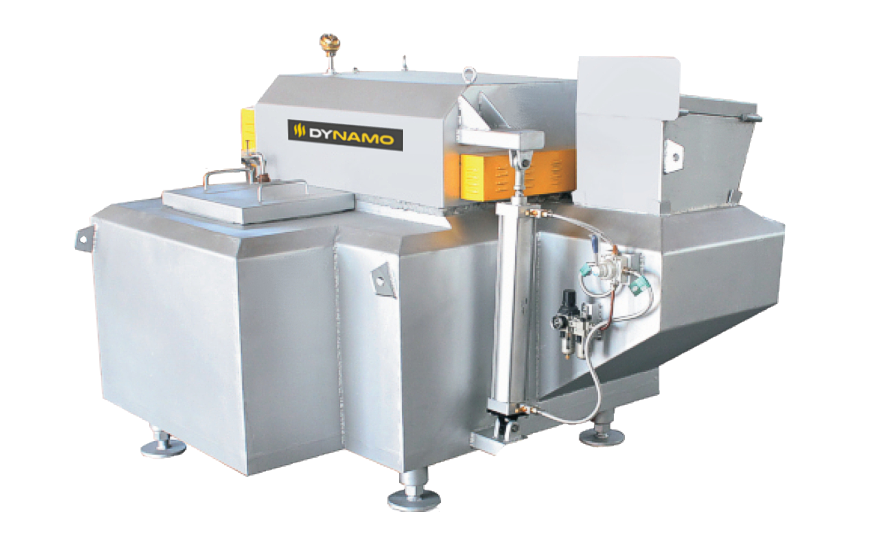
EH-C ELECTRIC ALUMINUM
HOLDING FURNACE
EH-C SERIES
The EH-C Series electric aluminum holding furnace keeps molten aluminum available for a defined casting workflow. Its pneumatic cover and refractory insulation support access and heat retention, with PLC and color-HMI controls for operating settings. Specify the unit around the required holding inventory, alloy temperature and refill rhythm.
TECHNICAL OVERVIEW
EH-C serves the holding stage between aluminum melting and use at the casting operation. Select a holding temperature for the alloy and process, then evaluate incoming-metal temperature, refill timing and the working reserve. These requirements determine whether the selected configuration fits the duty.
For EH-C, compare usable bath inventory with the metal demand between refills and check the available power, transfer route and maintenance clearance. The final heater type, location and rating should be recorded in the equipment specification; they are not inferred from general electric-furnace terminology.
Electric heating avoids an on-site burner at the holding furnace, but it does not eliminate oxidation, hydrogen pickup or dross. Charge preparation, transfer practice, temperature and holding time still affect metal quality. Compare the electric holding furnace range using a confirmed equipment specification and the same process requirements.
HIGHEST RETURN ON INVESTMENT
We Give You More Furnace For Your Money.
To be competitive today’s economy requires that manufacturers run their operations more efficiently and cost effectively than ever before. We offer the highest ROI (return on investment) in the industry. Dynamo gives you high-quality products for a reasonable investment and with more features than any other company. Simply put, we give you the most for your money!
THICKER INSULATION
We Add Way More Insulation to Our Furnaces Than Most Manufacturers.
The result is even greater efficiency and a solid, sturdy construction which is hard to beat.
HIGH THERMAL EFFICIENCY BY DESIGN
We Add Multiple Layers of Insulation.
Refractory insulation helps limit heat loss and reduce external shell temperature. The furnace uses electric heating, not gas combustion. Exterior surfaces may still be hot during operation; follow the specified access and hot-surface precautions.
EASY TO OPERATE INTERFACE
Greater Control - Means Greater Efficiency.
Our EH-C Series holding furnaces feature state-of-the-art PLC control with large color HMI screens with easy-to-read graphics - all at no extra charge. See in real time all furnace functions and change any setting on the fly. Now that's control.
HIGH QUALITY COMPONENTS
We Use Brand Name Components You Know and Already Use.
We use only the finest quality components that are open source and readily available locally in your area, or from our online parts store.
REMOTE SERVICE
We Can Remotely Troubleshoot Your Furnace from Our Facility.
Our EH-C Series holding furnaces include a Remote Connectivity Unit which allows our furnace technicians to remotely check the performance of the furnace, make any needed changes to the program or HMI, or to troubleshoot it directly from our service center. The customer is only required to connect the unit to the Internet via an Ethernet cable. We handle the rest.
INDUSTRY 4.0 REMOTE MONITORING
Remotely Monitor Your Furnace Performance From Any Device.
Our EH-C Series holding furnaces include a Remote Connectivity Unit which allows our furnace technicians to remotely check the performance of the furnace, make any needed changes to the program or HMI, or to troubleshoot it directly from our service center. The customer is only required to connect the unit to the Internet via an Ethernet cable. We handle the rest.
NINE STANDARD SIZES
Flexible Range of Applications.
The published EH-C table lists nine nominal aluminum holding sizes from 660 to 6,600 lb (300 to 3,000 kg). These figures describe holding inventory, not hourly melting output. Confirm the selected model designation and working capacity in the quotation.
| Item | US Standard (Al) | Metric Standard (Al) |
| Model | Hold | Hold |
| EH-C-660 | 660 lb | 300 kg |
| EH-C-1100 | 1100 lb | 500 kg |
| EH-C-1300 | 1300 lb | 600 kg |
| EH-C-1750 | 1750 lb | 800 kg |
| EH-C-2200 | 2200 lb | 1000 kg |
| EH-C-2600 | 2600 lb | 1200 kg |
| EH-C-3300 | 3300 lb | 1500 kg |
| EH-C-4400 | 4400 lb | 2000 kg |
| EH-C-6600 | 6600 lb | 3000 kg |
DIFFERENT SIZE?
Let Us Make One for You.
Tell us your requirements and we will be glad to work with you to give you exactly what you need.
Applications For The EH-C Series Electric Aluminum Holding Furnace
Check the selected furnace against the cell's metal draw rate, refill interval and transfer method. Die-casting, gravity-casting and other foundry workflows need a suitable holding reserve and access arrangement; the process name alone does not determine the correct configuration.
Account for incoming-metal temperature, the amount added at each refill and the usable inventory between transfers. Coordinate the EH-C holding stage with upstream melting so replenishment does not interrupt the required casting rhythm.
Set the holding temperature for the specified alloy and casting process. Control holding time, skimming and transfer exposure as part of the metal-quality plan. Heating does not by itself guarantee alloy chemistry, freedom from contamination or a particular casting-defect rate.
Frequently Asked Questions About The EH-C Series Electric Aluminum Holding Furnace
EH-C is presented as an electric aluminum holding furnace. The size table gives holding inventory, not a solid-charge melting rate. Define the upstream melter and refill plan separately unless the supplied equipment specification expressly includes a melting duty.
Confirm usable holding capacity, operating temperature, alloy compatibility, heater type and placement, electrical load, controls, transfer access and maintenance clearances. Do not assume a side-well, direct-immersion or radiant configuration from the model name.
No. Electric holding avoids combustion at the furnace, but oxidation, dross and hydrogen pickup also depend on metal preparation, moisture, temperature, holding duration and handling. Establish the operating practice and verify metal quality for the actual alloy and production cycle.
RELATED PROJECTS & POSTS
Industrial Furnace Types Guide: A Buyer’s Handbook
Read our guide on selecting the right Industrial furnace type to learn about the major furnace categories used across industry, how each system works, where it excels, and how to evaluate it for your operation.
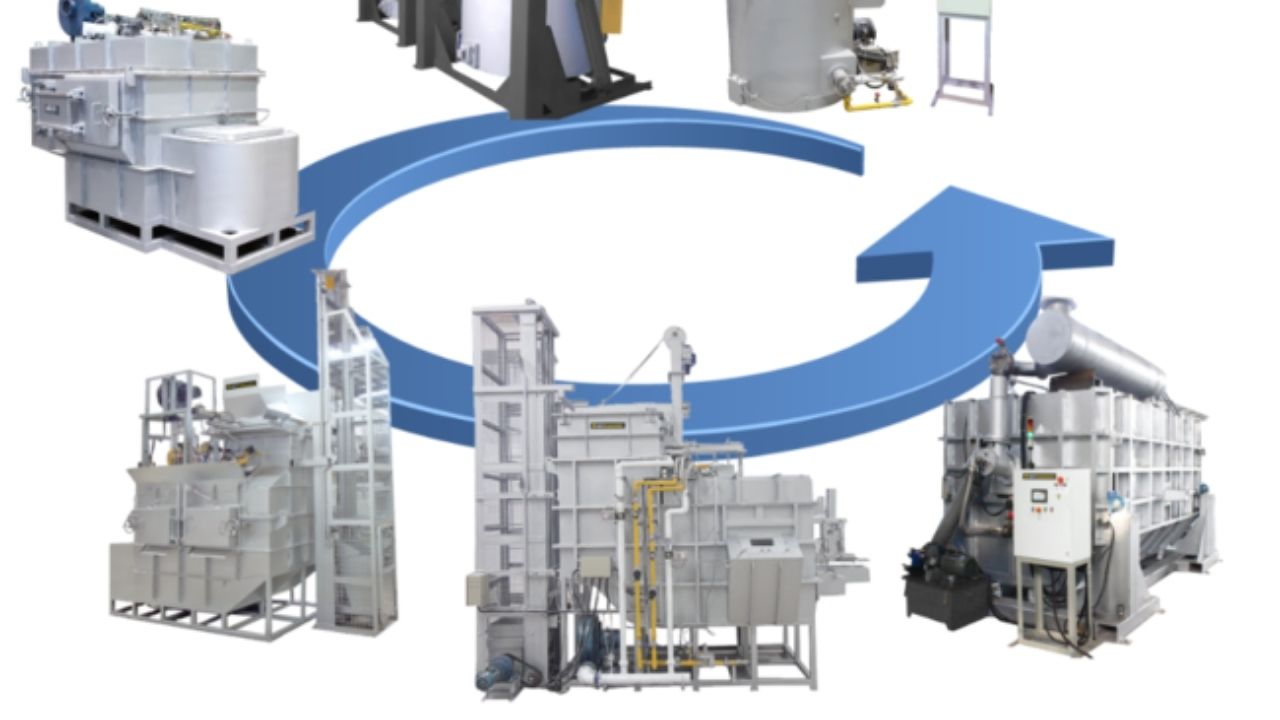
Selecting The Right Aluminum Furnace
To maximize the output of your production, the right selection of the aluminum furnace is important. Read our post in this field and become an expert in furnace picking.
Tilting Furnaces: Maximizing Efficiency in Non-Ferrous Foundries
At Dynamo Furnaces, we specialize in engineering thermal solutions that tackle the industry’s biggest challenges: rising energy costs, metal oxidation, and operator safety. Understanding the applications and advantages of stack technology is critical to increase your foundry efficiency.
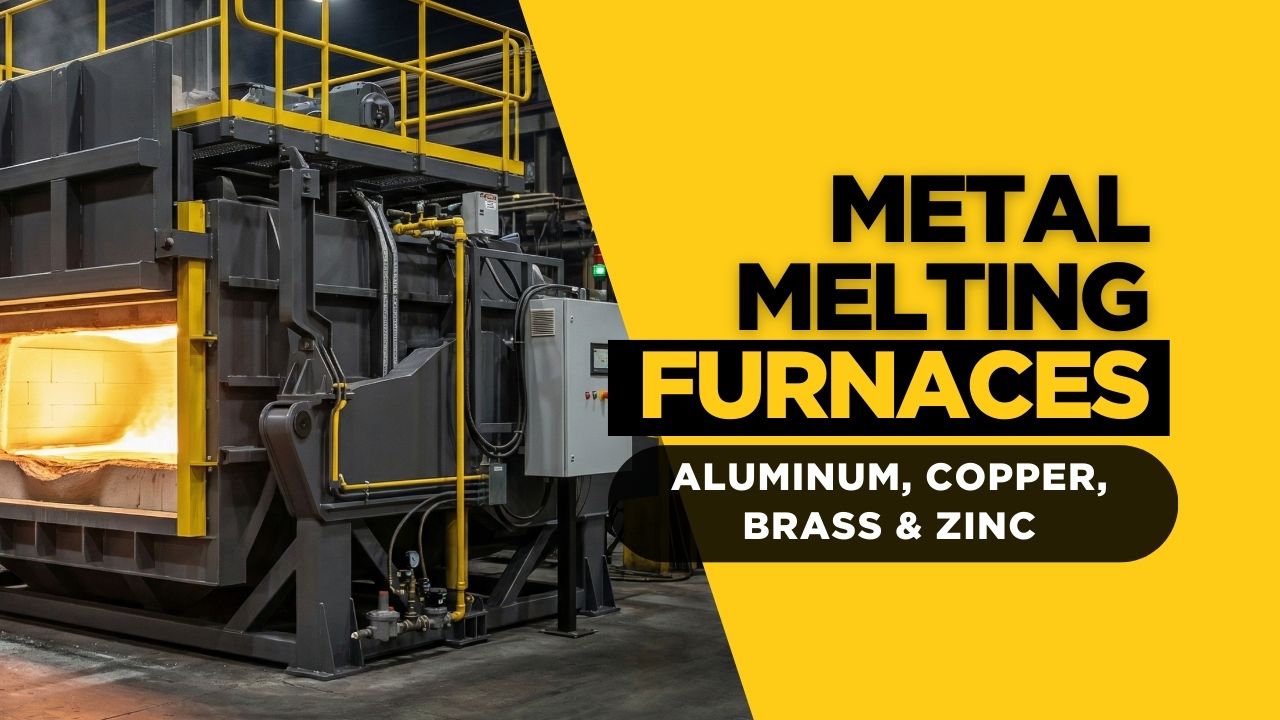
Metal Melting Furnaces: A Complete Technical Guide
Metal melting is one of the most energy‑intensive and technically demanding operations in manufacturing. This guide on metal melting furnaces explores the major furnace technologies used for non‑ferrous melting, explaining how each system works, where it excels, and how to evaluate it for your application.