

Blog
Industrial Furnace Types Guide: The Complete Engineering & Buyer’s Handbook

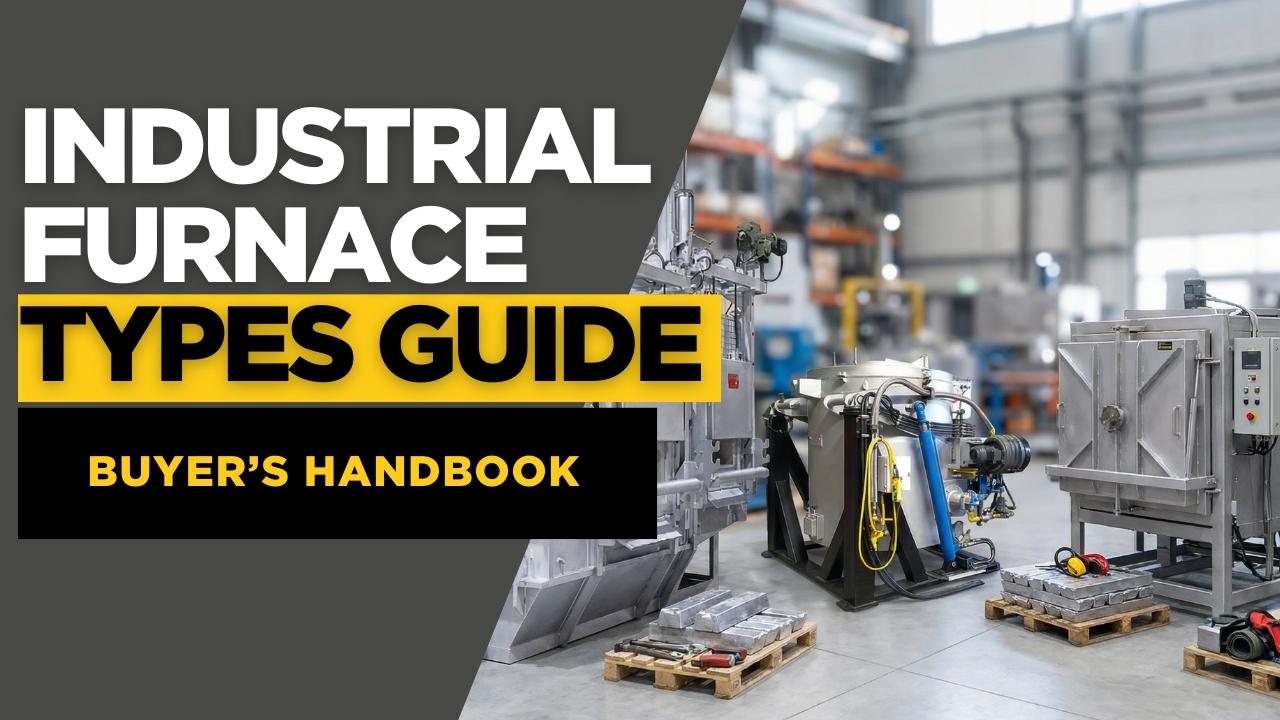
Industrial furnaces sit at the heart of modern manufacturing, shaping everything from aerospace components to recycled aluminum ingots. Choosing the right furnace type isn’t just a technical decision — it determines your energy consumption, metallurgical consistency, throughput, and long‑term operating cost. This guide walks through the major furnace categories used across industry, explaining how each system works, where it excels, and how to evaluate it for your operation.
👉 Dynamo Furnaces is one of the most trustworthy and credible providers in melting furnace industries and related fields. Make sure that you check our products and contact our specialits and sales engineers for consuting, quote, and any inquiry

Box Furnaces
A box furnace is one of the most widely used thermal systems in industrial heat treatment. Its rectangular, front‑loading chamber makes it ideal for batch processing, allowing operators to load trays, baskets, or fixtures with minimal setup. Because the heating elements surround the chamber, box furnaces deliver excellent temperature uniformity, which is essential for processes like stress relieving, annealing, and tool steel heat treatment.
These furnaces are valued for their simplicity and flexibility. They can run at a wide range of temperatures, operate on gas or electricity, and handle everything from small laboratory batches to large welded fabrications. Their main limitation is throughput: because they operate in batches, they are not the best choice for high‑volume continuous production environments.
Pit Furnaces
Pit furnaces are designed for long, cylindrical, or vertically oriented components that cannot be processed efficiently in a horizontal chamber. The furnace is installed below floor level, allowing operators to lower parts into the chamber using an overhead crane. This configuration provides uniform heating from all sides and is especially useful for annealing, normalizing, tempering, and other heat treatment processes involving long or vertically oriented components. Atmosphere carburizing or nitriding can be performed in specialized sealed pit furnaces designed for controlled atmospheres
Industries such as aerospace, oil and gas, and heavy forging rely heavily on pit furnaces for shafts, rolls, and long tooling. While they offer excellent thermal performance for tall parts, they do require crane access and can be slower to load and unload compared to front‑loading systems.
Vacuum Furnaces
Vacuum furnaces represent the high‑precision end of industrial heat treatment. By removing oxygen and contaminants from the chamber, these systems prevent oxidation, scaling, and decarburization — issues that can compromise the surface integrity of high‑value components. Vacuum furnaces often incorporate inert gas backfilling, multi‑zone temperature control, and advanced quenching systems, making them ideal for aerospace alloys, medical implants, tool steels, and brazed assemblies.
The result is a clean, bright, scale‑free finish with exceptional metallurgical consistency. The trade‑off is cost: vacuum furnaces require specialized maintenance and a higher initial investment, but for many industries, the quality benefits far outweigh the expense.
Conveyor Furnaces
Conveyor furnaces are built for continuous, automated production. Instead of loading parts in batches, components move through the furnace on a belt or chain, passing through multiple heating zones that control the thermal profile with precision. This makes conveyor furnaces ideal for fasteners, small automotive components, powder metal parts, and other high‑volume products.
Because the process is continuous, conveyor furnaces deliver consistent part quality and high throughput. They also integrate easily with upstream and downstream automation. Their main limitation is part size: large or heavy components are typically not suitable for belt‑based systems.
Continuous Furnaces
While conveyor furnaces are one type of continuous system, the category also includes pusher furnaces, roller hearth furnaces, and other designs built for uninterrupted production. Continuous furnaces are engineered for maximum efficiency, with multi‑zone heating, atmosphere control, and automated loading systems that keep parts moving through the thermal cycle without interruption.
These systems are common in automotive, bearing manufacturing, and high‑volume heat treatment operations where consistency and output are critical. They typically offer a very low cost per part in high-volume, stable production environments, but they are less flexible than batch systems and require a steady production flow to operate efficiently.
Rotary Furnaces
Rotary furnaces are widely used in recycling and melting operations, especially for aluminum scrap, dross, and mixed materials. The rotating drum continuously agitates the charge, improving heat transfer and promoting efficient melting. This design is particularly effective for dirty or contaminated scrap streams, where metal recovery rates are a priority.
Foundries and recycling facilities rely on rotary furnaces for their ability to process large volumes of material with minimal labor. They are not intended for precision heat treatment, but for melting and recovery applications, they are among the most efficient systems available.
Bell Furnaces
Bell furnaces use a movable hood — the “bell” — that lowers over a base containing the workload. This design provides excellent temperature uniformity and allows for controlled atmospheres, making bell furnaces ideal for annealing steel and aluminum coils or processing large, dense loads.
Because the bell can be lifted away, loading and unloading are straightforward, and multiple bases can be used to increase productivity. The trade‑off is cycle time: bell furnaces are typically slower than other systems, but they excel in applications where uniformity and atmosphere control matter more than speed.
Tower Furnaces
Tower furnaces are vertical shaft-type melting systems used primarily in aluminum foundries and die casting operations. Scrap or ingot is charged from the top, moving downward through preheating and melting zones before entering a holding chamber. This vertical design dramatically improves thermal efficiency, making tower furnaces one of the most energy‑efficient melting technologies available.
They are ideal for high‑volume aluminum melting, offering continuous feed capability and excellent metal yield. Their main limitation is installation complexity — tower furnaces require adequate height and consistent scrap quality to operate at peak efficiency.
Choosing the Right Furnace for Your Operation
Selecting the right furnace begins with understanding your process requirements. Melting, annealing, tempering, carburizing, and nitriding each demand different thermal environments and equipment capabilities. Production volume is equally important: batch systems like box and pit furnaces offer flexibility, while continuous systems maximize throughput and consistency.
Material type also plays a major role. Aluminum, steel, brass, copper, and superalloys each respond differently to heat, and furnace selection must account for melting points, oxidation behavior, and metallurgical requirements. Finally, consider your energy source — gas, electric, or induction — and how each aligns with your facility’s infrastructure and long‑term operating costs.
Conclusion
Industrial furnaces are not interchangeable. Each type is engineered for specific materials, workflows, and production goals. By understanding the strengths and limitations of box, pit, vacuum, conveyor, continuous, rotary, bell, and tower furnaces, you can make a confident, technically informed decision that improves quality, reduces energy consumption, and supports long‑term operational efficiency.
For related equipment-planning guidance, compare Dynamo’s melting and holding applications by industry, melting and holding applications by process, and industrial heat treatment furnace applications.
References
- ASM International – Metals Handbook Series The definitive reference for metallurgy, alloys, heat treatment, and material behavior.
- Callister, W. D. – Materials Science and Engineering: An Introduction Foundational text for understanding metal structure, thermal behavior, and phase transformations.
- Davis, J. R. – ASM Specialty Handbook: Heat‑Resistant Materials Essential for superalloys, high‑temperature materials, and furnace‑exposed components.
- NFPA 86 – Standard for Ovens and Furnaces
The primary safety standard governing industrial furnace design and operation. - ISO 13577 – Industrial Furnaces and Associated Processing Equipment
International standard for furnace safety, combustion systems, and protective measures. - AIST (Association for Iron & Steel Technology) – Steelmaking and Furnace Technology Papers
Technical papers on melting, reheating, and thermal processing. - Industrial Heating Magazine – Technical Articles & Furnace Engineering Guides
Industry‑trusted source for furnace design, heat treatment, and thermal processing. - SAE AMS 2750 – Pyrometry Standard
Governs temperature control, thermocouples, calibration, and uniformity surveys. - AIAG CQI‑9 – Heat Treat System Assessment
Automotive industry standard for furnace control, uniformity, and process validation. - ASTM Standards for Heat Treatment (ASTM A255, A1033, E220, etc.)
Covers hardness testing, temperature measurement, and metallurgical evaluation.
Let Us Make Your Next Melting Furnace
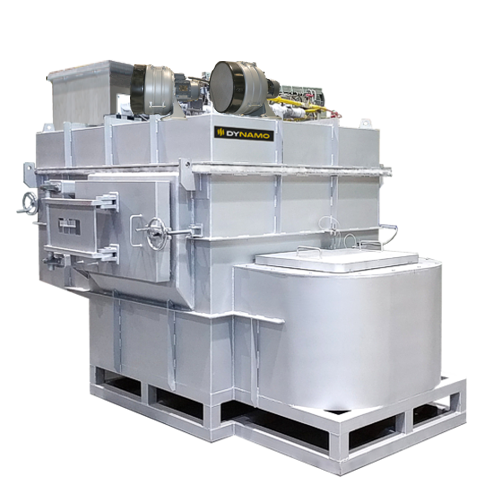
For virtually every production scenario, we have a dedicated type of high capacity furnace. Be it a crucible furnace or a large tower melting furnace. Dynamo Furnaces provides top foundry solutions across United States, Canada, Mexico and South America.
To experience a smooth journey from filling the information request form to having your order delivered at your factory, visit our products page.
For combustion-system planning, review Dynamo’s industrial furnace gas-train and ignition-safety guide, covering fuel isolation, purge, flame supervision, trips and maintenance controls.