Aluminum Dross Recycling Furnace
GDR-B SERIES
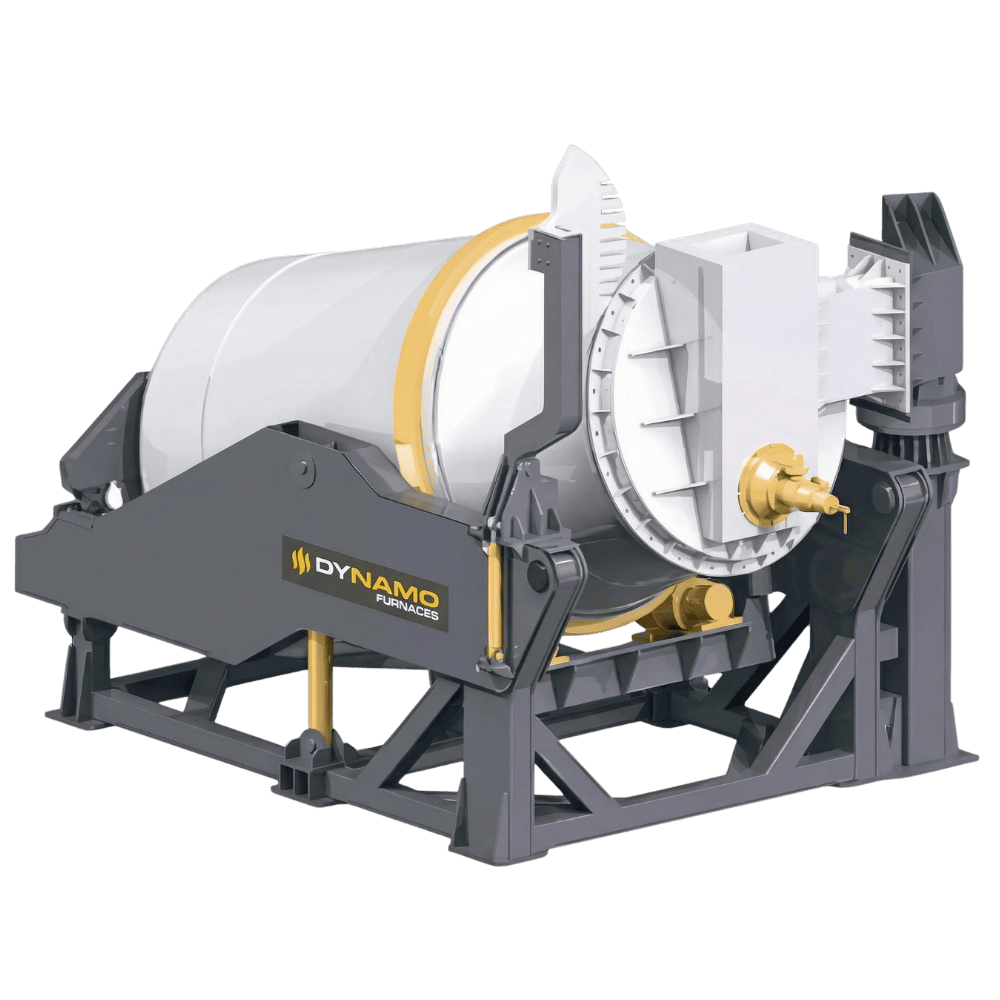
The GDR-B Series aluminum dross recycling furnace is designed for metallic aluminum recovery from dross and approved aluminum skimmings generated during melting, holding and casting. As an aluminum dross recovery furnace, it supports in-house dross processing rather than general mixed-metal scrap melting.
The existing configuration includes PLC control, a color HMI and hydraulic tilting for controlled metal discharge. Review the dross stream, charging method and recovered-metal handling requirements with Dynamo. The dross-recovery planning guide explains what to document before selecting the furnace.
TECHNICAL OVERVIEW
Dross can contain recoverable metallic aluminum entrained within an oxide-rich residue. The GDR-B is an aluminum dross processing furnace intended to recover that metallic fraction; it is not a process for converting aluminum oxide into primary aluminum. Feed composition and operation determine recovery.
Compare in-house dross processing with your current external recovery arrangement using measured metal content, dross volume, operating energy, staffing, recovered-metal value and residue-management cost. On-site recovery can shorten the material loop, but savings and recovery percentages require project-specific evidence.
The GDR-B feature set includes PLC/HMI operation and hydraulic tilting. Select the charging arrangement and downstream metal-handling equipment around the approved feed and process. Confirm any additional mechanisms or options in the quoted specification rather than assuming them from another recycling furnace.
HIGH THERMAL EFFICIENCY BY DESIGN
We Add Multiple Layers of Insulation.
The insulation is designed to limit heat loss and helps reduce external shell temperature. Furnace surfaces can still be hot; follow the operating instructions and site safety assessment.
THICKER INSULATION
We Add Way More Insulation to Our Furnaces Than Most Manufacturers.
The result is even greater efficiency and a solid, sturdy construction which is hard to beat.
EASY TO OPERATE INTERFACE
Greater Control - Means Greater Efficiency.
The GDR-B Series dross recycling furnaces feature state-of-the-art PLC control with large color HMI screens with easy to read graphics - all at no extra charge. See in real time all furnace functions and change any setting on the fly. Now that's control.
HIGH QUALITY HYDRAULIC POWER PACK
Reliable and Powerful.
The hydraulic tilting system supports controlled discharge of recovered metal. The selected furnace load, receiving vessel and pouring sequence must be covered by the operating specification.
REMOTE OPERATOR PENDANT
Added Safety and Convenience.
The remote operator pendant has an 8-foot cable for operation from an appropriate position. Establish operator clearance and pouring-zone protection through the site safety assessment.
VFD DRIVE BLOWER MOTORS
Better Efficiency and Lower Operating Cost.
Lots of air without control wastes a significant amount of energy. We use VFD Drives combined with Premium Inverter Duty Motors to give you greater RPM only when it is needed. All this translates into greater efficiency, lower operating costs, quieter operation, soft start and longer motor life. The advantage is clear. This is just one of the many ways we use to increase furnace efficiency, and reduce long term operating costs.
CHOOSE YOUR CONTROL SYSTEM
We Give You Options of PLC & HMI.
Select the control system that is best for you and easiest for your maintenance team.
HIGH QUALITY COMPONENTS
We Use Brand Name Components You Know and Already Use.
We use only the finest quality components that are open source and readily available locally in your area, or from our online parts store.
VIBRATORY CHARGER
Speeds Up and Simplifies Furnace Charging.
The optional vibratory charger supports the approved dross charging arrangement. Confirm material size, feed condition, charger capacity and furnace interface for the selected configuration.
Evaluate Recovery Economics
We Give You More Furnace for Your Money.
Evaluate return on investment from measured recoverable aluminum, processing costs, equipment utilization and residue handling. Compare these inputs with your current dross recovery contract; no universal payback or highest-in-industry return is assumed.
REMOTE SERVICE
We Can Remotely Troubleshoot Your Furnace from Our Facility.
Our GDR-B Series dross recycling furnace includes a Remote Connectivity Unit which allows our furnace technicians to remotely check the performance of the furnace, make any needed changes to the program or HMI, or to troubleshoot it directly from our service center. The customer is only required to connect the unit to the Internet via an Ethernet cable. We handle the rest.
INDUSTRY 4.0 REMOTE MONITORING
Remotely Monitor Your Furnace Performance From Any Device.
As an option, all our furnaces are available with Industry 4.0 remote performance monitoring units which feature a custom dashboard. You can not only monitor furnace performance, but you can be notified before an issue occurs. Included are condition based maintenance reminders and shift performance statistics. Minimize impact of emergencies and maximize furnace uptime, and productivity. See what is going on with the furnace and your production from any device, anywhere in the world.
THREE STANDARD SIZES
Flexible Range of Applications.
The published model table lists aluminum melting rates of 835–2,645 lb/h (380–1,200 kg/h) and holding capacities of 2,200–6,600 lb (1,000–3,000 kg). These are different quantities, not a guaranteed dross throughput or recovery percentage. Confirm the duty for your actual feedstock.
| Standard | US / Imperial (Al) | Metric (Al) | ||
| Model | Holding | Melting/h | Holding | Melting/h |
| GDR-B-2200 | 2200 lb | 835 lb | 1000 kg | 380 kg |
| GDR-B-4400 | 4400 lb | 1670 lb | 2000 kg | 760 kg |
| GDR-B-6600 | 6600 lb | 2645 lb | 3000 kg | 1200 kg |
Applications For The GDR-B Series Aluminum Dross Recycling Furnace
Hot dross and cold dross differ in thermal condition and handling requirements. Document the source, temperature, metallic aluminum content and storage history so Dynamo can confirm the appropriate GDR-B process and charging arrangement.
Foundries considering on-site aluminum dross recycling should match the recovery system to actual dross generation and recovered-metal use. Include safe collection, preparation, charging, discharge and residue storage in the project scope.
Review approved aluminum skimmings from known melt-shop operations as a separate feed specification. Do not assume that all slag, salt-bearing residue or furnace clean-out material is interchangeable with that stream.
Recoverable metallic aluminum may be returned to a melt-shop material loop after quality checks. Sampling and any required treatment or alloy adjustment determine suitability for the next casting operation.
For die-casting and automotive foundries, quantify dross collected per shift and its recoverable metal content. Those measurements provide a better selection basis than a general promise of high recovery.
Identify dross generated from holding furnaces, transfer ladles and casting lines by source and alloy. Approve the feed preparation and charging procedure; wet or moisture-contaminated material must not be treated as acceptable furnace feed.
Include residual dross classification, storage, transport and disposal or further treatment in the plant plan. Applicable emissions and environmental requirements must be assessed for the actual process and location; the furnace alone does not establish compliance.
Keep dross recovery separate from bulk scrap remelting. For prepared aluminum scrap and foundry returns, review the GDR-C rotary aluminum scrap furnace; for the overall material flow, use the aluminum recycling furnace range.
Frequently Asked Questions About The GDR-B Series Aluminum Dross Recycling Furnace
The objective is recovery of entrained metallic aluminum from approved dross, not chemical reduction of aluminum oxide. Recoverable metal content and process conditions determine the result.
GDR-B is the product to review for in-house aluminum dross recovery. Evaluate feed volume, preparation, energy, staffing, recovered-metal quality and residual material management against your existing recovery arrangement.
No. Hot or cold condition, alloy, recoverable metallic fraction and contamination must be reviewed. Each dross stream needs its own approved feed specification; broad residue names do not establish process compatibility.
No wet-feed capability is claimed. Moisture contamination is a serious hazard around molten metal. Follow the approved feed specification and site charging procedure; have uncertain material assessed before use.
GDR-B focuses on dross metal recovery. The GDR-C rotary scrap recycling furnace addresses prepared aluminum scrap remelting. Choose by the incoming material and required process, not similar model letters.
RELATED PROJECTS & POSTS
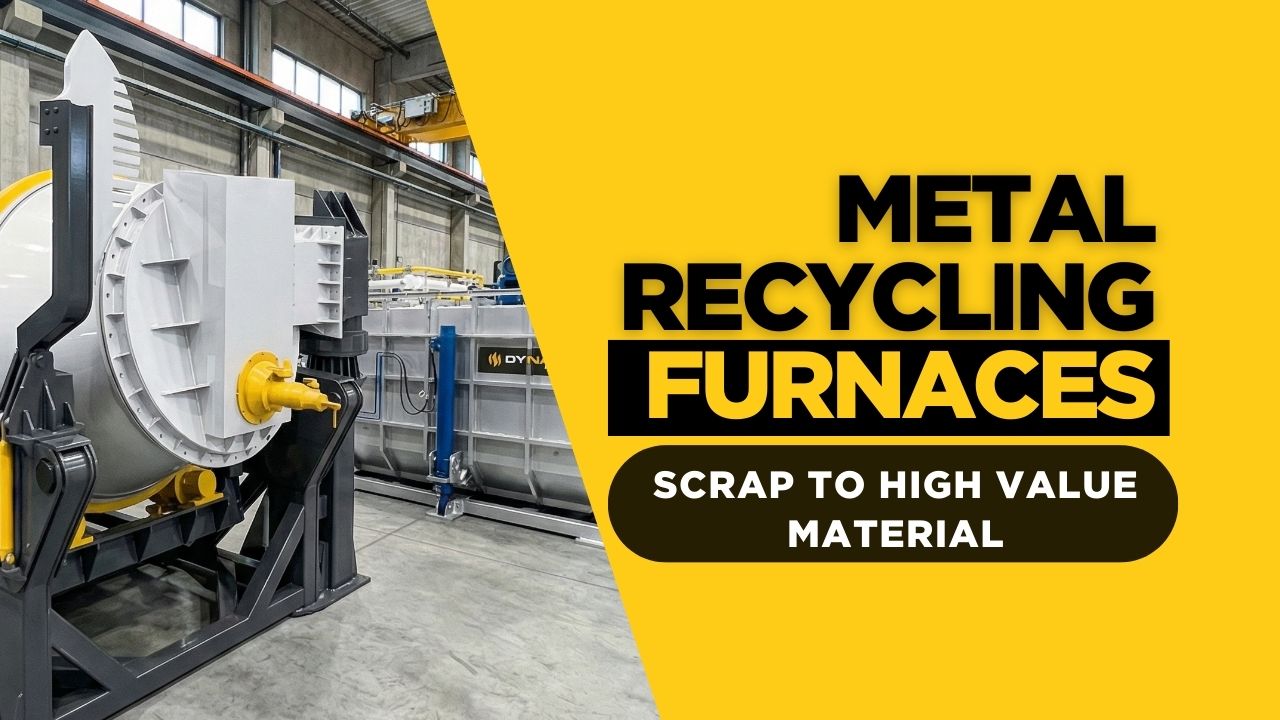
Industrial Metal Recycling & Furnace Applications
Explores how industrial furnaces support large‑scale recycling operations, the unique challenges of processing different scrap types, and the technologies that enable efficient, high‑quality metal recovery.
Chip Melting Furnaces in Aluminum Recycling
Read our article about the role of chip melting furnaces in aluminum recycling across various industries
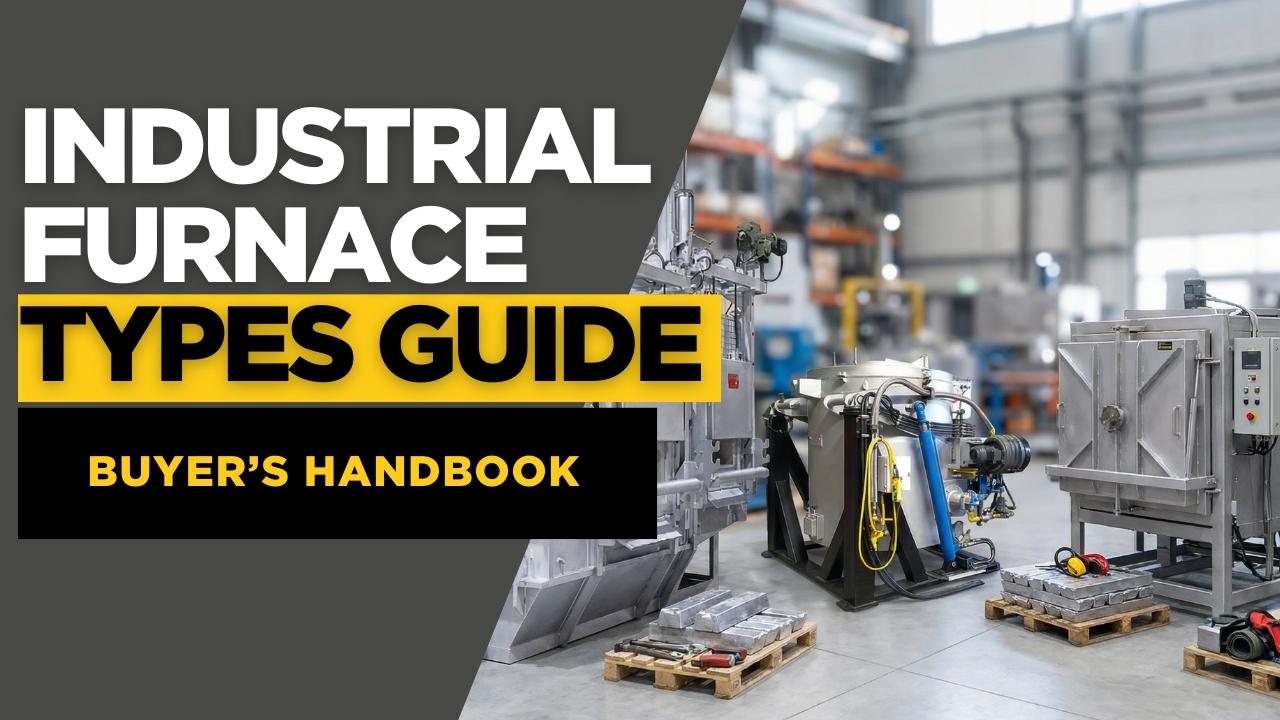
Industrial Furnace Types Guide: A Buyer’s Handbook
Read our guide on selecting the right Industrial furnace type to learn about the major furnace categories used across industry, how each system works, where it excels, and how to evaluate it for your operation.
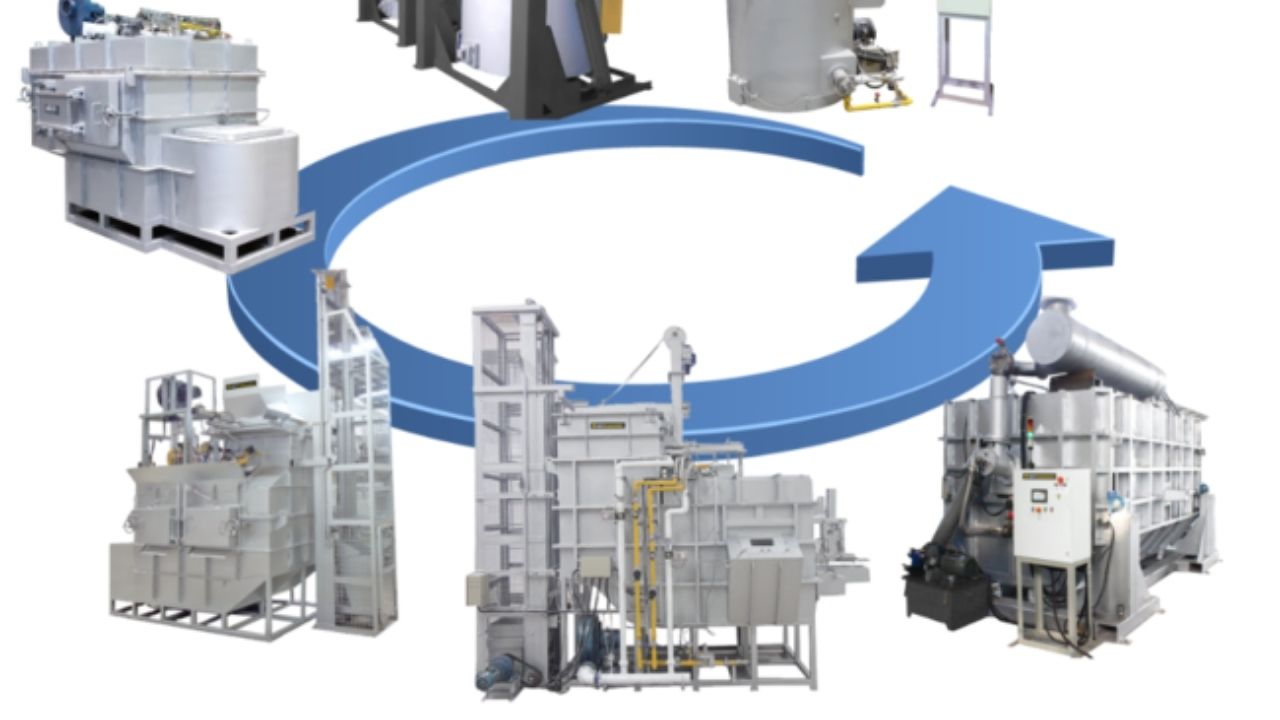
Selecting The Right Aluminum Furnace
To maximize the output of your production, the right selection of the aluminum furnace is important. Read our post in this field and become an expert in furnace picking.

Tilting Furnaces: Maximizing Efficiency in Non-Ferrous Foundries
At Dynamo Furnaces, we specialize in engineering thermal solutions that tackle the industry’s biggest challenges: rising energy costs, metal oxidation, and operator safety. Understanding the applications and advantages of stack technology is critical to increase your foundry efficiency.
Metal Melting Furnaces: A Complete Technical Guide
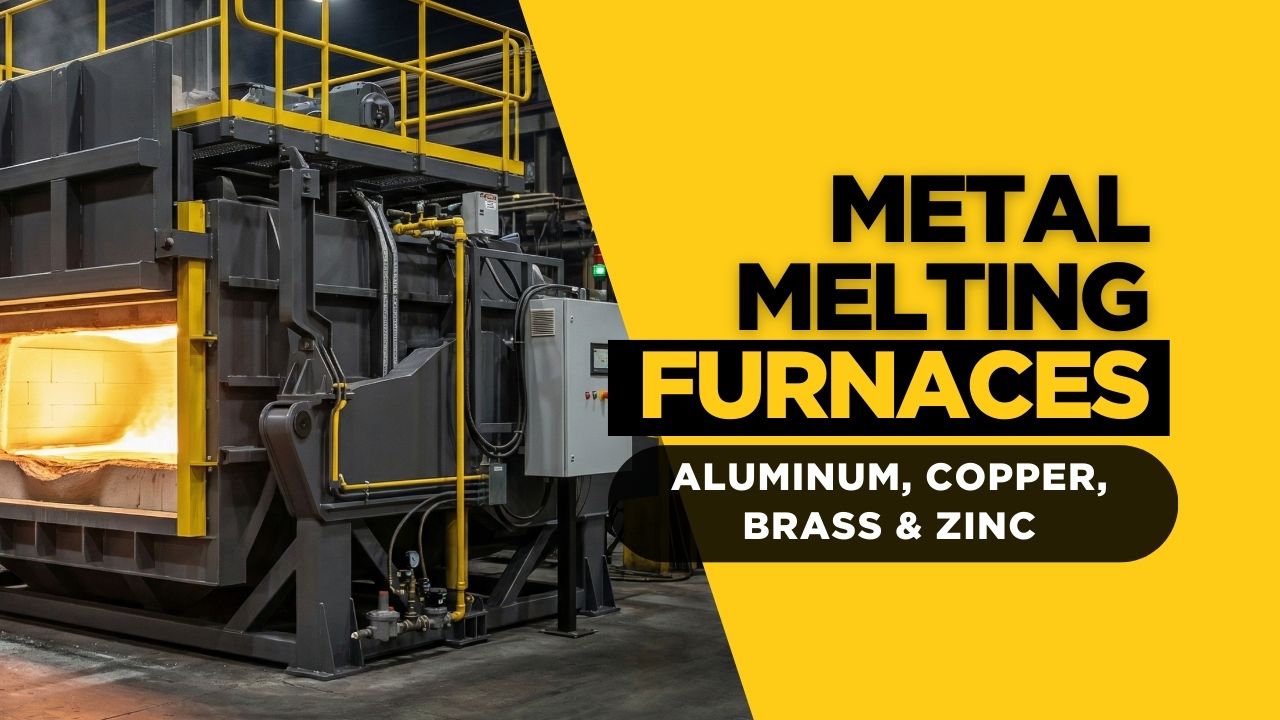
Metal melting is one of the most energy‑intensive and technically demanding operations in manufacturing. This guide on metal melting furnaces explores the major furnace technologies used for non‑ferrous melting, explaining how each system works, where it excels, and how to evaluate it for your application.