Aluminum Extrusion Melting & Holding Applications
Connect charge preparation, aluminum melting, holding, transfer, and return-scrap recovery for extrusion production.
Billet, Log, Butt, Crop, and Extrusion Scrap Melting & Metal-Delivery Systems
What Furnace System Does an Aluminum Extrusion Plant Need?
Direct answer: an extrusion operation that remelts billet, log ends, butts, crops, profiles, and clean process scrap needs a furnace system designed around alloy segregation, bulky charge geometry, metal recovery, melt rate, dross control, holding time, transfer, and the casting route used to produce new billet or ingot.
The best extrusion scrap melting furnace is determined by the material stream—not merely annual tonnage. Dense returns, thin profiles, contaminated scrap, and machining chips behave differently during charging. A complete plan therefore covers sorting and preparation, melting, holding, metal treatment, transfer, casting, controls, and safe material handling.
Plan Your Extrusion Melt & Recovery System
Send the material and production data needed for an engineering review:
- Alloys and segregation requirements
- Billet ends, extrusion butts, crops, profiles, scrap, or chips
- Average and peak melt demand
- Charge dimensions, density, coatings, oil, and moisture
- Holding, transfer, filtration, degassing, and billet-casting route
- Utilities, floor space, emissions, automation, and growth
Extrusion Metal Recovery: From Return Scrap to New Billet
A reliable loop preserves alloy identity and metal yield while matching the remelt system to the extrusion plant’s production schedule.
Characterize Returns
Separate alloys and document billet ends, butts, crops, profiles, skeletons, chips, coatings, oil, moisture, size, bulk density, and monthly volume.
Prepare the Charge
Define sorting, cutting, shredding, washing, drying, decoating, storage, and charging methods before furnace selection.
Match Melt Technology
Choose a furnace around scrap geometry, recovery target, melt rate, batch pattern, alloy changes, dross, and operator workflow.
Stabilize & Treat Metal
Plan holding, skimming, temperature control, filtration, degassing, sampling, and residence time before billet or ingot casting.
Connect Transfer & Casting
Coordinate launders, ladles, pumps, tilting discharge, casting machine demand, heat loss, and clean metal delivery.
Measure the Closed Loop
Track metal yield, dross, energy per recovered tonne, throughput, downtime, alloy losses, and returned metal quality.
How to Select a Furnace for Aluminum Extrusion Scrap
Extrusion scrap has high recovery value, but geometry and contamination strongly affect performance. Thin profiles expose more surface area to oxidation; oily or wet chips require preparation; large butts and billet ends influence charging access and recovery time. The equipment review should compare delivered metal yield, energy use, dross, labor, alloy control, maintenance, and the ability to feed the downstream billet or ingot casting schedule.
| Extrusion material stream | Typical furnace role | Planning priorities |
|---|---|---|
| Dense billet ends and clean returns | Central tower or reverberatory melting | Melt rate, batch size, alloy segregation, metal yield |
| Bulky profiles, butts, and varied clean scrap | Dry-hearth or reverberatory system | Charge geometry, loading method, oxidation, recovery |
| Controlled large batches | Tilting reverberatory melting | Batch schedule, alloy changes, discharge, casting demand |
| Prepared machining chips | Dedicated chip melting system | Oil, moisture, fines, drying, density, recovery |
| Billet or ingot casting buffer | Gas or electric holding furnace | Temperature stability, residence time, treatment, transfer |
Connected Equipment & Engineering Resources
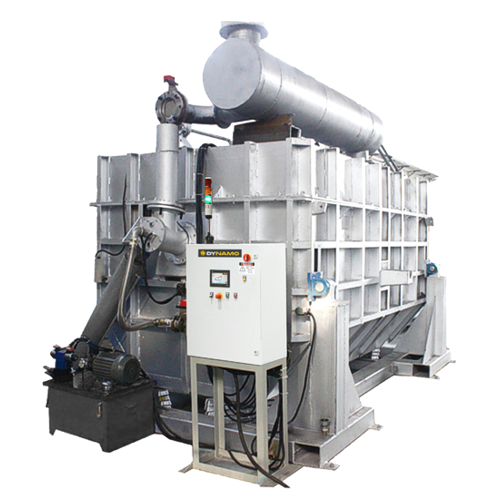
Compare the broader aluminum melting furnace family before choosing a platform. High-output plants may begin with the GM-H central tower furnace, while bulky return streams can make the GM-D dry-hearth furnace relevant.
For large controlled batches, evaluate the GM-J tilting reverberatory furnace; for the casting buffer, review the GH-A holding furnace. Energy-source tradeoffs are explained in the gas-versus-electric furnace guide.
Coordinate metal delivery with the molten-aluminum transfer guide and prepare difficult feedstock using the aluminum charge-preparation guide. Related solution paths are organized under applications by metal and applications by process.
Recommended Furnaces for Aluminum Extrusion Operations
These Dynamo systems support high-output melting, bulky or varied clean returns, controlled batches, and stable holding before downstream casting.
Central Tower Melting Furnace
GM-H Series
High-output aluminum melting for central systems serving multiple production cells.
Dry Hearth Melting Furnace
GM-D Series
Flexible aluminum melting for returns and production scrap with controlled charging.
Tilting Reverberatory Furnace
GM-J Series
Large-batch aluminum melting with controlled tilting and metal discharge.
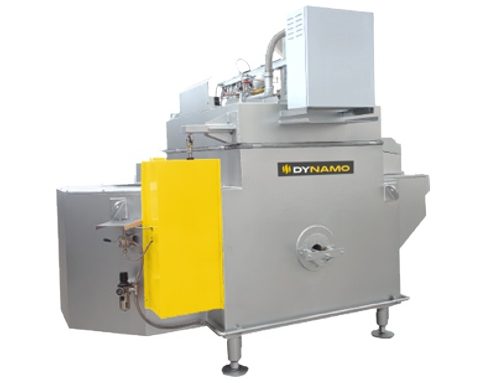
Gas Holding Furnace
GH-A Series
Stable molten-aluminum temperature and buffer capacity near production equipment.
Extrusion Materials and Production Environments
Dynamo equipment can be evaluated for production associated with:
- Billet and log ends
- Extrusion butts and crops
- Off-spec profiles and clean plant returns
- Architectural and building-system extrusions
- Automotive structural and mobility extrusions
- Aerospace and transportation profiles
- Heat-sink and electrical extrusions
- Machining chips from extrusion finishing
- Secondary billet and ingot production
- Multi-alloy extrusion operations
The final furnace arrangement must be based on each alloy and scrap stream, its condition, the required output form, and the casting schedule—not on a generic extrusion-industry label.
Aluminum Extrusion Melting & Holding FAQs
Clean billet ends, extrusion butts, crops, off-spec profiles, plant returns, and properly prepared machining chips can be candidates. Alloy identity, moisture, oil, coatings, iron attachments, fines, and geometry must be reviewed.
Thin or bulky profiles have lower bulk density and more exposed surface area than dense ingot. Geometry changes charging, oxidation, melt rate, bridging risk, furnace access, and delivered metal yield.
Often yes. Chips can carry oil, coolant, moisture, fines, and high surface area. Separation, washing, drying, densification, and controlled charging may be required before safe, efficient melting.
Use the real return generation rate, inventory pattern, alloy campaigns, batch size, preparation throughput, furnace recovery, holding reserve, casting rate, downtime, and growth plan.
Use documented sorting, dedicated storage, verified alloy campaigns, controlled cleanout, sampling, traceability, and a production schedule that limits unnecessary alloy changes.
Provide alloy list, scrap types and dimensions, contamination, monthly volume, target output, casting process, melt rate, shift schedule, utilities, floor plan, environmental constraints, and automation goals.
RELATED TECHNICAL GUIDES
Metal Melting Furnaces: Aluminum, Copper, Brass & Zinc – A Complete Technical Guide
Metal melting is one of the most energy‑intensive and technically demanding operations in manufacturing. Whether a facility is producing aluminum
Gas vs Electric Melting Furnaces: Selection Factors for Foundries and Recyclers
Compare gas and electric melting furnaces for foundries and recycling plants, including heat input, controls, utilities, and metal handling.
Molten Aluminum Transfer Planning: Holding Furnaces, Launders, and Casting Lines Working Together
Learn how molten aluminum transfer planning connects melting furnaces, holding furnaces, launders, pouring practice, and casting lines.

Aluminum Charge Preparation Before Melting: Sorting, Drying, Density, and Contamination Control
Review aluminum charge preparation before melting, including sorting, shredding, washing, drying, density, moisture, and contamination control.