Aluminum Electric -
Tilting Crucible Melting Furnaces
EM-C Series
TECHNICAL OVERVIEW
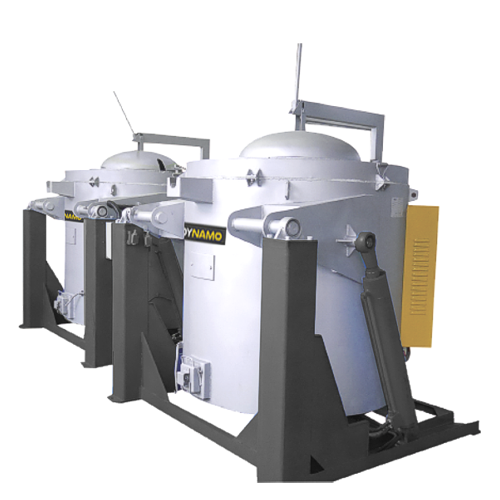
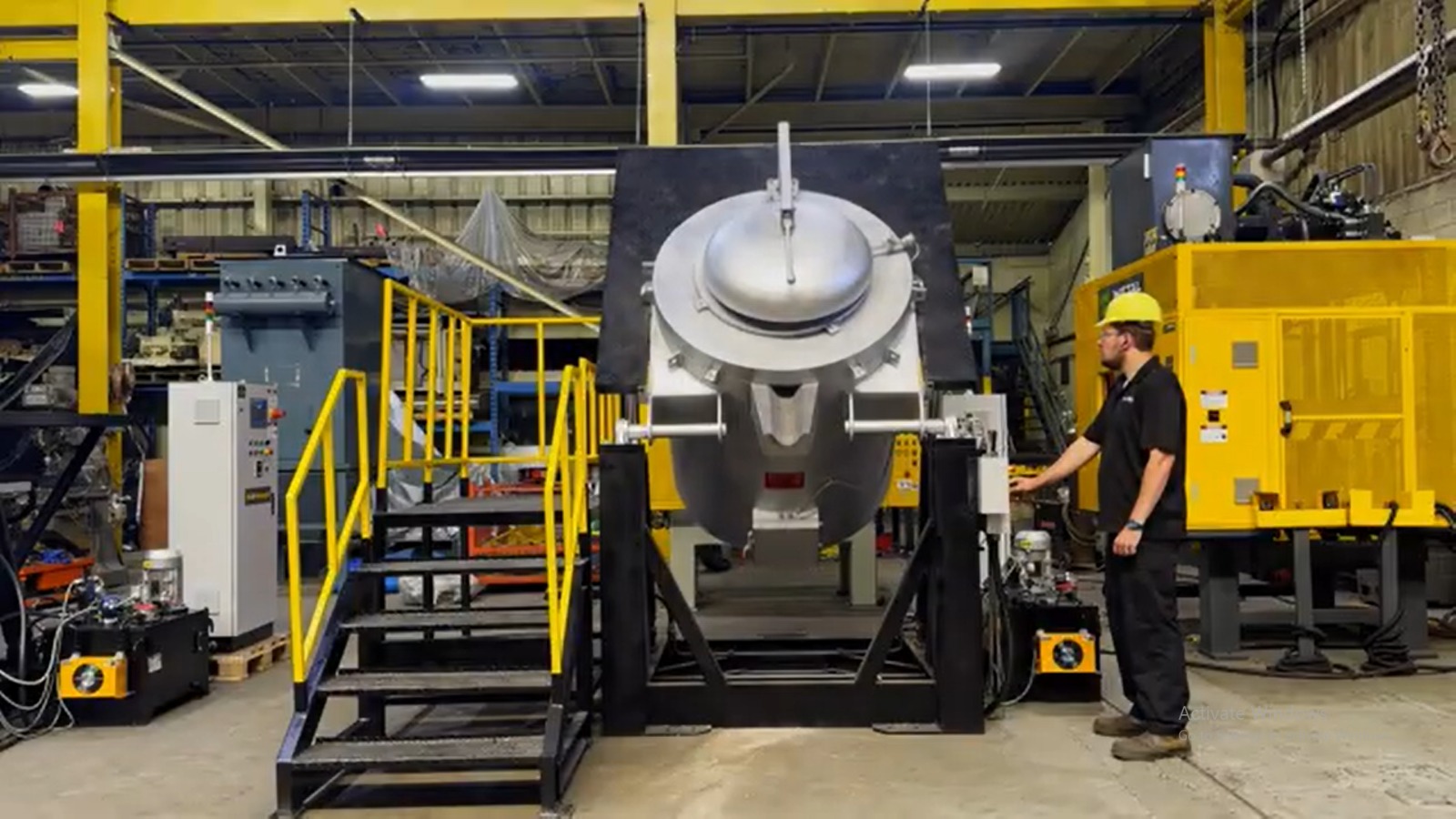
EM-C is an electric resistance tilting crucible furnace with hydraulic discharge for aluminum foundries and casting cells. As an electric tilting crucible melting and holding furnace, it combines batch melting, an available holding bath and controlled molten aluminum transfer. The exact temperature, melt rate and metal quality depend on the selected model, charge practice, crucible condition and operating procedure. Its electric heat source avoids on-site burner combustion at the furnace, while the tilt is planned around the receiving ladle or mold.
Choose EM-C when hydraulic controlled pouring and direct ladle filling are central to the process. The tilt can reduce manual crucible handling and support a steadier metal stream, but pouring remains a hot-metal operation requiring trained operators, guarding and a defined transfer route. For a stationary square-crucible dip-out arrangement, compare the EM-B electric bale-out furnace; for gas-fired tilting heat, compare the GM-B gas tilting crucible furnace. These alternatives serve different discharge and utility needs.
The EM-C combines electric resistance heating, a round crucible, hydraulic tilting and the specified PLC/HMI package. Its controlled batch aluminum melting role suits production that changes alloys or works in defined campaigns, while the tilt directs the melt toward ladles or molds. Evaluate charge dimensions, electrical load, hydraulic access, refractory insulation, pour geometry and maintenance clearance before selecting a size.
NO ON-SITE COMBUSTION
Electric Heat for a Defined Plant Energy Mix.
HIGHEST RETURN ON INVESTMENT
We Give You More Furnace For Your Money.
High Thermal Efficiency BY DESIGN
We Add Multiple Layers of Insulation.
THICKER INSULATION
We Add Way More Insulation to Our Furnaces Than Most Manufacturers.
HIGH QUALITY COMPONENTS
We Use Brand Name Components You Know and Already Use.
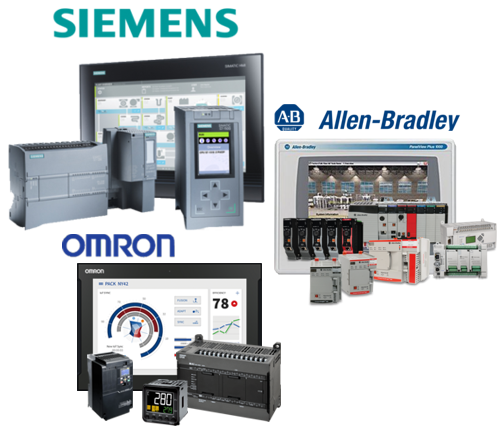
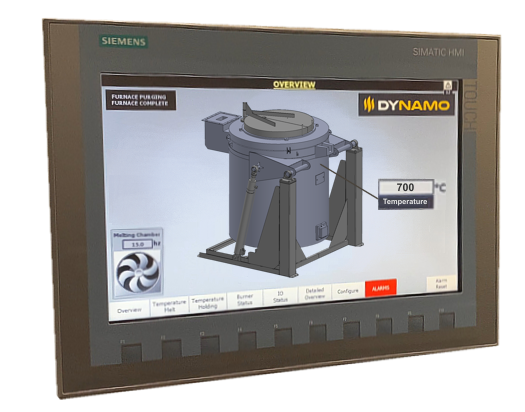
CHOOSE YOUR CONTROL SYSTEM
We Give You Options of PLC & HMI.
Select the control system that is best for you and easiest for your maintenance team.
REMOTE OPERATOR PENDANT
Added Safety and Convenience.
HIGH QUALITY HYDRAULIC POWER PACK
Reliable and Powerful.
EASY TO OPERATE INTERFACE
Greater Control - Means Greater Efficiency.
REMOTE SERVICE
We Can Remotely Troubleshoot Your Furnace from Our Facility.
INDUSTRY 4.0 REMOTE MONITORING
Remotely Monitor Your Furnace Performance From Any Device.
FIVE STANDARD SIZES
Flexible Range of Applications.
| Item | US Standard (Al) | Metric Standard (Al) | ||
| Model | Holding | Melting/h * | Holding | Melting/h * |
| EM-C-770 | 770 lb | 330 lb | 350 kg | 150 kg |
| EM-C-1100 | 1100 lb | 440 lb | 500 kg | 200 kg |
| EM-C-1750 | 1750 lb | 660 lb | 800 kg | 330 kg |
| EM-C-2200 | 2200 lb | 880 lb | 1000 kg | 400 kg |
| EM-C-2600 | 2600 lb | 990 lb | 1200 kg | 450 kg |
Applications For The EM-C Series Aluminum Tilting Crucible Melting Furnace
The EM‑C Series is engineered for aluminum foundries that require exceptionally clean molten metal with minimal oxidation and hydrogen pickup. Electric resistance heating eliminates combustion gases and flame impingement, producing a stable, low‑dross melt. The tilting crucible design allows smooth, controlled pouring, reducing turbulence and preventing oxide entrainment — a critical factor for producing high‑quality castings with excellent surface finish and dimensional accuracy.
The EM‑C Series provides a dependable molten aluminum supply for gravity casting, sand casting, and permanent‑mold casting operations. Its precise temperature control ensures consistent melt quality, while the tilting mechanism enables ergonomic, low‑turbulence metal transfer into ladles or molds. This improves casting integrity and reduces defects such as cold shuts, inclusions, and porosity.
For die-casting support and smaller casting cells, this electric batch melting furnace can supply planned quantities of molten aluminum when melt rate and holding reserve match the casting rhythm. Hydraulic tilt supports direct ladle filling and controlled transfer. Check ladle size, pour height, travel distance and metal temperature instead of assuming a short transfer always prevents heat loss.
EM-C can support alloy-flexible batch melting when the crucible, cleaning method and production schedule suit the alloy campaign. Define batch identity, treatment steps and temperature limits before molten metal is transferred to casting equipment. Any degassing or treatment equipment is a separate process requirement, not an implied EM-C feature.
The EM‑C Series is an excellent choice for research labs, prototype shops, and low‑volume production environments that require clean molten aluminum in controlled quantities. Its electric heating system provides fast heat‑up, precise temperature control, and quiet operation — ideal for testing new alloys, validating casting designs, or producing short‑run components. The tilting mechanism simplifies metal handling, improving safety and workflow efficiency.
Charge clean, dry and appropriately sized ingots, runners, returns or prepared production scrap that fit the selected round crucible. Whole sows and mixed or contaminated feed are not implied by the standard EM-C description. Good charge preparation and controlled pouring can support low melt loss; measured recovery depends on alloy, charge condition, skimming and operating practice.
Electric melting is inherently energy‑efficient, and the EM‑C Series maximizes this advantage with high‑performance heating elements and thick refractory insulation. The closed‑chamber design minimizes heat loss, while precise temperature control prevents overheating and unnecessary power consumption. For facilities seeking to reduce energy costs without compromising melt quality, the EM‑C Series offers a highly economical solution.
The hydraulic tilt avoids removing a full crucible for each pour and can make the discharge route easier to control. It does not eliminate molten-metal splash, radiant heat or lifting hazards. Specify operator position, receiving equipment, guarding, PPE and training for the actual installation.
Frequently Asked Questions About The EM-C Series Aluminum Tilting Crucible Melting Furnace
EM-C combines electric resistance heating with hydraulic tilting, supporting controlled batch melting and pouring without a gas burner at the furnace. Potential differences in dross, hydrogen pickup and energy use depend on charge condition, crucible practice, atmosphere and the compared gas-fired system; no fixed performance advantage is claimed for every installation.
Evaluate EM-C for clean, dry, appropriately sized aluminum ingots, runners, returns and prepared production scrap that fit the selected crucible. Confirm alloy compatibility, charge geometry and safe handling for each model. Large whole sows and mixed or contaminated feed are not assumed suitable.
Electric resistance heating avoids direct flame impingement at the crucible. Suitable charge preparation, temperature control and low-turbulence pouring can help reduce oxidation and aluminum melt loss, but actual metal recovery must be measured for the alloy and process. Hydraulic tilt supports controlled discharge to the receiving ladle or mold.
EM-C may be operated through repeated batches or extended production schedules when its rated melting rate, holding capacity, electrical service and maintenance plan match demand. It is not a substitute for a high-output central shaft furnace when continuous molten-metal supply is the main duty.
Yes — EM‑C Series electric aluminum tilting crucible melting furnaces are available throughout the United States, Canada, and Mexico. Foundries, die‑casting plants, and aluminum processors rely on these furnaces for clean melting, precise temperature control, and safe, ergonomic metal handling. Regional availability ensures faster delivery, dependable technical support, and access to replacement parts. Units can be configured with various crucible sizes, power ratings, and control options to meet specific production requirements.
RELATED PROJECTS & POSTS
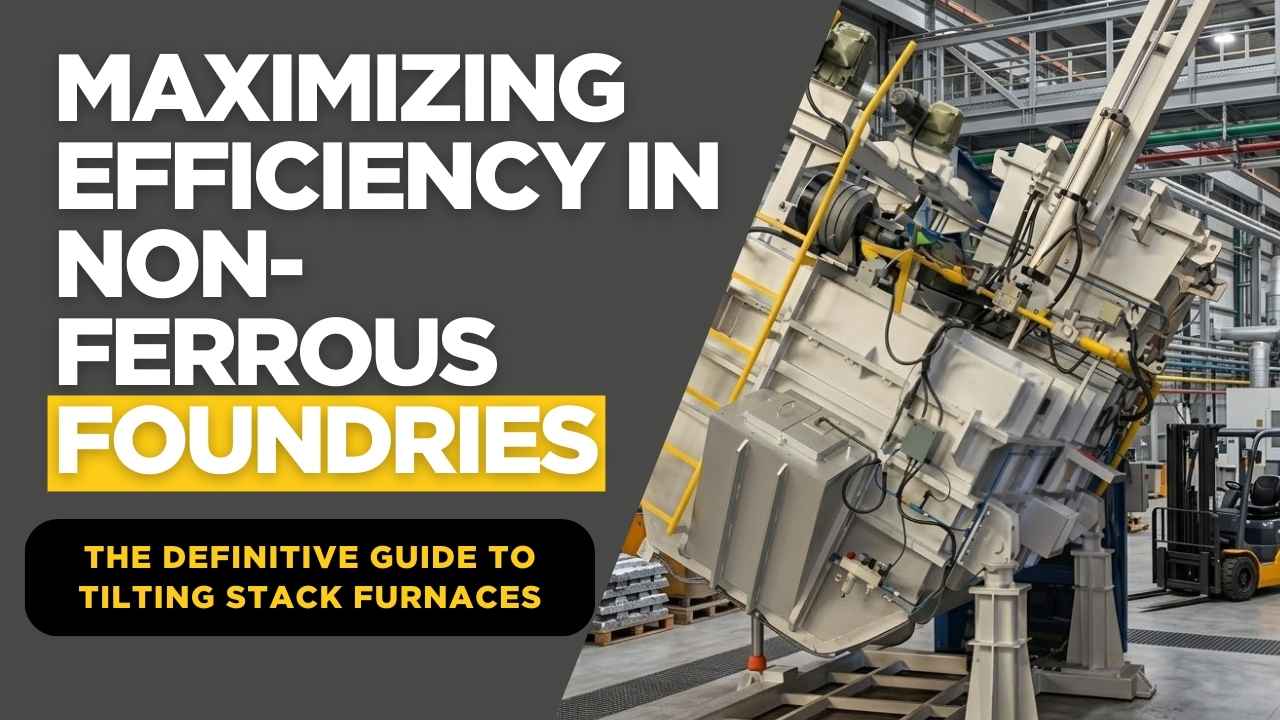
Tilting Furnaces: Maximizing Efficiency in Non-Ferrous Foundries
At Dynamo Furnaces, we specialize in engineering thermal solutions that tackle the industry’s biggest challenges: rising energy costs, metal oxidation, and operator safety. Understanding the applications and advantages of stack technology is critical to increase your foundry efficiency.
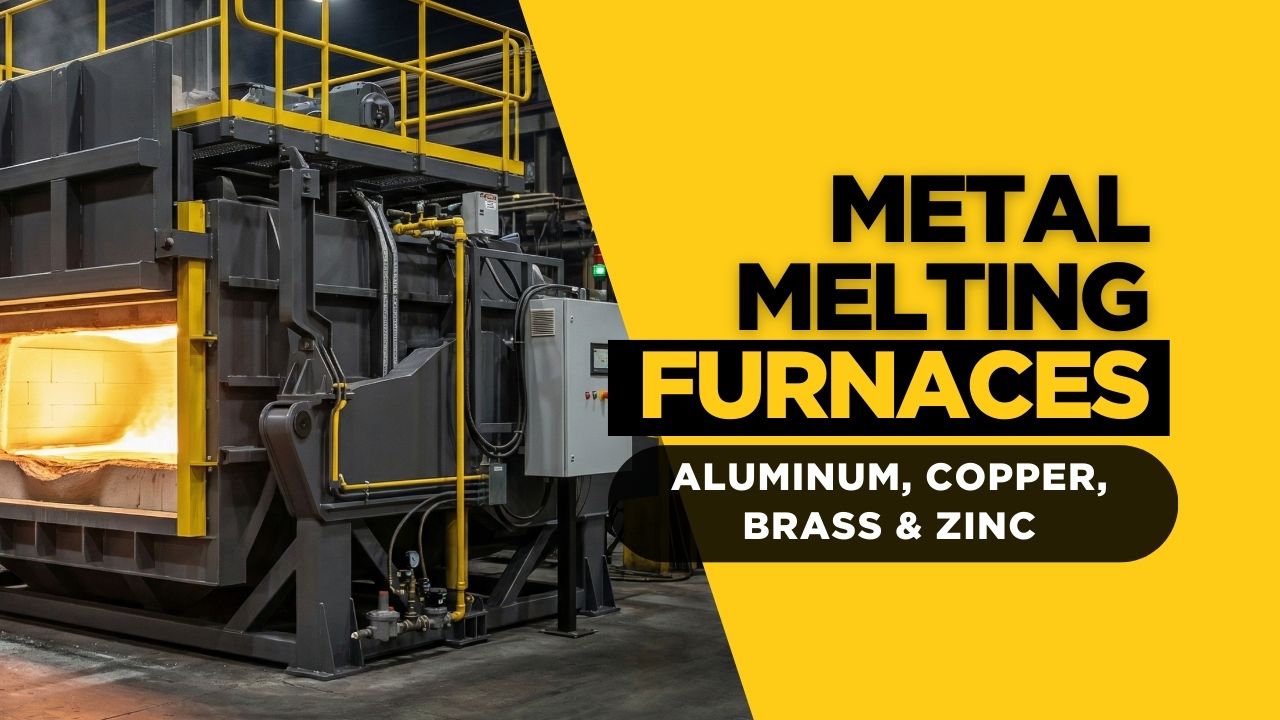
Metal Melting Furnaces: A Complete Technical Guide
Metal melting is one of the most energy‑intensive and technically demanding operations in manufacturing. This guide on metal melting furnaces explores the major furnace technologies used for non‑ferrous melting, explaining how each system works, where it excels, and how to evaluate it for your application.
Industrial Furnace Types Guide: A Buyer’s Handbook
Read our guide on selecting the right Industrial furnace type to learn about the major furnace categories used across industry, how each system works, where it excels, and how to evaluate it for your operation.
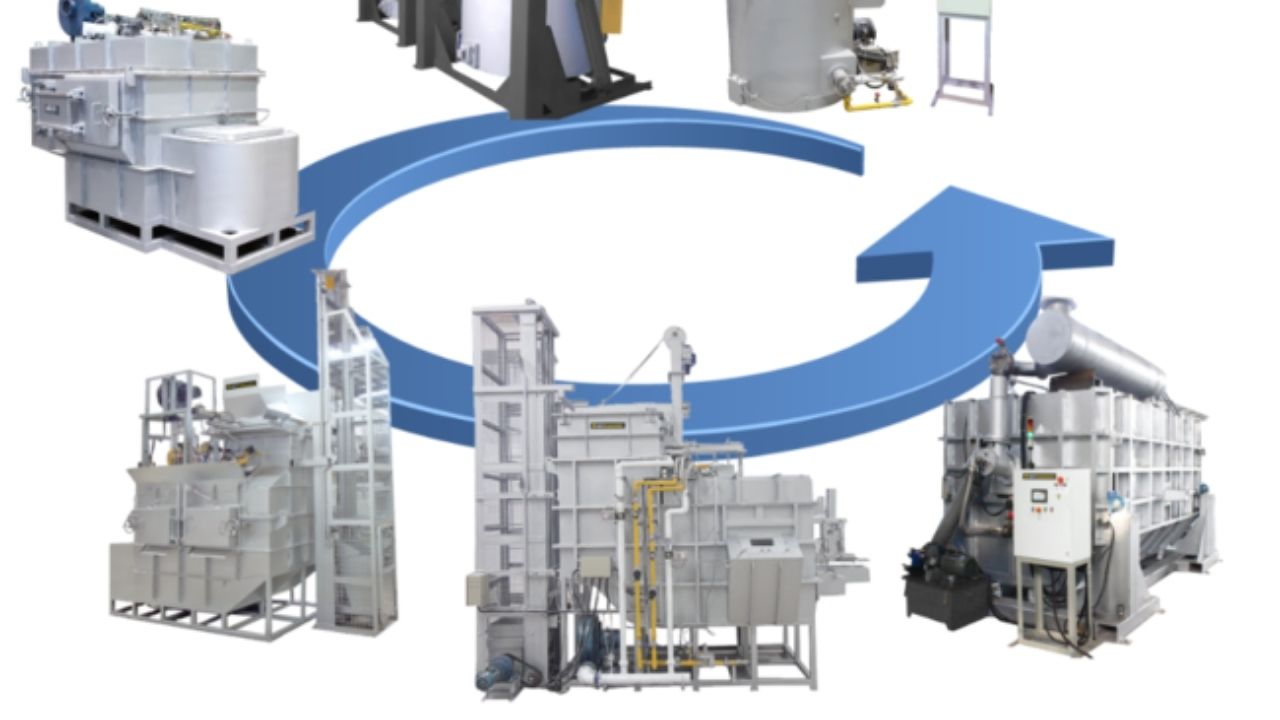
Selecting The Right Aluminum Furnace
To maximize the output of your production, the right selection of the aluminum furnace is important. Read our post in this field and become an expert in furnace picking.