Industrial Metal Melting Furnace Applications

Match furnace type to metal, charge condition, real melt demand, quality targets, utilities, and downstream production.

Gas and Electric Furnace Selection for Ingot, Returns, Scrap, and Controlled Batch Melting

How Do You Select an Industrial Metal Melting Furnace?

Direct answer: select a melting furnace from the alloy, charge material, required liquid-metal rate, batch pattern, energy source, quality target, and discharge method. Central tower and stack furnaces fit steady high-output aluminum demand; dry-hearth and reverberatory systems fit selected returns and scrap; crucible furnaces support flexible batches; and dedicated recycling furnaces handle chips, dross, or difficult feedstocks.

Capacity alone is not enough. A useful review includes charge density, moisture, contamination, average and peak demand, recovery time, holding reserve, temperature, oxidation, dross, alloy changes, transfer distance, casting schedule, utilities, emissions, maintenance, and growth.

Plan Your Metal Melting Application

Send the process information needed for an engineering review:

  • Metal and alloy specifications
  • Ingot, returns, scrap, chips, or dross condition
  • Average and peak melt demand
  • Batch or continuous production schedule
  • Discharge, transfer, holding, and casting route
  • Utilities, emissions, controls, maintenance, and growth

Melting Process: From Solid Charge to Usable Liquid Metal

The melting furnace must fit the complete material-and-production balance, not only nominal bath size.

01

Define Metal & Alloy

Document chemistry, segregation, temperature, treatment, sampling, and cross-contamination limits.

02

Characterize Charge

Measure ingot, returns, scrap, chips, moisture, oil, coatings, size, density, and loading method.

03

Calculate Melt Rate

Model average and peak demand, recovery time, batches, shifts, downtime, reserve, and future growth.

04

Protect Metal Quality

Control temperature, oxidation, dross, turbulence, residence time, treatment, and transfer exposure.

05

Choose Energy & Layout

Compare gas and electric capacity, cost, emissions, charging access, service clearance, and floor space.

06

Connect the Next Step

Coordinate holding, filtration, degassing, transfer, casting, automation, and return-metal handling.

How Furnace Type Changes the Melting Process

Compare delivered liquid-metal output, usable yield, energy per tonne, dross, labor, alloy flexibility, maintenance, emissions, and downstream continuity. The best furnace is the one that accepts the real charge safely and supplies the next process at the required rate and quality.

Melting dutyTypical equipment roleCritical inputs
Steady high-output aluminumCentral tower or stack furnacePeak demand, charge mix, recovery, redundancy
Large controlled batchesTilting reverberatory furnaceBatch weight, alloy change, discharge, cycle
Flexible batch meltingGas or electric crucible furnaceAlloy schedule, cleanout, crucible, pouring
Prepared returns or scrapDry-hearth or recycling furnaceGeometry, contamination, yield, dross
Chips, swarf, or drossDedicated recovery systemMoisture, oil, fines, residue, output

Connected Equipment & Engineering Resources

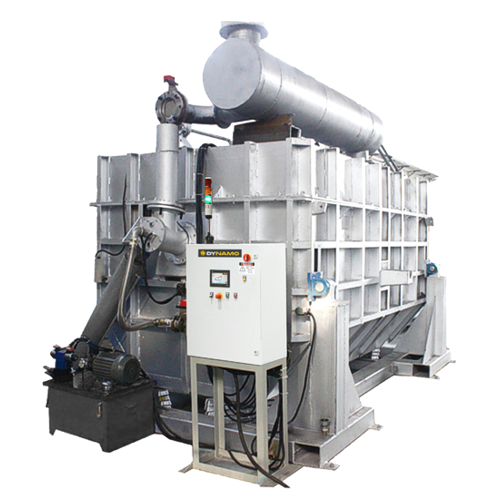
Start with the melting furnace family, then compare gas melting furnaces and electric melting furnaces. High-output aluminum demand may lead to the GM-H central tower furnace.

For controlled large batches, review the GM-J tilting reverberatory furnace. Use the metal melting technical guide, gas-versus-electric guide, and melting-rate guide before sizing.

Related solution paths are organized under applications by metal and applications by industry.

Metal Melting Furnace Platforms

Representative Dynamo platforms for central, large-batch, electric tilting, and flexible crucible melting.

Central Tower Melting Furnace

GM-H Series

High-output aluminum melting for central systems and steady demand.

Tilting Reverberatory Furnace

GM-J Series

Large-batch melting with controlled tilting and discharge.

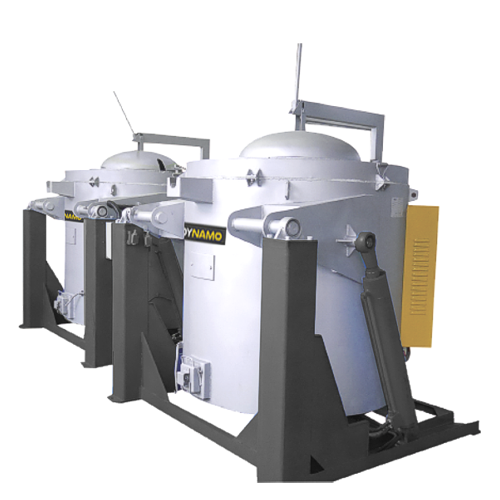
Electric Tilting Crucible Furnace

EM-C Series

Controlled electric batch melting and tilting for flexible production.

Gas Crucible Melting Furnace

GM-A Series

Flexible batch melting for aluminum foundry production.

Process Applications & Production Environments

Dynamo equipment and engineering resources can be evaluated for:

  • Primary and secondary ingot melting
  • Foundry returns and clean process scrap
  • High-pressure, low-pressure, and gravity casting
  • Central melt departments
  • Flexible jobbing-foundry batches
  • Extrusion and automotive returns
  • Copper and heavier-alloy crucible melting
  • Secondary metal production
  • Alloy campaign production
  • Melting before holding or casting

Final equipment selection requires confirmation of the actual material, process, rate, utilities, layout, controls, safety, and quality requirements.

Industrial Metal Melting Furnace FAQs

What information determines furnace type?

Metal, alloy, charge, contamination, melt demand, batch pattern, temperature, energy, discharge, quality, layout, and maintenance determine the fit.

How is melt rate calculated?

Use actual liquid-metal demand, charge and recovery cycle, peak load, downtime, holding reserve, shifts, and growth rather than bath capacity alone.

When is a crucible furnace appropriate?

Crucible furnaces suit flexible batches, smaller campaigns, controlled pouring, and alloy changes when their capacity and temperature duty match production.

When is a central melting system appropriate?

Central systems fit steady demand from multiple cells or lines when transfer, holding, buffer capacity, and redundancy are engineered together.

Can wet scrap or chips be charged?

Do not assume so. Moisture, oil, fines, coatings, and density may require sorting, washing, drying, or dedicated recovery equipment.

What should be sent to Dynamo?

Provide alloy, charge samples, hourly demand, shifts, temperatures, output route, utilities, emissions, layout, controls, maintenance, and growth.

RELATED TECHNICAL GUIDES