Die Casting Foundry Melting & Holding Applications

Engineer a stable molten-aluminum supply for HPDC, LPDC, permanent-mold, gravity, and structural casting cells.

Central Melt Supply, Cell-Side Holding, Transfer, and Return-Metal Systems

What Furnace System Does a Die Casting Foundry Need?

Direct answer: a die casting foundry normally needs coordinated melting, holding, transfer, and control—not simply a furnace with enough nominal capacity. A central aluminum melting furnace recovers solid charge and clean returns; holding furnaces near the cells stabilize temperature; transfer equipment limits interruption and heat loss; and reserve capacity protects the casting machines during charging or maintenance.

The correct die casting furnace system depends on alloy families, average and peak metal demand, shot profile, number of cells, return-metal ratio, transfer distance, temperature tolerance, utilities, emissions requirements, planned downtime, maintenance access, and future production growth.

Plan Your Die Casting Melt System

Send the operating data that determines melt supply and holding stability:

  • Alloys, ingot, gates, runners, biscuits, and returns
  • HPDC, LPDC, permanent-mold, or gravity-casting process
  • Average and peak hourly metal consumption
  • Number of casting cells and transfer distance
  • Target metal temperature and allowable variation
  • Shift schedule, planned downtime, utilities, and redundancy

Die Casting Furnace Planning: From Charge to Shot Sleeve

Each stage must support the same demand profile so the casting cells receive the right alloy, at the right temperature, without avoidable starvation or excess residence time.

01

Define Charge & Returns

Document ingot, clean returns, gates, runners, biscuits, contamination, moisture, alloy families, charge size, and the return-metal ratio.

02

Model Melt Demand

Calculate average and peak consumption, shift curves, recovery time, interruptions, growth, and reserve metal required for the connected cells.

03

Size Cell-Side Holding

Match holding capacity to transfer rhythm, shot demand, replenishment frequency, temperature loss, residence time, and alloy changes.

04

Protect Melt Quality

Control oxidation, dross, turbulence, temperature, cleaning practice, alloy segregation, and exposure during transfer and replenishment.

05

Plan Transfer & Redundancy

Compare ladles, launders, pouring systems, travel distance, backup capacity, maintenance windows, and recovery after an interruption.

06

Integrate Controls & Access

Specify PLC/HMI functions, alarms, metal-level control, data logging, interlocks, charging access, traffic routes, and service clearance.

How to Match Furnace Type to Die Casting Production

Central systems fit steady multi-cell demand. Batch and tilting furnaces support flexible schedules, alloy changes, or controlled discharge. Cell-side holding furnaces isolate casting stability from charging and melt-recovery cycles. The engineering review should model the complete metal balance across a real shift, including startup, peak demand, maintenance, and unplanned interruptions.

Foundry requirementTypical equipment roleCritical sizing inputs
Several high-output die casting cellsCentral melting furnace plus local holding furnacesPeak demand, transfer distance, buffer capacity, redundancy
Variable returns or clean production scrapDry-hearth or reverberatory meltingCharge geometry, contamination, recovery, dross, loading method
Large controlled batchesTilting reverberatory meltingBatch size, alloy changes, discharge method, cycle time
Stable temperature at each cellGas or electric holding furnaceConsumption rate, replenishment, temperature tolerance, local emissions
Frequent alloy changes or smaller lotsCrucible or tilting batch furnaceAlloy schedule, cleanout, batch size, pouring control

Connected Equipment & Engineering Resources

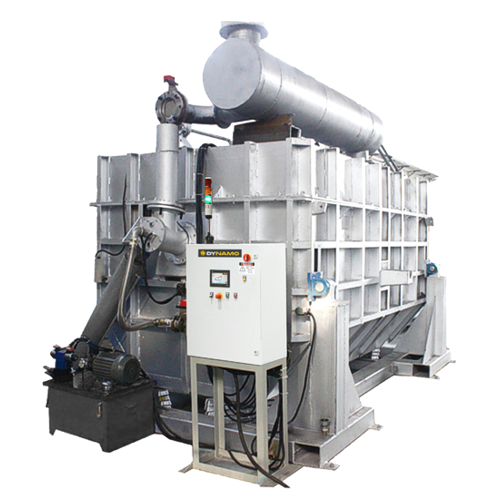
Start with the central tower melting furnace when one central source must feed multiple cells, then compare the available aluminum holding furnace systems for local temperature control. The broader gas melting furnace lineup helps frame alternative melting arrangements.

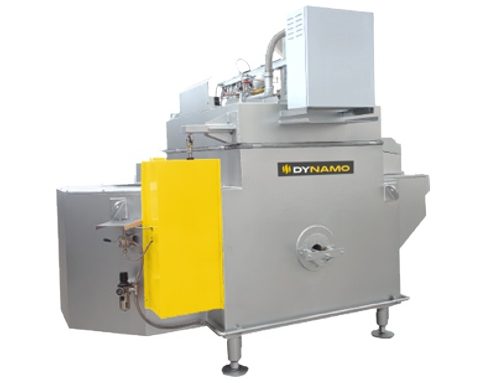
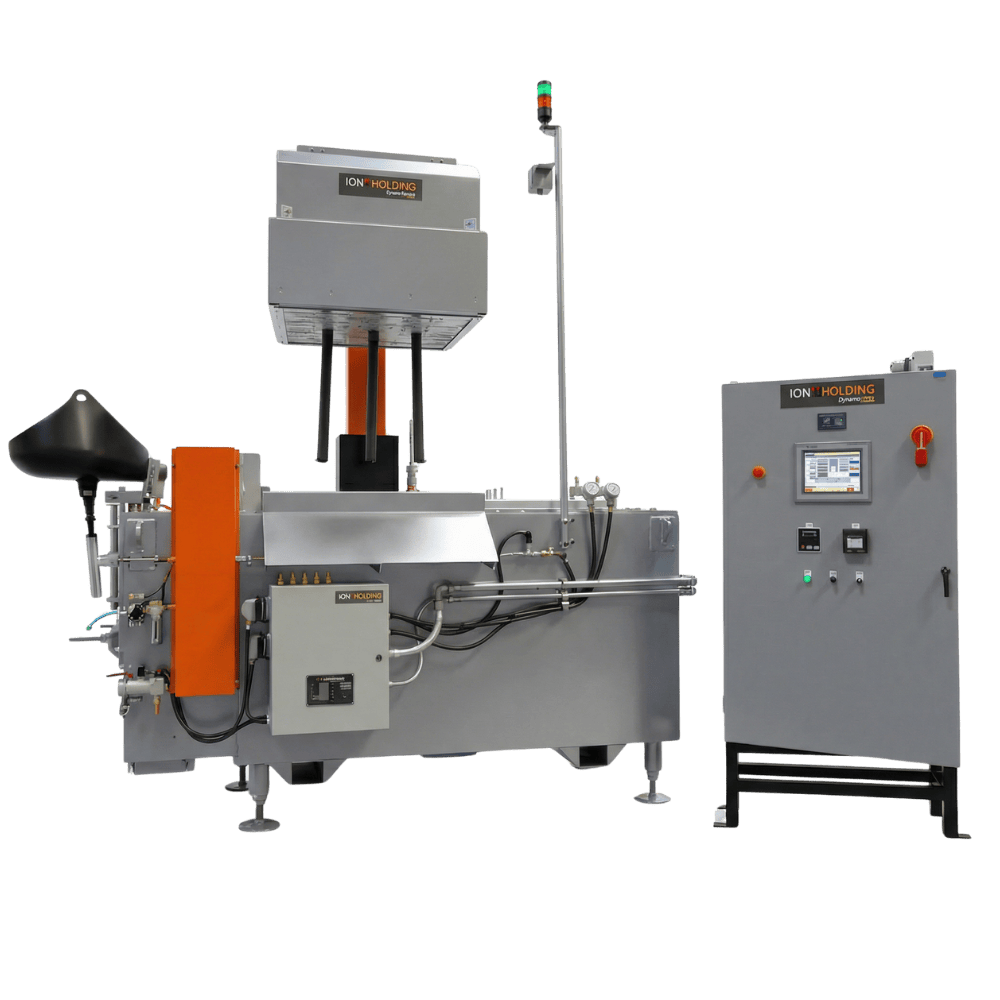
For large controlled batches, review the GM-J tilting reverberatory furnace. Near the casting machines, compare the GH-A gas holding furnace with the EH-A electric holding furnace based on utilities, emissions, recovery, and control requirements.

Use the die casting cell furnace-planning guide and aluminum furnace selection guide to document demand before equipment selection. You can also navigate Dynamo solutions through applications by metal or applications by process.

Recommended Furnaces for Die Casting Foundries

These Dynamo product families cover central aluminum melting, controlled batch discharge, and gas or electric holding near the casting cells.

Central Tower Melting Furnace

GM-H Series

High-output aluminum melting for central systems serving multiple production cells.

Gas Holding Furnace

GH-A Series

Stable molten-aluminum temperature and buffer capacity near production equipment.

Tilting Reverberatory Furnace

GM-J Series

Large-batch aluminum melting with controlled tilting and metal discharge.

Electric Holding Furnace

EH-A Series

Precise electric holding for stable temperature, clean operation, and local metal supply.

Die Casting Processes and Component Programs

Dynamo equipment can be evaluated for production associated with:

  • High-pressure die casting (HPDC)
  • Low-pressure die casting (LPDC)
  • Structural aluminum casting
  • Powertrain and transmission housings
  • Battery trays and mobility structures
  • Permanent-mold and gravity casting
  • Aluminum wheels and chassis parts
  • Appliance and industrial housings
  • Multi-cell central melt departments
  • Foundries with return-metal recovery programs

Component type alone does not select the furnace. Alloy, feedstock, actual demand, casting method, metal-quality target, utilities, and layout remain the controlling inputs.

Die Casting Foundry Melting & Holding FAQs

What furnace arrangement is common for a multi-cell die casting foundry?

A central melting furnace feeding one or more cell-side holding furnaces is common where several casting machines require a continuous molten-aluminum supply. Smaller or flexible operations may use individual crucible or tilting furnaces.

How should die casting melting capacity be sized?

Use actual average and peak hourly demand, return-metal ratio, charging and recovery time, shift schedule, planned downtime, holding reserve, startup demand, and expected growth. Nominal bath capacity alone is not enough.

Why separate melting and holding duties?

The melting furnace handles solid charging and recovery while the holding furnace buffers the cell and stabilizes temperature. Separating the duties can reduce production disturbance during charging and improve cell-side control.

Should a foundry choose gas or electric holding?

Compare plant utilities, local emissions, temperature control, recovery requirement, installation constraints, energy cost, maintenance capability, and production duty. Neither energy source is universally better.

How much reserve molten metal is required?

Reserve depends on peak cell demand, transfer interval, melt-furnace recovery, planned interruptions, allowable residence time, and the consequence of starving a cell. It should be calculated from the production schedule.

What project data should be supplied to Dynamo?

Provide alloy specifications, feedstock, return ratio, consumption by cell, temperatures, transfer method, utilities, floor plan, shift pattern, controls, maintenance access, emissions constraints, and redundancy goals.

RELATED TECHNICAL GUIDES