

Blog
Heat Treatment Furnaces & Processes: A Complete Technical Guide for Modern Manufacturing

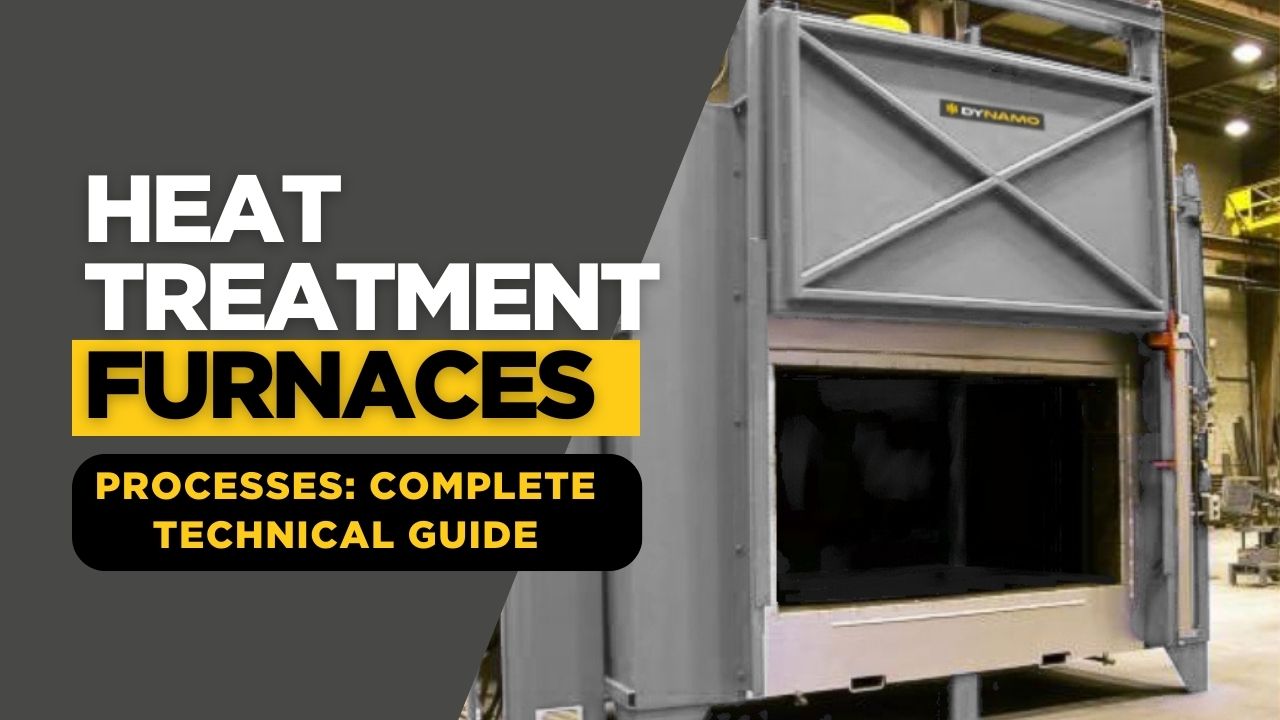
Heat treatment is one of the most critical steps in metal manufacturing, shaping the mechanical properties, microstructure, and long‑term performance of steels and alloys. Whether a facility is annealing steel, tempering steel, performing carburizing, running nitriding, or conducting stress relieving, the choice of furnace and process parameters determines the final quality of the part. This guide explores the major heat treatment processes used across industry and the furnace technologies that support them, helping engineers and buyers understand how to select the right system for their operation.
👉 Dynamo Furnaces is one of the most trustworthy and credible providers in melting furnace industries and related fields. Make sure that you check our products and contact our specialits and sales engineers for consuting, quote, and any inquiry
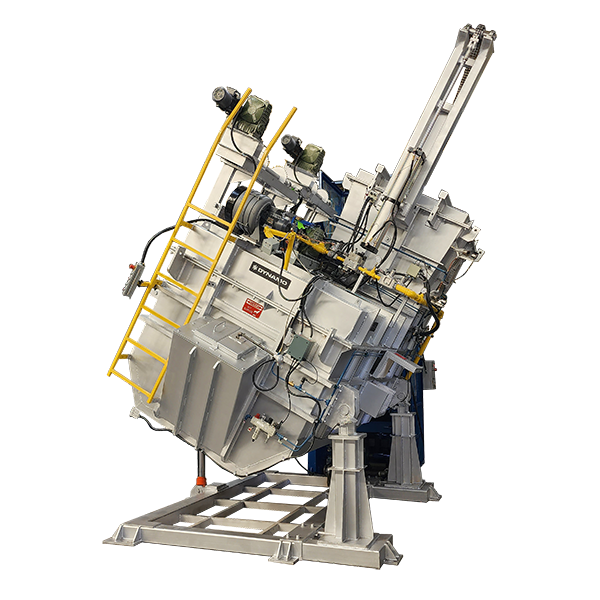
Understanding Heat Treating Furnaces
A heat treating furnace is engineered to deliver precise temperature control, atmosphere management, and repeatable thermal cycles. Unlike melting furnaces, which operate at extreme temperatures to liquefy metal, heat treatment furnaces operate below the melting point to modify the internal structure of the material. These systems may be electric, gas‑fired, or atmosphere‑controlled, depending on the process requirements.
Modern heat treatment relies on furnaces such as box furnaces, pit furnaces, vacuum furnaces, and atmosphere‑controlled furnaces, each designed to support specific metallurgical outcomes. The right furnace ensures uniform heating, controlled cooling, and consistent part quality across every batch.
Annealing Steel
Annealing is one of the oldest and most widely used heat treatment processes. When annealing steel, the material is heated to a temperature where its internal structure becomes more ductile and uniform. The steel is then cooled slowly, often inside the furnace, to reduce hardness, relieve internal stresses, and improve machinability.
Annealing is essential for components that will undergo forming, machining, or cold working. It is commonly performed in box furnaces, pit furnaces, and continuous furnaces, depending on part size and production volume. Controlled atmospheres are often used to prevent oxidation and scaling, especially for high‑value components.
Tempering Steel
Tempering is performed after hardening to reduce brittleness and improve toughness. When tempering steel, the material is reheated to a lower temperature—typically between 150°C and 650°C—depending on the desired mechanical properties. This controlled reheating allows the steel to retain strength while gaining ductility and impact resistance.
Tempering is widely used in the production of tools, gears, shafts, and structural components. A heat treating furnace with excellent temperature uniformity is essential, as even small variations can affect hardness and performance. Many facilities use high temperature ovens or box furnaces for tempering operations.
Carburizing
Carburizing is a diffusion‑based heat treatment process that introduces carbon into the surface of low‑carbon steel. This creates a hard, wear‑resistant outer layer while maintaining a tough, ductile core. Carburizing is essential for gears, bearings, shafts, and other components that require high surface hardness.
Carburizing can be performed in atmosphere furnaces, integral quench furnaces, or vacuum furnaces, depending on the required case depth and surface quality. Gas carburizing remains the most common method, but vacuum carburizing is increasingly used for high‑precision applications where clean surfaces and tight tolerances are required.
Nitriding
Nitriding is a low‑temperature heat treatment process that diffuses nitrogen into the surface of steel, creating a hard, wear‑resistant layer without requiring quenching. Because most nitriding processes occur below the austenitizing temperature and do not require quenching, distortion is typically much lower than in conventional hardening processes —making it ideal for precision components.
A nitriding furnace must maintain extremely stable temperatures and controlled atmospheres, often using ammonia or plasma‑based systems. Nitrided components are used in automotive, aerospace, and tooling applications where fatigue resistance and surface hardness are critical.
Stress Relieving
Stress relieving is used to remove residual stresses created during welding, machining, casting, or forming. These stresses can cause distortion, cracking, or premature failure if not properly treated. During stress relieving, the material is heated to a temperature appropriate for the alloy—commonly between 500°C and 650°C for carbon steels, with lower or higher ranges depending on material grade — and held long enough to allow internal stresses to relax.
This process is commonly performed in box furnaces, pit furnaces, and continuous furnaces, depending on part geometry. Stress relieving is essential for large weldments, pressure vessels, structural components, and precision machined parts.
Vacuum Heat Treatment
Vacuum furnaces play a major role in modern heat treatment, especially for high‑value alloys and components requiring clean, scale‑free surfaces. Vacuum systems significantly reduce oxygen and contaminants, preventing oxidation and decarburization. They are widely used for tool steels, aerospace alloys, medical implants, and components requiring tight metallurgical control.
Vacuum furnaces support processes such as hardening, tempering, annealing, brazing, and sintering. Their ability to deliver uniform heating and controlled cooling makes them indispensable in industries where quality cannot be compromised.

Atmosphere‑Controlled Furnaces
Many heat treatment processes require a controlled atmosphere to prevent oxidation, maintain surface chemistry, or support diffusion. Atmosphere‑controlled furnaces use nitrogen, hydrogen, endothermic gas, or other mixtures to create the ideal environment for carburizing, carbonitriding, annealing, and bright heat treating.
These furnaces are essential for producing clean, scale‑free surfaces and consistent case depths. They are widely used in automotive, bearing, and fastener manufacturing.
Continuous Heat Treatment Systems
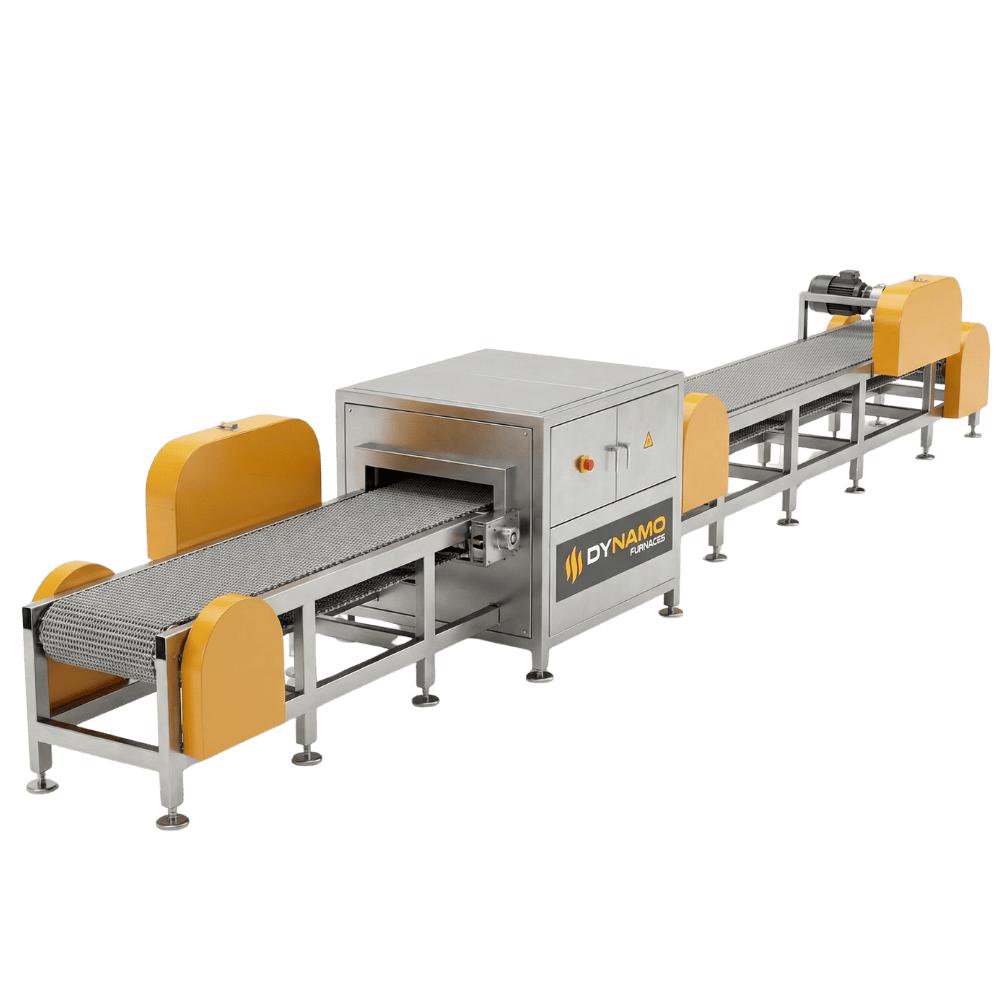
For high‑volume production, continuous furnaces and conveyor furnaces provide unmatched throughput and consistency. Parts move through multiple heating zones on a belt, roller hearth, or pusher system, ensuring precise thermal profiles and repeatable results.
Continuous systems are ideal for fasteners, small automotive components, powder metal parts, and other products requiring consistent heat treatment at scale. Their efficiency and automation capabilities make them a cornerstone of modern manufacturing.
Choosing the Right Heat Treating Furnace
Selecting the right furnace depends on several factors:
The specific heat treatment process (annealing, tempering, carburizing, nitriding, stress relieving)
Part size, geometry, and material
Required surface quality and metallurgical properties
Production volume (batch vs continuous)
Atmosphere requirements
Energy source (gas, electric, induction)
A facility performing carburizing may require an integral quench furnace, while a shop focused on annealing steel may rely on a box furnace. High‑precision aerospace components may require vacuum heat treatment, while automotive fasteners benefit from continuous furnace systems.
Conclusion
Heat treatment is a complex, highly engineered process that demands the right furnace technology for each application. Whether you are tempering steel, annealing steel, performing carburizing, running nitriding, or conducting stress relieving, the furnace you choose determines the consistency, performance, and reliability of your final product. By understanding the strengths of vacuum furnaces, atmosphere furnaces, box furnaces, pit furnaces, and continuous systems, manufacturers can make informed decisions that support long‑term operational success.
For related equipment-planning guidance, compare Dynamo’s industrial heat treatment furnace applications, aerospace and precision casting furnace applications, and melting and holding applications by industry.
References
- Davis, J. R. – ASM Specialty Handbook: Heat‑Resistant Materials Essential for superalloys, high‑temperature materials, and furnace‑exposed components.
- NFPA 86 – Standard for Ovens and Furnaces
The primary safety standard governing industrial furnace design and operation. - ISO 13577 – Industrial Furnaces and Associated Processing Equipment
International standard for furnace safety, combustion systems, and protective measures. - AIST (Association for Iron & Steel Technology) – Steelmaking and Furnace Technology Papers
Technical papers on melting, reheating, and thermal processing. - Industrial Heating Magazine – Technical Articles & Furnace Engineering Guides
Industry‑trusted source for furnace design, heat treatment, and thermal processing. - SAE AMS 2750 – Pyrometry Standard
Governs temperature control, thermocouples, calibration, and uniformity surveys. - AIAG CQI‑9 – Heat Treat System Assessment
Automotive industry standard for furnace control, uniformity, and process validation. - ASTM Standards for Heat Treatment (ASTM A255, A1033, E220, etc.)
Covers hardness testing, temperature measurement, and metallurgical evaluation. - U.S. Department of Energy (DOE) – Industrial Energy Efficiency Reports
Authoritative research on furnace efficiency, heat recovery, and energy optimization. - EPA – Industrial Furnace Emissions Guidelines
Regulatory framework for emissions, combustion efficiency, and environmental compliance. - IPCC – Industrial Process Emissions & Carbon Footprint Data
Global reference for carbon‑intensity metrics and environmental impact. - ISA (International Society of Automation) – Standards for PLCs, SCADA & Process Control Covers automation architecture, safety interlocks, and furnace control logic.
- Siemens / Rockwell Automation – Furnace Control System White Papers Industry‑leading documentation on PLC furnace control, SCADA integration, and Industry 4.0 connectivity.
Let Us Make Your Next Melting Furnace
For virtually every production scenario, we have a dedicated type of high capacity furnace. Be it a crucible furnace or a large tower melting furnace. Dynamo Furnaces provides top foundry solutions across United States, Canada, Mexico and South America.
To experience a smooth journey from filling the information request form to having your order delivered at your factory, visit our products page.
For the complete aluminum treatment sequence, review Dynamo’s aluminum solution heat treatment, quenching and aging guide, including load uniformity, transfer time, quench control, distortion and final-property planning.