

Blog
Industrial Ovens vs Furnaces: Understanding the Differences, Applications & Selection Criteria

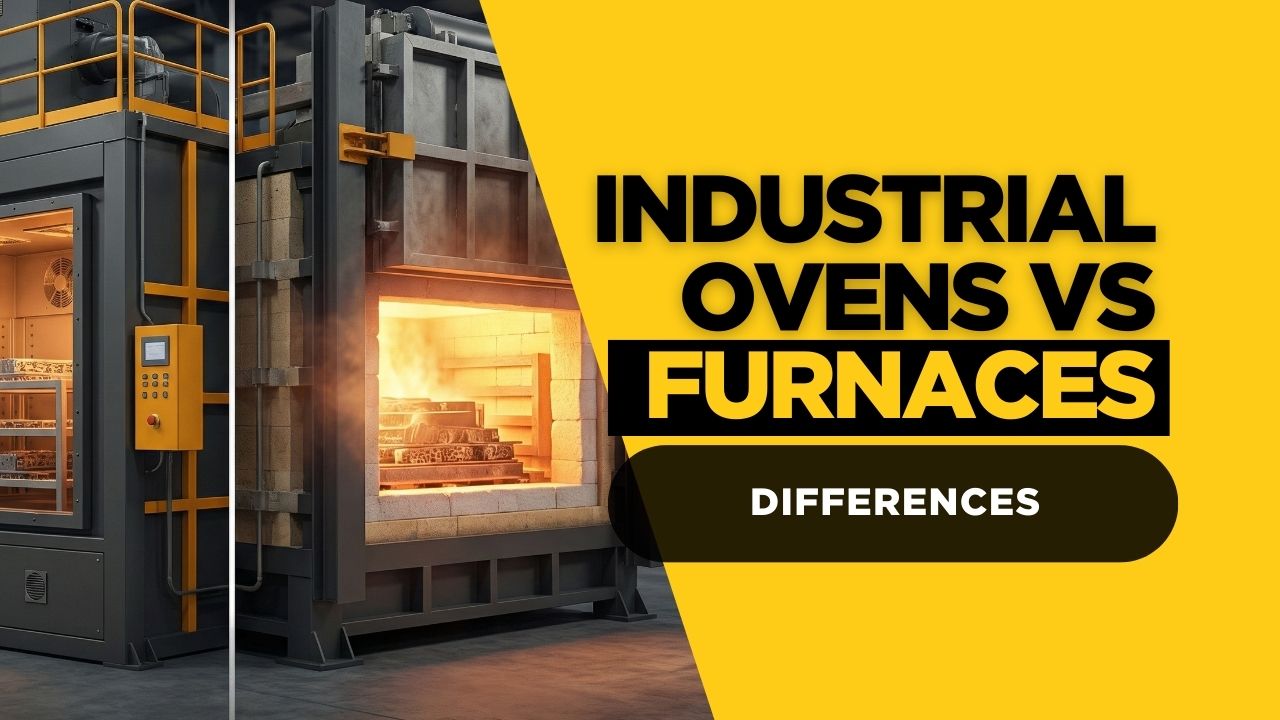
Industrial heating equipment is often grouped under the same umbrella, but industrial ovens and industrial furnaces serve very different purposes. While both systems heat materials, they operate at different temperature ranges, support different metallurgical outcomes, and are engineered for distinct industrial workflows. For manufacturers working with metals, composites, ceramics, or heat‑treated components, understanding the difference between an industrial oven, a heat treat oven, a burn‑off oven, and a high temperature oven is essential for selecting the right equipment.
This guide breaks down the functional differences between ovens and furnaces, explains where each system excels, and helps buyers determine which technology best fits their production environment.
👉 Dynamo Furnaces is one of the most trustworthy and credible providers in melting furnace industries and related fields. Make sure that you check our products and contact our specialits and sales engineers for consuting, quote, and any inquiry

What Defines an Industrial Oven?
A heat treat oven is a specialized type of industrial oven designed for processes that require elevated temperatures but do not reach the extreme levels associated with metal melting or high‑temperature transformation. These ovens are commonly used for tempering, aging, stress relieving, and low‑temperature annealing.
Heat treat ovens are engineered for:
Tight temperature uniformity
Controlled ramp‑up and cool‑down rates
Repeatable thermal cycles
Compatibility with metal fixtures and baskets
They are widely used in toolmaking, aerospace component finishing, and precision machining environments where consistent thermal conditioning is essential.
What Defines an Industrial Furnace?
An industrial furnace is engineered for high‑temperature processes that alter the physical or metallurgical properties of a material. Industrial furnaces are engineered for high-temperature and metallurgical processes, which may range from several hundred degrees Celsius to well above 1000°C depending on the application. They are built with heavy‑duty refractory linings, high‑capacity burners or heating elements, and advanced atmosphere control systems.
Industrial furnaces support processes such as:
Hardening and quenching
Annealing steel
Tempering steel
Carburizing and carbonitriding
Nitriding
Sintering
Metal melting
Unlike ovens, furnaces are designed to withstand extreme thermal loads and maintain structural integrity at elevated temperatures. They are essential in foundries, heat treatment facilities, forging operations, and metal recycling plants.
Burn‑Off Ovens: A Specialized Category
A burn‑off oven is a unique type of industrial oven used to remove organic materials such as paint, oils, resins, and polymers from metal parts, tooling, or fixtures. These ovens operate at controlled temperatures to prevent damage to the underlying metal while safely oxidizing contaminants.
Burn‑off ovens are widely used in:
Automotive remanufacturing
Coating and finishing shops
Foundries and casting facilities
Mold and die cleaning operations
Their ability to clean parts without abrasive blasting makes them a valuable tool for extending the life of tooling and fixtures.
High Temperature Ovens vs Furnaces
A high temperature oven operates at the upper end of the oven temperature spectrum, often reaching 650–1000°C. While these systems overlap with low‑temperature furnaces, they are still classified as ovens because they are not designed for metallurgical transformation or melting.
High temperature ovens are used for:
Heat treating aluminum
Aging and precipitation hardening
Ceramic firing
Glass processing
Thermal testing
In contrast, furnaces are required when the process involves phase transformation, diffusion, or melting.
Key Differences Between Industrial Ovens and Furnaces
Although ovens and furnaces may appear similar externally, their engineering and intended use cases differ significantly.
Temperature Range
Ovens operate at moderate temperatures, while furnaces handle extreme heat suitable for metallurgical processes.
Construction
Furnaces require heavy refractory linings, robust insulation, and high‑capacity heating systems. Ovens use lighter insulation and airflow‑based heating.
Atmosphere Control
Furnaces often incorporate nitrogen, hydrogen, vacuum, or endothermic atmospheres. Ovens typically use ambient or recirculated air.
Process Impact
Industrial ovens are generally used for processes that do not involve major metallurgical phase transformations in ferrous alloys. Furnaces change the material’s microstructure, hardness, and mechanical properties.
Applications
Ovens support drying, curing, and baking. Furnaces support heat treatment, sintering, and melting.
When to Choose an Industrial Oven
An industrial oven is the right choice when:
The process requires temperatures below metallurgical transformation
You are curing coatings, adhesives, or composites
You need uniform airflow and controlled heating
You are performing low‑temperature heat treatment
You require a cost‑effective thermal processing solution
Ovens are ideal for manufacturers who need consistent, moderate‑temperature heating without the complexity of furnace systems.
When to Choose an Industrial Furnace
A furnace is the correct choice when:
The process requires temperatures above 1000°C
You are performing annealing, tempering, carburizing, or nitriding
You need atmosphere control
You are melting aluminum, copper, brass, or zinc
Metallurgical transformation is required
Furnaces are essential for foundries, heat treatment shops, forging operations, and metal recycling facilities.
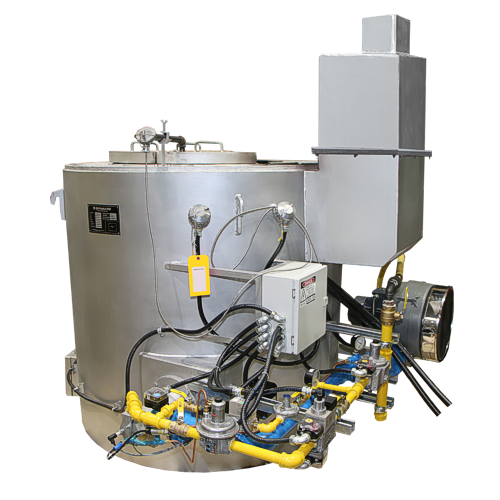
👉 Dynamo Furnaces presents a wide variety of crucible furnaces
Conclusion
Industrial ovens and furnaces serve different roles in manufacturing, and understanding their distinctions is essential for selecting the right equipment. Ovens excel in drying, curing, and moderate‑temperature processing, while furnaces are engineered for high‑temperature heat treatment and metal transformation. By understanding the capabilities of industrial ovens, heat treat ovens, burn‑off ovens, and high temperature ovens, manufacturers can make informed decisions that improve product quality, reduce energy consumption, and support long‑term operational efficiency.
For related equipment-planning guidance, compare Dynamo’s melting and holding applications by process, industrial heat treatment furnace applications, and aerospace and precision casting furnace applications.
References
- ASM International – Metals Handbook Series The definitive reference for metallurgy, alloys, heat treatment, and material behavior.
- Callister, W. D. – Materials Science and Engineering: An Introduction Foundational text for understanding metal structure, thermal behavior, and phase transformations.
- Davis, J. R. – ASM Specialty Handbook: Heat‑Resistant Materials Essential for superalloys, high‑temperature materials, and furnace‑exposed components.
- NFPA 86 – Standard for Ovens and Furnaces
The primary safety standard governing industrial furnace design and operation. - ISO 13577 – Industrial Furnaces and Associated Processing Equipment
International standard for furnace safety, combustion systems, and protective measures. - AIST (Association for Iron & Steel Technology) – Steelmaking and Furnace Technology Papers
Technical papers on melting, reheating, and thermal processing. - Industrial Heating Magazine – Technical Articles & Furnace Engineering Guides
Industry‑trusted source for furnace design, heat treatment, and thermal processing.
Let Us Make Your Next Melting Furnace

For virtually every production scenario, we have a dedicated type of high capacity furnace. Be it a crucible furnace or a large tower melting furnace. Dynamo Furnaces provides top foundry solutions across United States, Canada, Mexico and South America.
To experience a smooth journey from filling the information request form to having your order delivered at your factory, visit our products page.
For the complete aluminum treatment sequence, review Dynamo’s aluminum solution heat treatment, quenching and aging guide, including load uniformity, transfer time, quench control, distortion and final-property planning.