

Blog
Continuous Conveyor Furnace Systems: High‑Throughput Thermal Processing for Modern Manufacturing

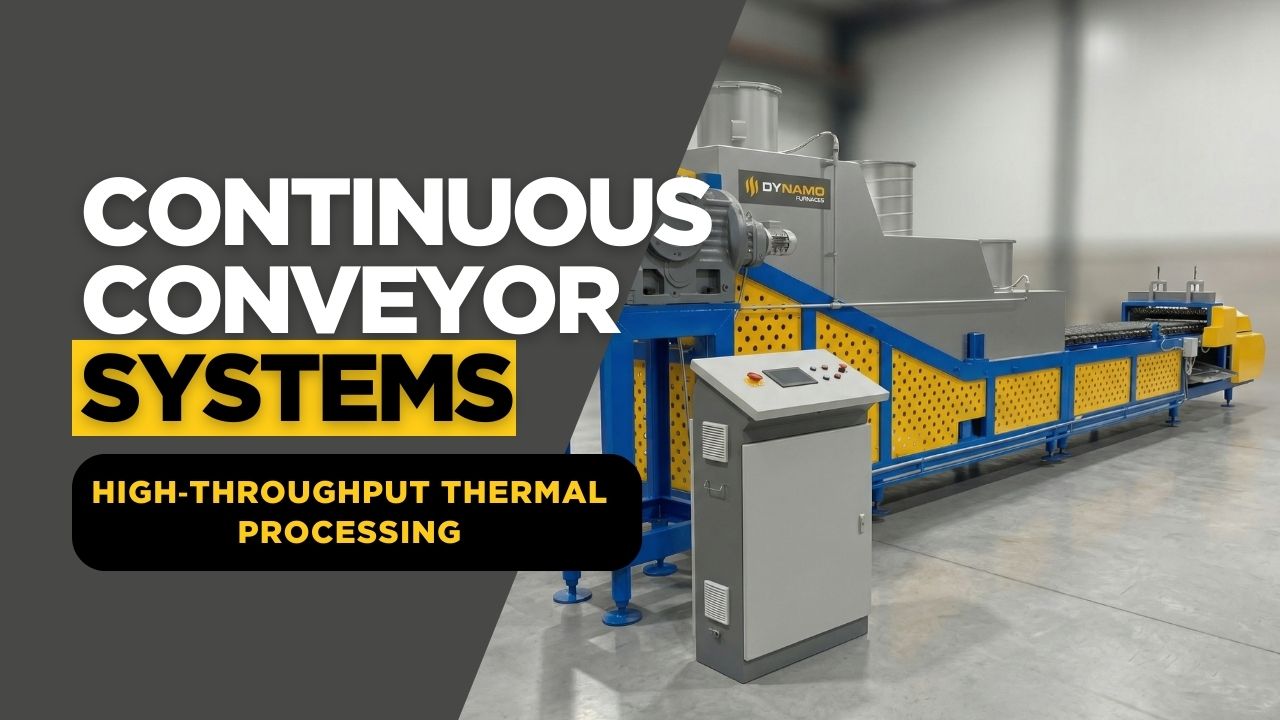
Continuous thermal processing has become the backbone of high‑volume manufacturing. As industries demand faster production, tighter metallurgical tolerances, and fully automated workflows, continuous furnaces and conveyor furnace systems have emerged as essential equipment. Unlike batch furnaces, which require manual loading and discrete cycles, continuous systems move parts through controlled heating zones with remarkable consistency. This approach reduces labor, improves repeatability, and supports the uninterrupted flow required in modern production environments.
This guide explores the engineering behind continuous furnaces, the advantages of mesh belt furnaces, the precision of walking beam furnaces, and the role of continuous processing lines in today’s industrial landscape.
👉 Dynamo Furnaces is one of the most trustworthy and credible providers in melting furnace industries and related fields. Make sure that you check our products and contact our specialits and sales engineers for consuting, quote, and any inquiry

The Role of Continuous Furnaces in Industrial Production
A continuous furnace is designed to maintain a steady, uninterrupted thermal cycle. Parts enter one end of the furnace, travel through multiple heating zones, and exit fully processed. This eliminates downtime between batches and ensures that every component experiences the same temperature profile.
Continuous furnaces are widely used in automotive, aerospace, fastener manufacturing, powder metallurgy, and electronics. Their ability to deliver consistent results makes them ideal for processes such as sintering, brazing, annealing, tempering, and stress relieving. As production volumes increase, continuous systems become essential for maintaining throughput without sacrificing quality.
Conveyor Furnace Systems: Automation and Uniformity
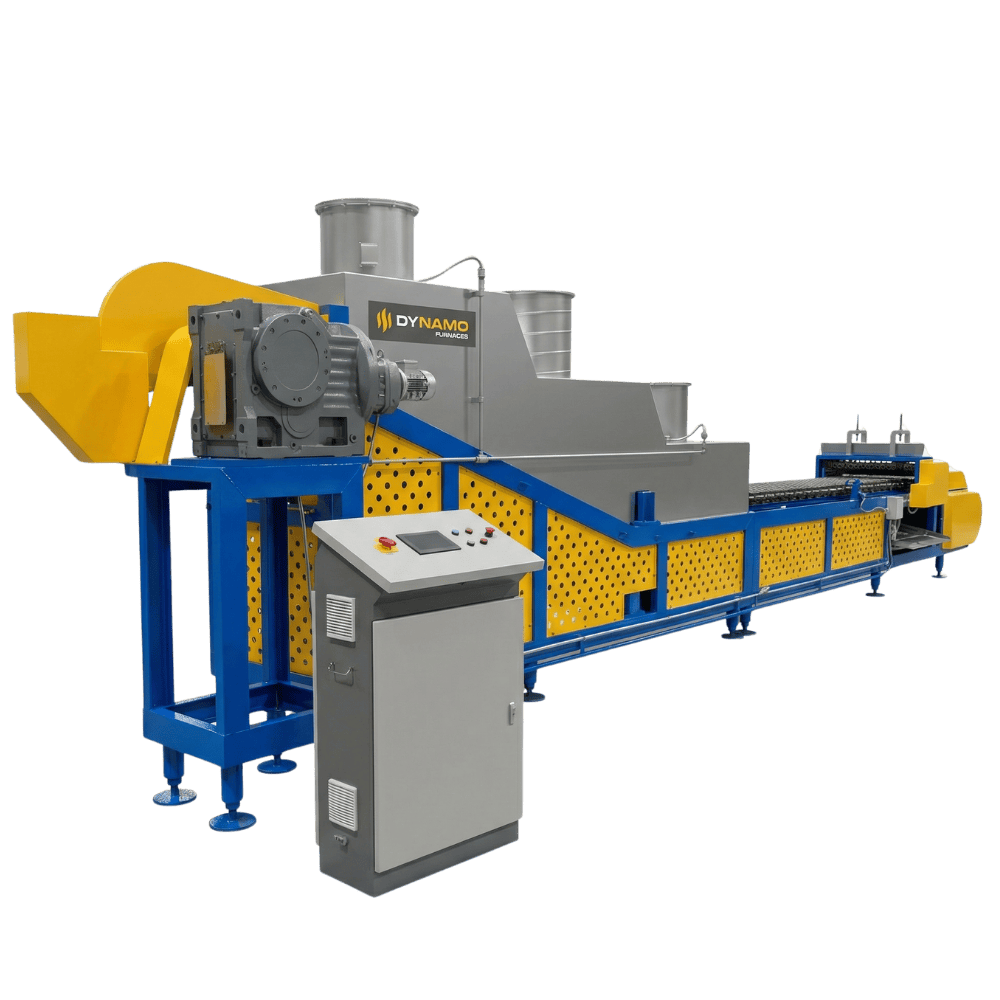
A conveyor furnace uses a moving belt or chain to transport parts through the heating chamber. This design supports precise temperature control and repeatable processing, making conveyor furnaces ideal for small components, stamped parts, fasteners, and powdered metal products.
The conveyor system is designed to provide highly consistent heating and cooling conditions when properly loaded and maintained. This uniformity is especially important in industries where dimensional stability, hardness, and microstructure must remain consistent across thousands of parts per hour.
Conveyor furnaces also integrate easily with upstream and downstream automation, including washers, quench tanks, robotic loaders, and inspection systems. This makes them a cornerstone of modern continuous manufacturing
Mesh Belt Furnaces: Precision for Small Components
A mesh belt furnace is one of the most widely used conveyor furnace designs. The woven steel belt allows heat to circulate freely around the parts, ensuring excellent temperature uniformity. Mesh belt furnaces are ideal for small, lightweight components that require consistent heating, such as fasteners, bearings, sintered parts, and stamped metal pieces.
Because the belt moves continuously, production never stops. This makes mesh belt furnaces highly efficient for high‑volume operations. Their ability to maintain tight temperature control across long production runs ensures consistent metallurgical results and reduces scrap rates.
Walking Beam Furnaces: Gentle Handling for Precision Parts
A walking beam furnace uses a mechanical lifting and advancing system to move parts through the heating chamber. Instead of sliding across a belt, components are lifted and carried forward in small increments. This eliminates friction, reduces surface damage, and ensures precise positioning.
Walking beam furnaces are ideal for heavier components, delicate parts, or products that require exact spacing during heat treatment. Their controlled movement and stable support make them popular in forging, bar heating, and precision heat treatment applications.
Because the parts are not dragged across a belt surface, walking beam furnaces can reduce mechanical surface wear and minimize marking in certain applications.
Continuous Processing Lines: Integrated Thermal Workflows
Modern manufacturing increasingly relies on continuous processing lines — fully integrated systems that combine heating, cooling, quenching, washing, and material handling into a single automated workflow. These lines may include:
Pre‑wash or degreasing stations
Controlled‑atmosphere heating zones
Multi‑zone temperature control
Quench tanks or cooling tunnels
Tempering or aging ovens
Inspection and packaging modules
By linking each stage of production, continuous processing lines eliminate bottlenecks and ensure that every part moves through the system with minimal human intervention. This improves throughput, reduces labor costs, and enhances product consistency.
Advantages of Continuous & Conveyor Furnace Systems
Continuous furnaces offer several key advantages over batch systems. Their uninterrupted operation reduces downtime and increases throughput. Because parts move through controlled heating zones, temperature uniformity is significantly improved. Automation reduces labor requirements and minimizes human error. Continuous systems also integrate easily with robotics, conveyors, and digital monitoring tools, making them ideal for Industry 4.0 environments.
Energy efficiency is another major benefit. Continuous furnaces maintain stable temperatures, reducing the thermal cycling that consumes excess fuel in batch systems. Over time, this leads to lower operating costs and improved sustainability.
Applications Across Industry
Continuous and conveyor furnace systems are used in a wide range of industries:
Automotive: fasteners, gears, bearings, and sintered components
Aerospace: precision heat treatment and controlled‑atmosphere processing
Electronics: brazing and soldering operations
Powder Metallurgy: sintering and densification
General Manufacturing: annealing, tempering, and stress relieving
Each application benefits from the consistency, speed, and automation that continuous systems provide.
Choosing the Right Continuous Furnace
Selecting the right system depends on part size, material, required temperature profile, and production volume. A mesh belt furnace may be ideal for small components, while a walking beam furnace is better suited for heavier or more delicate parts. For high‑volume operations requiring multiple thermal steps, a fully integrated continuous processing line may be the best solution.
Manufacturers should consider:
Temperature uniformity
Atmosphere requirements
Belt or beam design
Throughput capacity
Integration with automation
Maintenance accessibility
A well‑designed continuous system aligns thermal performance with production goals, ensuring long‑term reliability and efficiency.
Conclusion
Continuous and conveyor furnace systems are essential for modern high‑volume manufacturing. Whether using a mesh belt furnace, a walking beam furnace, or a fully integrated continuous processing line, manufacturers gain the consistency, efficiency, and automation required to stay competitive. By selecting the right system and integrating it into a streamlined workflow, facilities can improve product quality, reduce energy consumption, and achieve long‑term operational success.
For related equipment-planning guidance, review Dynamo’s industrial heat treatment furnace applications.
References
- ASM International – Metals Handbook Series The definitive reference for metallurgy, alloys, heat treatment, and material behavior.
- Callister, W. D. – Materials Science and Engineering: An Introduction Foundational text for understanding metal structure, thermal behavior, and phase transformations.
- Davis, J. R. – ASM Specialty Handbook: Heat‑Resistant Materials Essential for superalloys, high‑temperature materials, and furnace‑exposed components.
Let Us Make Your Next Melting Furnace

For virtually every production scenario, we have a dedicated type of high capacity furnace. Be it a crucible furnace or a large tower melting furnace. Dynamo Furnaces provides top foundry solutions across United States, Canada, Mexico and South America.
To experience a smooth journey from filling the information request form to having your order delivered at your factory, visit our products page.