

Blog
Next Story of Accomplishment: Commissioning & Operational Handover of Ingot Casting Machine

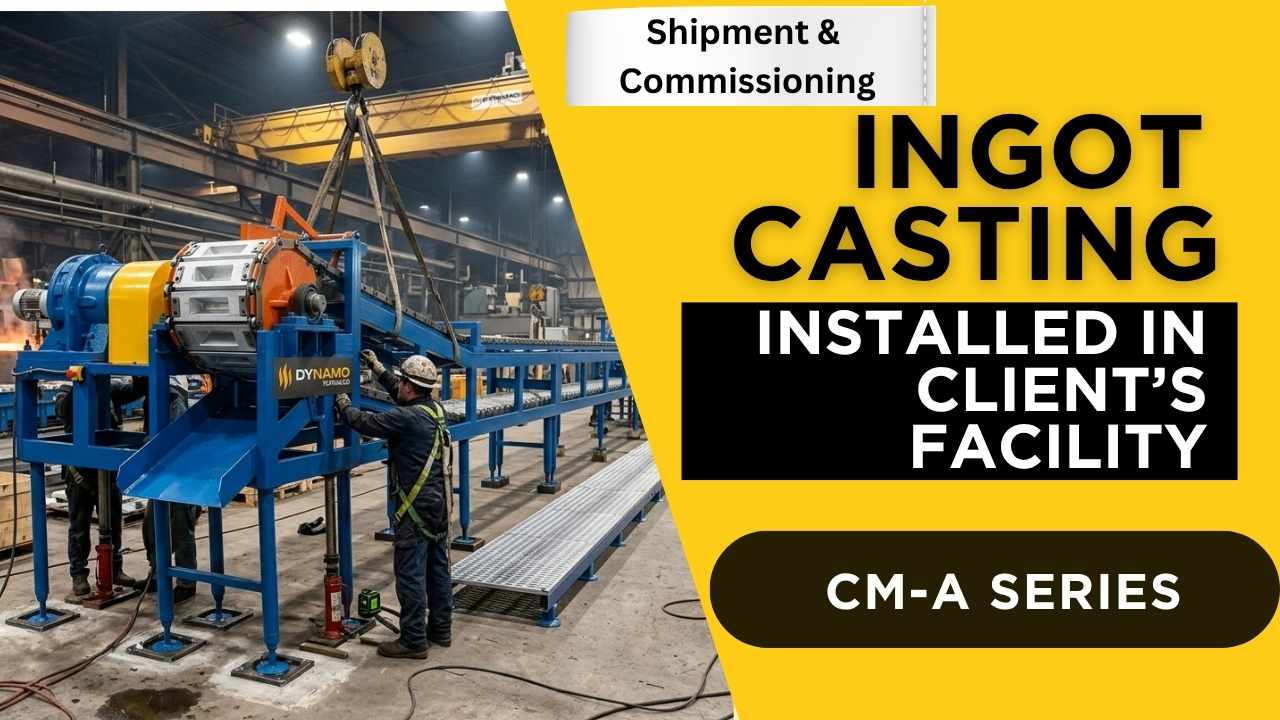
Before the CM‑A Series Ingot Casting Machine ever leaves our facility, its journey has already passed through months of structured engineering work. In Phase One, the project began with order negotiations, technical consultations, workflow analysis, and the complete mechanical and automation design of the ingot casting line. Every detail—from mold‑chain configuration to pouring system geometry—was engineered to match the customer’s melting capacity, alloy portfolio, and ingot weight requirements.
Then, the machine moved through fabrication and assembly, where the mold chain, drive system, pouring basin, and cooling modules were built according to the validated design. Electrical panels were wired, PLC logic was programmed, and the entire structure was aligned and prepared for dispatch. Although this machine does not require a full in‑house testing cycle, every subsystem was inspected, verified, and prepared for final commissioning at the customer’s site.
With engineering complete and assembly finalized, the project now enters its final and most visible stage: shipment, installation, commissioning, and operator training.
Introduction to the CM‑A Series Ingot Casting Machine
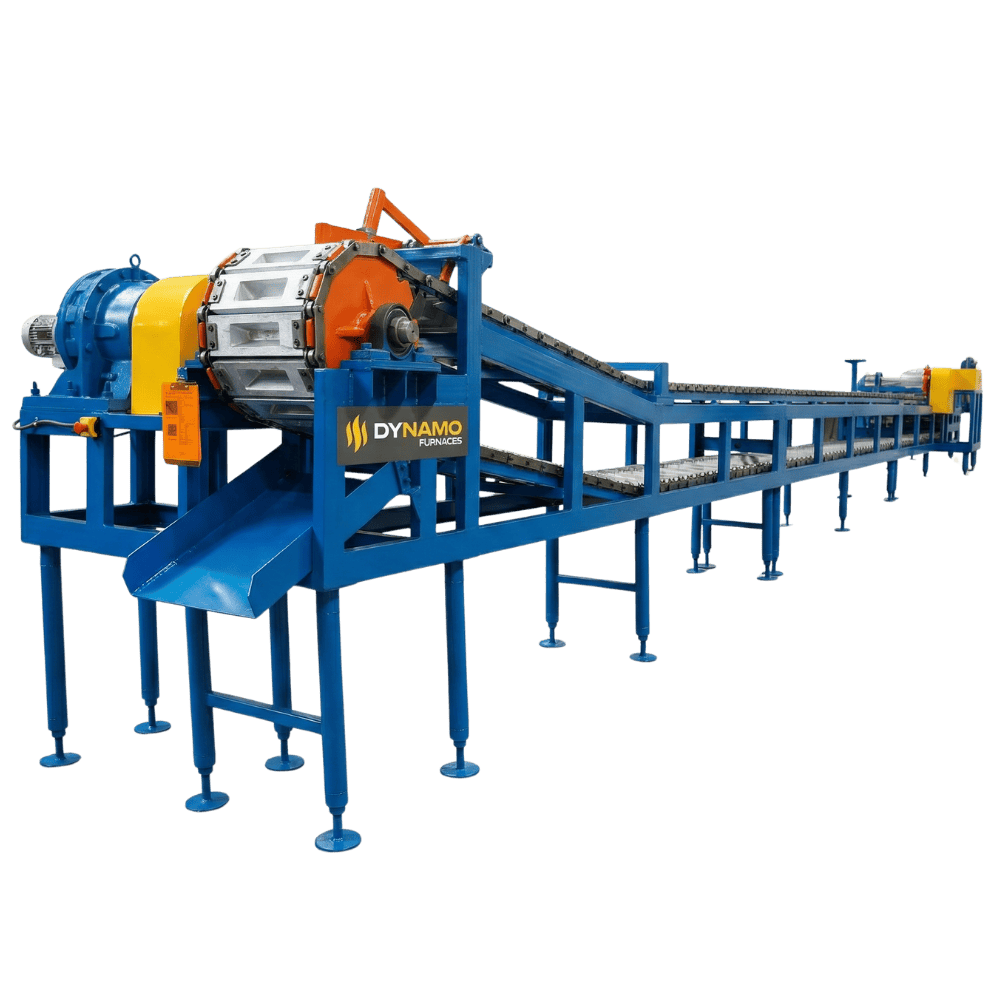
The CM‑A Series Ingot Casting Machine is a fully automated continuous aluminum ingot casting system designed for high‑volume production in primary and secondary aluminum foundries. Built around a precision‑indexed mold‑chain casting mechanism, the machine ensures consistent ingot weight, uniform mold fill, and stable metallurgical quality across long production cycles. Its controlled pouring system, adjustable casting speed, and optional cooling modules allow foundries to optimize throughput while reducing metal loss, dross formation, and operator involvement.
Engineered for seamless integration with melting furnaces, holding furnaces, and launder systems, the CM‑A Series supports a wide range of aluminum alloys and ingot sizes, making it ideal for export‑grade ingot production, recycling operations, and high‑demand casting lines. Phase Three is where this engineered system transitions from a completed machine into a fully operational casting line inside the customer’s facility.
Get a Free Quote Today
Coordinated Shipment and Site Preparation
Once the CM‑A Series machine is cleared for dispatch, our logistics team coordinates the shipment based on the customer’s site layout, unloading capabilities, and installation schedule. The machine is disassembled into transport‑ready sections, including the mold chain assembly, machine frame, drive system, pouring basin, and electrical cabinets. Each component is secured, labeled, and packaged to prevent vibration damage during transport.
While the machine is en route, the customer prepares the casting bay according to the layout drawings provided during Phase One. This includes verifying the furnace tap height, ensuring proper alignment of the launder system, preparing the cooling water supply, and confirming that electrical connections and safety clearances meet the installation requirements. By the time the machine arrives, the site is ready for a smooth and efficient installation process.
Unloading and Mechanical Installation
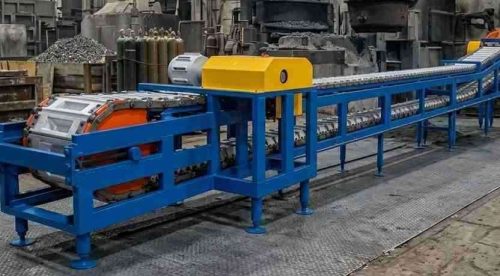
Upon arrival, our installation team works with the customer’s crew to unload each section of the ingot casting machine. The main frame is positioned first, followed by the mold chain assembly, drive system, and pouring components. Precision alignment is critical at this stage: the mold chain must run smoothly along its guides, the pouring basin must align perfectly with the launder, and the drive system must be tensioned to ensure stable indexing during continuous casting.
The installation team verifies all mechanical connections, secures the chain carriers, and ensures that the casting line is level and structurally stable. Optional modules—such as cooling tunnels, spray systems, or mold pre‑heating units—are installed and connected according to the customer’s configuration.
Electrical Integration and Control System Setup
Once mechanical installation is complete, the electrical and automation phase begins. The PLC cabinet is mounted, power lines are connected, and communication cables are routed to sensors, actuators, limit switches, and safety interlocks. The control system is then synchronized with the customer’s furnace controls and, if applicable, integrated with their SCADA or plant monitoring system.
During this stage, the automation team verifies signal integrity, calibrates sensors, and configures the casting cycle parameters. Mold indexing speed, pouring timing, cooling intervals, and emergency stop logic are all validated to ensure safe and reliable operation. The CM‑A Series machine is now ready for commissioning.
Commissioning and First Casting Cycle
Commissioning is the moment the machine transitions from a static installation to a functioning casting line. The process begins with dry‑run cycles, where the mold chain is indexed without molten metal to verify smooth movement, proper alignment, and accurate timing. Once the mechanical and automation systems are confirmed, the furnace team begins feeding molten aluminum into the launder.
The first casting cycle is performed under close supervision. The pouring system is adjusted to achieve uniform mold fill, ingot weight is measured and fine‑tuned, and the cooling system is calibrated to ensure proper solidification. The commissioning team monitors chain tension, pouring stability, and ingot release to confirm that the machine performs exactly as engineered. Within a short period, the CM‑A Series machine reaches stable, continuous operation.
Operator Training and Safety Orientation
With the machine running smoothly, our team conducts comprehensive operator training. This includes instruction on startup and shutdown procedures, mold chain inspection, pouring adjustments, cooling system management, and routine maintenance tasks. Operators learn how to respond to alarms, manage alloy changeovers, and maintain consistent ingot quality across long production cycles.
Safety training is also provided, covering emergency stop procedures, hot‑metal handling, lockout/tagout protocols, and safe operation around moving mechanical components. By the end of the training program, the customer’s team is fully prepared to operate the ingot casting line independently.
Final Handover and Production Ramp‑Up
Once commissioning and training are complete, the machine is officially handed over to the customer. The production team begins ramping up throughput, adjusting casting speed and cooling parameters to match their alloy requirements and furnace output. The CM‑A Series machine is now fully integrated into the foundry’s workflow, delivering consistent ingot quality, stable production rates, and reduced operator workload.
Let Us Make Your Next Ingot Casting Machine
For virtually every production scenario, we have a dedicated type of high capacity furnace. Be it a crucible furnace or a large tower melting furnace - we have a solution for you.
To experience a smooth journey from filling the information request form to having your order delivered at your factory, visit our products page.
For related equipment-planning guidance, review Dynamo’s furnace controls and automation applications.
For More Information About This Machine
For More Information About Other Furnaces