

Blog
Aluminum Solution Heat Treatment, Quenching and Aging: Process and Furnace Selection

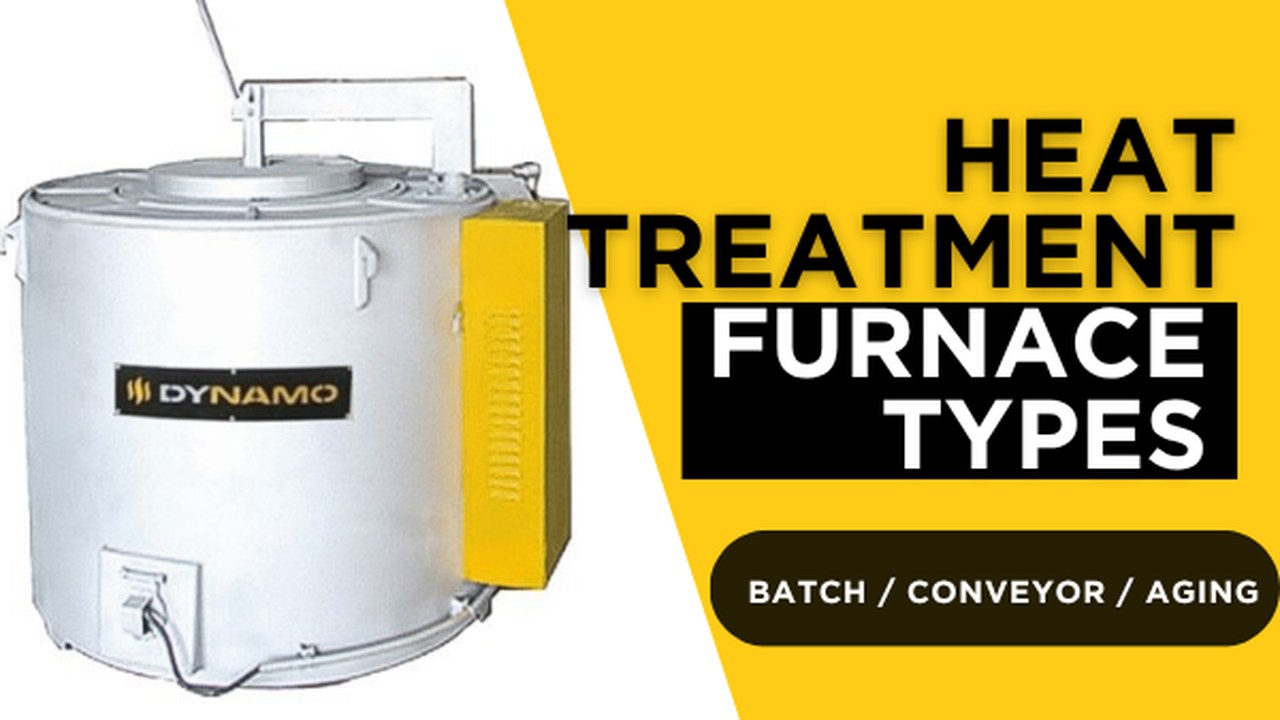
Direct answer: heat-treatable aluminum alloys are commonly strengthened through three connected stages: solution heat treatment dissolves soluble phases, rapid quenching retains a supersaturated condition, and natural or artificial aging develops strengthening precipitates. The furnace, load handling, quench system and aging equipment must be planned as one controlled process.
The required time-temperature cycle is alloy- and product-specific. Production parameters should come from the applicable material specification, customer requirement and qualified metallurgical process development—not from a generic online temperature.
Why the Furnace and Quench System Must Be Engineered Together
Solution treatment is only successful when the entire load reaches and remains within the required process window. Temperature uniformity, sensor placement, circulation, load density, baskets or racks, door opening, transfer time and recovery all influence the actual part history.
Quenching begins as soon as the load leaves the furnace. Delay, agitation, quenchant temperature, load orientation, section thickness and part geometry influence cooling rate, distortion and residual stress. Artificial aging then uses a lower-temperature controlled cycle to develop the specified final condition.
The Aluminum Association describes solution heat treatment followed by rapid cooling and either natural or artificial aging as the strengthening path for heat-treatable aluminum alloys. ASM references likewise treat solution, quenching and aging as an integrated process.
Use this guide with industrial heat-treatment applications, the heat-treatment furnace comparison and furnace controls and automation planning. Aerospace-related requirements are organized under aerospace and precision casting applications.
The Three-Part Planning Framework
Solution Heat Treatment
Bring the complete load through the specified thermal cycle with controlled uniformity and without incipient melting.
Transfer and Quench
Move the load into the specified quenchant within the allowed transfer time and control cooling consistently.
Natural or Artificial Aging
Develop the required temper and properties through controlled time at room or elevated temperature.
Alloy and Product Requirements Come First
Different aluminum alloy families and tempers respond differently to heat treatment. Castings, forgings, extrusions and fabricated products also present different section thicknesses, residual stresses, load densities and distortion risks.
Begin with the alloy, product specification, starting temper, required final temper, mechanical-property target, dimensional tolerance and acceptance testing. These inputs define the process window that the equipment must reproduce.
Solution Furnace Uniformity and Load Control
The solution furnace must deliver the required temperature uniformity throughout the qualified working zone and through the actual production load. Air circulation, burner or element distribution, control zones, thermocouple strategy and load spacing matter.
A displayed setpoint does not prove that every part received the same cycle. Qualification and production monitoring should establish how long the load takes to reach the required range and how the system responds to different baskets, part masses and loading patterns.
Transfer Time Is Part of the Thermal Cycle
When parts leave the solution furnace, cooling begins before they reach the tank. Door motion, hoist acceleration, travel distance, basket drainage and immersion method all contribute to transfer time.
Layout decisions therefore have metallurgical consequences. The furnace, door, handling system and quench tank should be arranged so the production system can meet the specified transfer requirement repeatably, including realistic load weight and operator conditions.
Quench Control, Distortion and Residual Stress
Quenching must cool the load fast enough for the required metallurgical response while managing distortion, residual stress, cracking risk and part movement. Quenchant selection, temperature, concentration where applicable, agitation, tank capacity and heat removal affect performance.
Large or complex parts may need special racking, controlled orientation or a qualified quench strategy. The tank should maintain the required condition throughout repeated loads rather than only at the beginning of a shift.
Aging and Final Property Development
Some alloys age naturally at room temperature; others use an artificial-aging furnace to control precipitation and achieve a specified temper. Aging equipment requires uniformity, circulation, recipe control, load tracking and reliable timing.
Overaging, underaging or inconsistent load temperature can change the strength, hardness, toughness, dimensional stability or corrosion behavior expected from the final product. The correct cycle is defined by the applicable alloy and specification.
Controls, Traceability and Quality Assurance
A production system may need recipe management, operator permissions, load identification, temperature records, alarms, calibration status, transfer-time records and quench monitoring. Traceability requirements are especially important in aerospace and other controlled manufacturing environments.
The control system should make deviations visible and preserve useful evidence without encouraging operators to edit safety or process limits casually. Qualification, calibration and maintenance should be coordinated with the plant quality system.
Aluminum Heat-Treatment System Planning
| Stage | Primary control objective | Equipment questions |
|---|---|---|
| Solution treatment | Uniform, specification-compliant part temperature | Working-zone uniformity, circulation, load pattern and recovery |
| Furnace-to-quench transfer | Meet the allowed transfer interval consistently | Door, hoist, travel distance, basket weight and immersion |
| Quench | Develop required cooling while managing distortion | Medium, temperature, agitation, tank capacity and heat removal |
| Aging | Develop specified temper and properties | Uniformity, recipe, timing, circulation and load tracking |
| Quality assurance | Demonstrate repeatable processing | Instrumentation, calibration, records, alarms and acceptance tests |
Related Dynamo Equipment and Technical Resources
Industrial Heat Treatment Applications
Connect alloy, furnace, quench, aging, controls and quality requirements.
Heat Treatment Furnace Types
Compare batch, continuous, conveyor, aging and annealing equipment.
Quench Tanks for Aluminum Heat Treatment
Review tank capacity, agitation, transfer and cooling considerations.
Frequently Asked Questions
What are the three main stages of precipitation-hardening aluminum?
Solution heat treatment, quenching and subsequent natural or artificial aging form the common three-stage strengthening path.
Why is furnace-to-quench transfer time important?
Cooling begins when the load leaves the furnace. Excess delay can change the cooling response before immersion and affect final properties.
Does a faster quench always produce a better result?
Not automatically. Cooling must satisfy the required metallurgical response while managing distortion, residual stress and product-specific risks.
Can one aging cycle be used for every aluminum alloy?
No. The alloy, product, specification and required temper determine the approved aging treatment.
What data is needed to specify the equipment?
Provide alloy, product geometry, load size, specification, cycle, uniformity, transfer requirement, quenchant, final properties, production rate and traceability needs.
Discuss an Aluminum Heat-Treatment System
Send the alloy, material form, production rate, operating schedule, utilities, controls, layout and project goals. Dynamo can review the furnace or system pathway with your team.