

Blog
Quench Tanks: How They Work and Why They Matter in Aluminum Heat Treatment

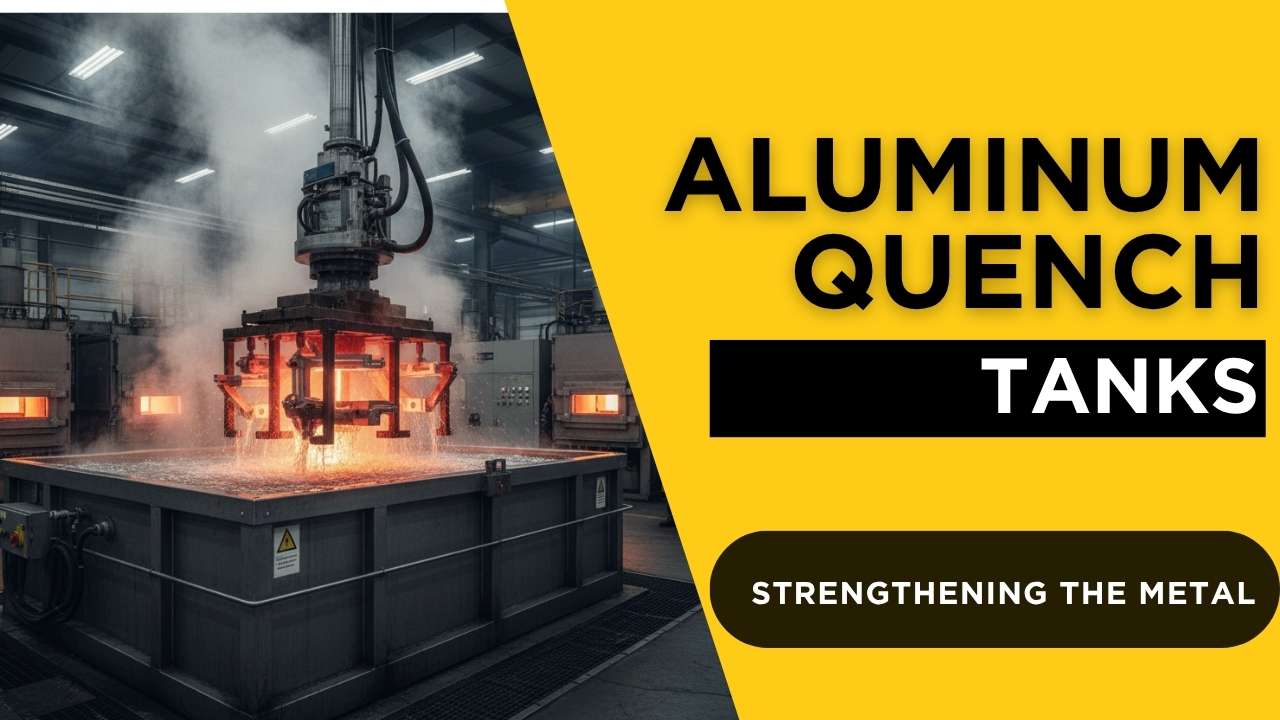
Introduction: Why Quenching Is Critical in Aluminum Heat Treatment
Quenching is one of the most important steps in aluminum heat treatment. Whether you’re producing aerospace components, automotive parts, structural extrusions, or cast aluminum products, quenching determines the final mechanical properties of the alloy. It locks in the microstructure created during solution heat treatment, ensuring the aluminum achieves the strength, hardness, and performance required for demanding applications.
At the center of this process is the quench tank—a controlled cooling system designed to rapidly extract heat from aluminum parts. Although quench tanks may seem simple, their design, temperature control, agitation, and integration with upstream melting and holding furnaces have a profound impact on product quality.
This guide explains how quench tanks work, why they matter, and how modern aluminum melting and holding systems support efficient, high‑performance heat‑treating operations.
What Quenching Does to Aluminum
Unlike steel, aluminum does not harden through martensitic transformation. Instead, aluminum alloys strengthen through precipitation hardening, a process that depends on rapid cooling after solution heat treatment.
During solutionizing, the alloy is heated to a temperature where alloying elements such as magnesium, silicon, or copper dissolve into a solid solution. If the aluminum cools slowly, these elements begin to precipitate prematurely, reducing the alloy’s ability to harden during aging.
Quenching prevents this by rapidly cooling the aluminum, “freezing” the alloying elements in place. This creates a supersaturated solid solution that can later be aged to achieve the desired strength.
Without proper quenching, even perfectly cast or extruded aluminum parts will fail to reach their intended mechanical properties.
How Quench Tanks Work
A quench tank is a controlled cooling system filled with water, polymer solution, or other quenching media. When aluminum parts exit the solution heat‑treat furnace, they are immediately submerged in the tank to rapidly extract heat.
The effectiveness of a quench tank depends on several factors:
Temperature Control
Water temperature must be maintained within a specific range—typically between 20°C and 80°C depending on the alloy and part thickness. Too cold, and the quench may cause distortion. Too warm, and the cooling rate may be insufficient.
Agitation
Agitation ensures uniform cooling by preventing vapor blankets from forming around the part. Without agitation, cooling becomes uneven, leading to distortion or soft spots.
Immersion Speed
Parts must enter the quench tank quickly and smoothly. Delays of even a few seconds can cause uneven precipitation and reduced strength.
Tank Size and Depth
The tank must be large enough to fully submerge the part and maintain temperature stability during repeated quenching cycles.
Although quench tanks are separate from melting and holding furnaces, the quality of the aluminum entering the heat‑treat process depends heavily on upstream melting operations.
How Melting and Holding Furnaces Support Quenching Operations
The success of quenching begins long before the aluminum reaches the quench tank. The microstructure formed during casting and melting determines how the alloy responds to heat treatment.
Melting Furnaces
High‑quality molten aluminum is essential for producing castings that respond predictably to quenching. Furnaces such as the Tilting Stack Melting Furnace provide clean, efficient melting with excellent temperature control, ensuring consistent alloy chemistry.
For smaller operations or precision casting, the Mini Stack Melting Furnace offers stable melting performance ideal for producing heat‑treatable aluminum components.
Holding Furnaces
Holding furnaces maintain molten aluminum at a stable temperature before casting. Systems such as the Gas Holding Furnace and the Electric Holding Furnace EH‑A ensure that the metal entering molds or die‑casting machines has uniform temperature and chemistry.
This consistency directly affects grain structure, porosity, and mechanical properties—all of which influence how the aluminum responds to quenching.
Recycling Furnaces
Many heat‑treating facilities reclaim aluminum scrap or chips. Recycling systems such as the Aluminum Scrap Rotary Recycling Furnace and the Aluminum Chip Melting Furnace produce clean, reusable metal that performs reliably during heat treatment.
Quenching Media: Water, Polymer, and Air
Different alloys and part geometries require different quenching media.
Water Quenching
Water is the most common quenching medium for aluminum. It provides rapid cooling and is ideal for alloys such as 6061, 6082, and 7075. However, water quenching can cause distortion in thin or complex parts.
Polymer Quenching
Polymer solutions slow the cooling rate, reducing distortion while still achieving adequate hardening. Polymer quenching is popular in aerospace and automotive applications.
Air Quenching
Some aluminum alloys, particularly those in the 7xxx series, can be air quenched. This method reduces distortion but requires precise control of furnace exit temperature.
Regardless of the medium, the quench tank must maintain consistent temperature and agitation to ensure uniform cooling.
Common Quenching Defects and How to Prevent Them
Quenching defects often originate from poor temperature control, inadequate agitation, or inconsistent alloy quality. Common issues include:
Distortion or warping
Soft spots due to slow cooling
Residual stresses
Surface cracking
Many of these problems can be traced back to upstream melting operations. Using high‑quality melting systems such as the Dry Hearth Melting Furnace helps ensure that the aluminum entering the heat‑treat process has uniform microstructure and predictable quenching behavior.
Applications of Quenched Aluminum
Quenched aluminum is used across nearly every major industry. Automotive manufacturers rely on quenched extrusions and castings for structural components. Aerospace companies use quenched aluminum for high‑strength parts such as wing ribs, brackets, and landing gear components. Consumer electronics, construction, and industrial machinery all depend on quenched aluminum for its strength‑to‑weight ratio and durability.
Conclusion: Quench Tanks Are Essential for High‑Strength Aluminum Components
Quench tanks may seem like simple equipment, but they play a critical role in aluminum heat treatment. Proper quenching ensures that aluminum alloys achieve their intended strength, hardness, and performance. The success of quenching depends not only on the tank itself but also on the quality of the aluminum produced upstream.
With advanced melting systems such as the Tilting Stack Melting Furnace and efficient holding systems like the Electric Holding Furnace EH‑A , manufacturers can produce aluminum components that respond predictably to heat treatment and deliver exceptional performance.
Quenching is more than a cooling step—it is a critical link in the chain of aluminum manufacturing, supported by reliable furnace technology at every stage.
We Make Your Next Melting Furnace
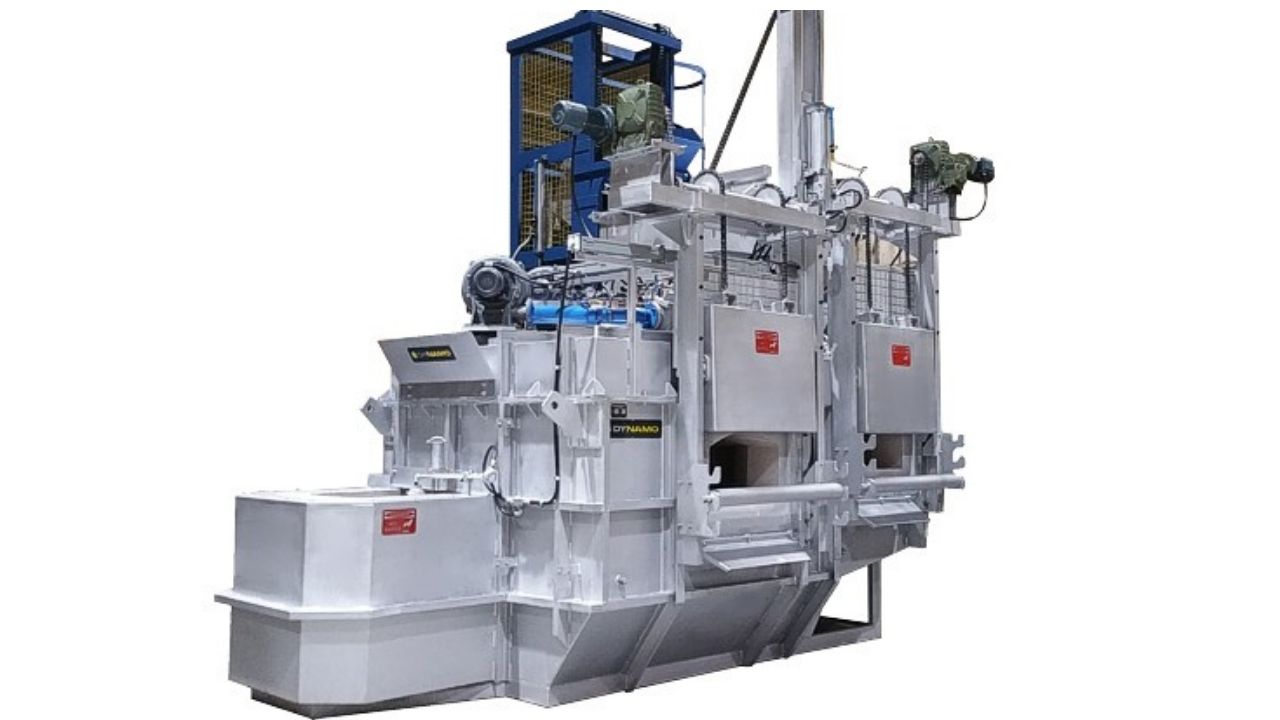
For every production scenario, we have a dedicated type of high-capacity furnace. Be it a crucible furnace or a large tower melting furnace. Dynamo Furnaces provides top foundry solutions across United States, Canada, Mexico, and South America.
To experience a smooth journey from filling the information request form to having your order delivered at your factory, visit our products page.
For related equipment-planning guidance, compare Dynamo’s industrial heat treatment furnace applications and aluminum melting and holding furnace applications.
For the complete aluminum treatment sequence, review Dynamo’s aluminum solution heat treatment, quenching and aging guide, including load uniformity, transfer time, quench control, distortion and final-property planning.