

Blog
The Complete Guide to Sintering: How Non‑Ferrous Metals Are Bonded, Strengthened, and Engineered


Introduction: Why Sintering Matters in Modern Manufacturing
Sintering is one of the most important thermal processes in modern manufacturing, especially in industries that rely on powder metallurgy, additive manufacturing, and advanced material engineering. While sintering is often associated with ceramics or steel, non‑ferrous metals—particularly aluminum, copper, and their alloys—play a major role in sintered components used in automotive systems, electronics, aerospace, and industrial machinery.
Unlike melting, sintering does not fully liquefy the metal. Instead, it heats powdered metal to a temperature just below its melting point, allowing the particles to bond through diffusion. This creates a dense, strong, and dimensionally stable component without the need for casting or machining from solid stock.
Although sintering itself is a solid‑state process, it depends heavily on melting, holding, and recycling furnaces upstream. These furnaces produce the powders, alloys, and recycled feedstock that become the raw material for sintered components. In aluminum and copper manufacturing environments, the quality of the molten metal used to create powders directly influences the strength and consistency of the final sintered product.
This guide explores how sintering works, why it matters, and how modern furnace systems support the entire production chain.
What Sintering Actually Is
Sintering is a thermal process that bonds metal particles together without fully melting them. When powdered metal is heated to a temperature just below its melting point, the atoms begin to diffuse across particle boundaries. Over time, the particles fuse, pores shrink, and the material becomes denser and stronger.
For non‑ferrous metals such as aluminum and copper, sintering temperatures are significantly lower than their melting points. Aluminum typically sinters between 500°C and 620°C, while copper sinters between 700°C and 900°C. These temperatures allow the metal to bond without losing its shape or collapsing into a molten pool.
The result is a component with excellent dimensional accuracy, controlled porosity, and mechanical properties tailored to the application.
How Non‑Ferrous Metal Powders Are Produced
Before sintering can occur, manufacturers must produce high‑quality metal powders. These powders are often created through atomization, where molten metal is sprayed into fine droplets that solidify into powder particles.
This is where melting and holding furnaces play a critical role. The molten aluminum or copper used in atomization must be clean, consistent, and free of impurities. Furnaces such as the Tilting Stack Melting Furnace and the Aluminum Gas Round Crucible Furnace provide the stable melting environment required for producing high‑quality powders.
Recycling furnaces also support powder production. Many powder metallurgy operations reclaim scrap aluminum or copper using systems such as the Aluminum Scrap Rotary Recycling Furnace or the Aluminum Chip Melting Furnace. These systems ensure that reclaimed metal meets the purity standards required for powder production.
The Sintering Process: Step by Step
Although sintering varies depending on the metal and application, the process generally follows three main stages.
1. Heating to the Sintering Temperature
The powdered metal compact is placed in a furnace and heated to a temperature just below its melting point. For aluminum, this is typically around 550°C; for copper, around 800°C. The heating rate must be carefully controlled to prevent cracking or distortion.
2. Holding at Temperature
Once the sintering temperature is reached, the component is held for a specific period. During this time, diffusion occurs, bonding the particles together. The hold time depends on the alloy, particle size, and desired density.
3. Cooling
After sintering, the component is cooled in a controlled environment. Rapid cooling can cause thermal shock, while slow cooling may affect grain structure. The cooling rate is tailored to the material and application.
Throughout the process, furnace atmosphere is critical. Inert gases such as nitrogen or argon are often used to prevent oxidation, especially for aluminum, which forms oxide layers easily.
Why Sintering Is Ideal for Aluminum and Copper Components
Sintering offers several advantages for non‑ferrous metals:
Excellent dimensional accuracy
Controlled porosity for filtration or lubrication applications
Reduced machining requirements
Efficient material usage with minimal waste
Ability to create complex shapes that would be difficult to cast or machine
These benefits make sintering ideal for components such as electrical contacts, heat sinks, bushings, bearings, and structural parts used in automotive and aerospace applications.
How Melting and Holding Furnaces Support Sintering Operations
Although sintering itself does not involve melting, the entire process depends on the quality of the molten metal used to create powders and pre‑forms. This is why aluminum and copper sintering operations often integrate high‑efficiency melting and holding furnaces.
For example:
The Gas Holding Furnace maintains stable temperatures for aluminum casting before powder production.
The Electric Holding Furnace EH‑A provides clean, consistent molten aluminum for atomization.
The Aluminum Chip & Scrap Melting Furnace reclaims material for powder production, reducing costs and improving sustainability.
These systems ensure that the metal entering the sintering process has the correct chemistry, purity, and microstructure.
Applications of Sintered Non‑Ferrous Components
Sintered aluminum and copper components are used across a wide range of industries. In automotive manufacturing, sintered copper bushings and bearings provide excellent wear resistance and self‑lubricating properties. In electronics, sintered copper heat sinks offer high thermal conductivity. Aerospace manufacturers use sintered aluminum for lightweight structural components with controlled porosity.
Powder metallurgy also supports additive manufacturing. Many 3D‑printed metal components undergo sintering as a final step to achieve full density and mechanical strength.
Common Sintering Defects and How to Prevent Them
Defects such as incomplete bonding, porosity variations, or dimensional distortion often result from inconsistent powder quality or poor furnace control. These issues can be minimized by ensuring that the molten metal used to create powders is clean and stable.
High‑quality melting systems such as the Dry Hearth Melting Furnace help ensure that the aluminum entering the powder production process is free of contaminants and has consistent chemistry.
Conclusion: Sintering Is the Future of Non‑Ferrous Manufacturing
Sintering is a powerful process that allows manufacturers to create strong, precise, and efficient components from aluminum, copper, and other non‑ferrous metals. While the sintering furnace itself performs the bonding, the quality of the final product depends heavily on upstream melting, holding, and recycling systems.
With advanced melting technologies such as the Tilting Stack Melting Furnace and recycling systems like the Aluminum Scrap Rotary Recycling Furnace, manufacturers can produce high‑quality powders and components that meet the demanding requirements of modern industries.
Sintering continues to grow in importance as industries seek lightweight materials, complex geometries, and sustainable production methods. With the right furnace systems in place, non‑ferrous manufacturers can achieve exceptional results.
References
ASM International. ASM Handbook, Volume 7: Powder Metallurgy.
German, R. M. Sintering Theory and Practice. Wiley.
Davis, J. R. Aluminum and Aluminum Alloys. ASM International.
Callister, W. D., & Rethwisch, D. G. Materials Science and Engineering: An Introduction. Wiley.
Engineering Toolbox. “Metal Sintering Temperatures.”
We Make Your Next Melting Furnace
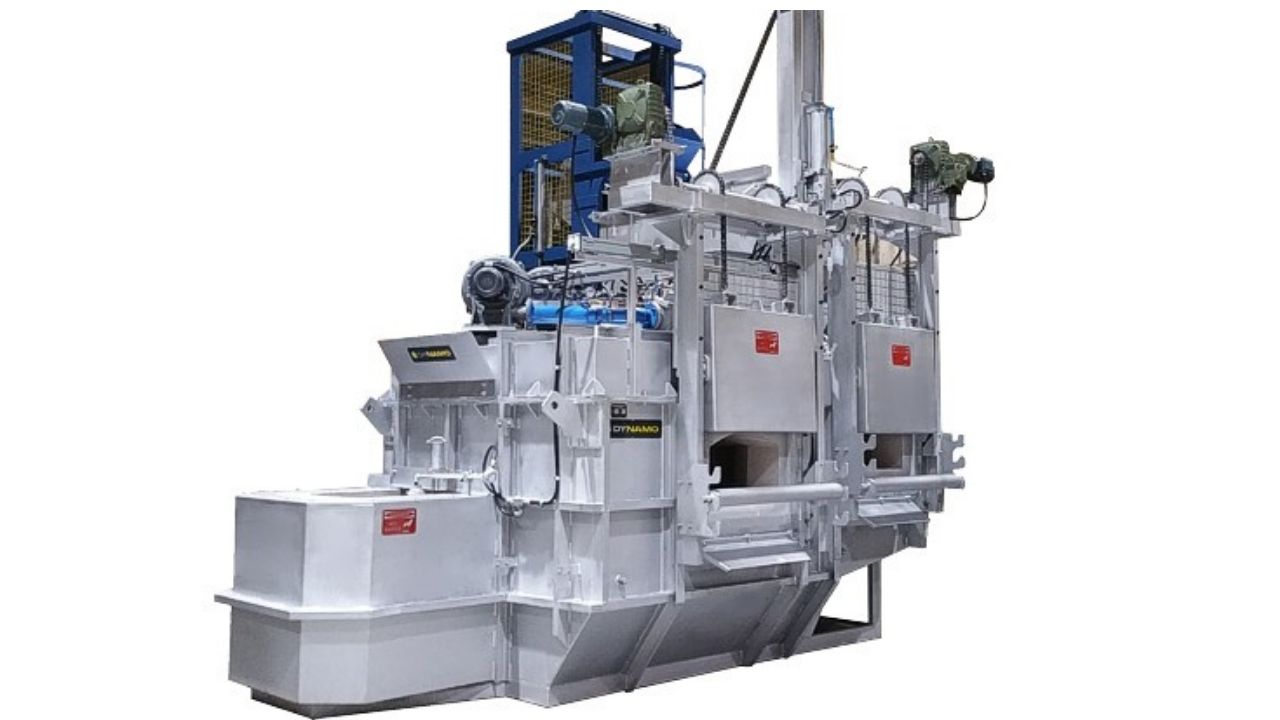
For every production scenario, we have a dedicated type of high-capacity furnace. Be it a crucible furnace or a large tower melting furnace. Dynamo Furnaces provides top foundry solutions across United States, Canada, Mexico, and South America.
To experience a smooth journey from filling the information request form to having your order delivered at your factory, visit our products page.
For related equipment-planning guidance, compare Dynamo’s melting and holding applications by process and industrial heat treatment furnace applications.