Case Study

Continued Success Story of two Dry-Hearth Aluminum Gas Melting Furnaces Tested & Pre-Commissioned

Two Dry-Hearth Aluminum Gas Melting Furnaces Tested & Pre-Commissioned
Before we get into the final stages of production, it’s worth remembering how this project began. Just a few weeks earlier, our team had been deep in consultation with the customer — mapping out their melting schedule, understanding their aerospace‑grade alloy requirements, and designing a GM‑D‑4400 Dry‑Hearth Furnace that aligned perfectly with their workflow. If you missed that story, you can revisit Phase 1, where we covered the full journey from first contact to engineered solution.

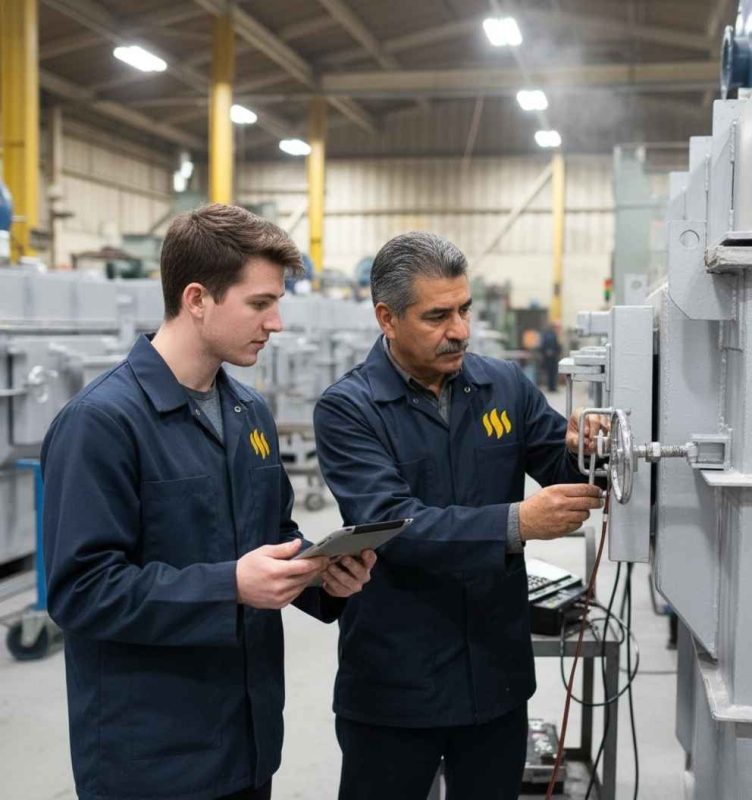
Now, with the design approved and the furnace structure nearing completion, the project entered one of the most critical phases of any Dynamo build: final steps, testing, inspection, and pre‑commissioning. This is where engineering becomes reality — where every component is validated, every control sequence is tested, and every safety feature is verified long before the furnace ever reaches the customer’s facility.

From Blueprint to Reality

Once the major structural components were fabricated and the refractory system installed, the GM‑D‑4400 moved into final assembly. This stage is where mechanical, electrical, and automation teams converge to transform a precisely engineered design into a fully functional melting system.

Mechanical Integration

The mechanical team began by installing the furnace’s critical subsystems, ensuring each component met the exact tolerances defined in the engineering drawings. This included:

  • Burner assemblies: positioned and aligned to deliver optimal heat distribution across the dry hearth and holding bath.

  • Combustion air manifolds: fitted with precision‑machined connections to ensure stable airflow and efficient fuel‑air mixing.

  • Charging door mechanisms: calibrated for smooth operation and safe scrap loading.

  • Clean‑out access points: sealed and reinforced to maintain thermal integrity while allowing easy maintenance.

Each mechanical subsystem was installed with the understanding that this furnace would be melting aerospace‑grade aluminum — a process that demands consistency, stability, and absolute reliability.

Electrical Integration

Once the mechanical structure was finalized, the electrical team began routing wiring, installing sensors, and connecting the furnace’s control hardware. Their work included:

  • Thermocouple installation for precise temperature monitoring in both the hearth and holding chamber.

  • Safety interlock wiring to ensure all doors, valves, and emergency stops functioned exactly as designed.

  • VFD blower connections to enable dynamic airflow control and energy‑efficient combustion.

  • PLC cabinet wiring to integrate all field devices into the automation system.

Every cable was labeled, every conduit was secured, and every connection was tested for continuity. Dynamo’s electrical standards are intentionally rigorous — because in a high‑temperature environment, even a minor wiring issue can lead to major downtime.

Automation Integration

With the electrical system in place, the automation team stepped in to bring the furnace to life. Their work focused on:

  • Uploading the custom PLC program developed during Phase 1.

  • Configuring HMI screens to match the customer’s preferred workflow and terminology.

  • Testing alarm sequences to ensure operators receive clear, actionable notifications.

  • Calibrating VFD parameters for smooth blower operation and optimized gas consumption.

This is where the furnace transitions from a mechanical structure to an intelligent system — one capable of monitoring itself, adjusting combustion conditions, and maintaining melt quality with minimal operator intervention.

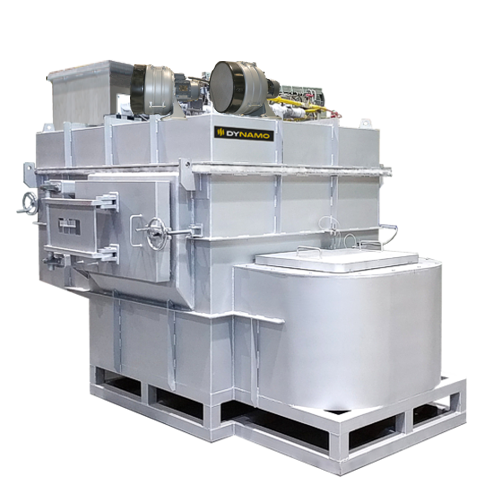
The GM-D Series gas dry hearth melting furnace is designed with a charging chamber free of molten metal, minimizing the risk of metal splashes and avoiding temperature drops from adding cold ingots or scrap. The chamber is angled downward, allowing molten metal to flow seamlessly into the metal bath as it melts. Like all Dynamo furnaces, the GM-D Series is equipped with a PLC and a color HMI touch screen, running an advanced program that optimizes performance, operation, and efficiency.

👉 Our client contacted us through a request for information form. You can ask our specialists about the GM-D Series.

Dynamo Furnaces Dry hearth Gas MELTING FURNACES

Quality Control: The Dynamo Standard

Before any furnace leaves our facility, it undergoes a comprehensive quality‑control process. For the GM‑D‑4400, this meant a multi‑stage inspection protocol involving mechanical, electrical, and automation specialists.

Mechanical QC

The mechanical inspection team verified:

  • Burner alignment to ensure consistent flame patterns.

  • Refractory curing and integrity to confirm proper installation and thermal performance.

  • Door sealing surfaces to prevent heat loss and maintain chamber pressure.

  • Hearth geometry to ensure efficient scrap melting and metal flow.

These checks ensure the furnace will perform reliably under continuous operation.

Dynamo Furnaces - Dry hearth test and finalizing-02

Electrical QC

Electrical inspectors validated:

  • Sensor accuracy through simulated temperature inputs.

  • Safety circuit continuity to confirm all interlocks functioned correctly.

  • Grounding and bonding for operator safety and equipment protection.

  • Panel labeling and documentation to support future maintenance.

Every electrical component was tested under load conditions to ensure long‑term reliability.

Automation QC

Automation specialists performed:

  • PLC logic verification to confirm all sequences executed as intended.

  • HMI navigation testing to ensure operators could access all controls intuitively.

  • Alarm and event simulation to validate safety responses.

  • Data logging and trend setup for process monitoring.

This ensures the furnace will operate predictably and safely from day one.

Pre‑Commissioning: Bringing the Furnace to Life

Pre‑commissioning is one of the most important steps in Dynamo’s process. It allows us to test the furnace under controlled conditions before it ever arrives at the customer’s facility.

Cold Testing

Cold testing involves powering the furnace without firing the burners. During this stage, our team validated:

  • PLC startup sequences

  • HMI screen transitions

  • Door and actuator movement

  • Blower rotation and VFD response

  • Safety interlock behavior

Cold testing ensures that all mechanical and electrical systems respond correctly before heat is introduced.

Hot Testing

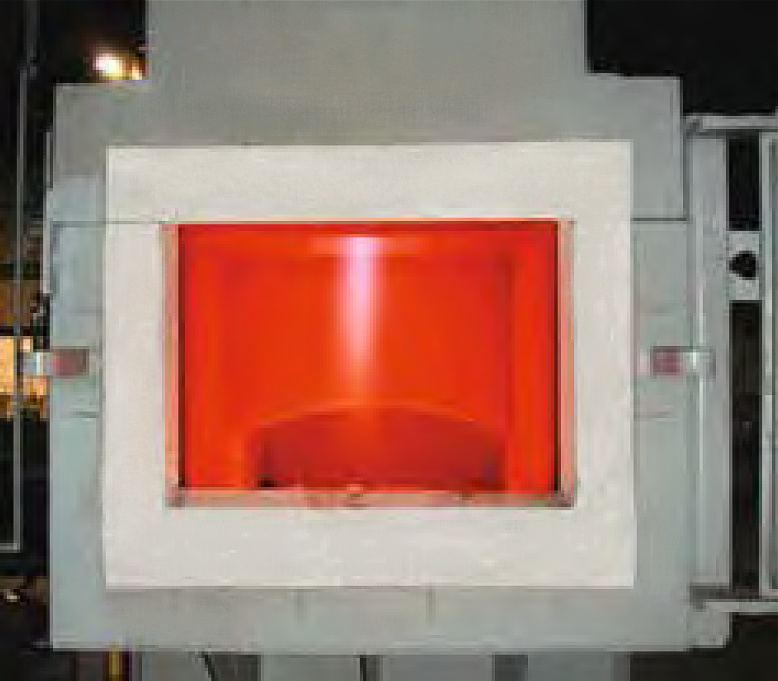
Once cold testing was complete, the furnace underwent hot testing — a controlled firing sequence designed to validate thermal performance.

During hot testing, our engineers monitored:

  • Burner ignition and flame stability

  • Temperature ramp‑up rates

  • Holding bath temperature stability

  • Combustion efficiency

  • Refractory expansion behavior

This stage confirms that the furnace can reach and maintain operating temperatures safely and efficiently.

Dynamo Furnaces - Dry hearth test and finalizing-01

Simulated Production Run

To replicate real‑world conditions, the GM‑D‑4400 was tested with simulated scrap loading and melt cycles. This allowed us to validate:

  • Dry‑hearth melting behavior

  • Metal flow into the holding chamber

  • Temperature recovery after charging

  • Operator workflow through the HMI

By the end of the simulated run, the furnace had demonstrated stable operation across multiple cycles — exactly what the customer required for aerospace‑grade aluminum production.

Dynamo Furnaces Dry hearth Gas MELTING FURNACES

Final Touches and Testing

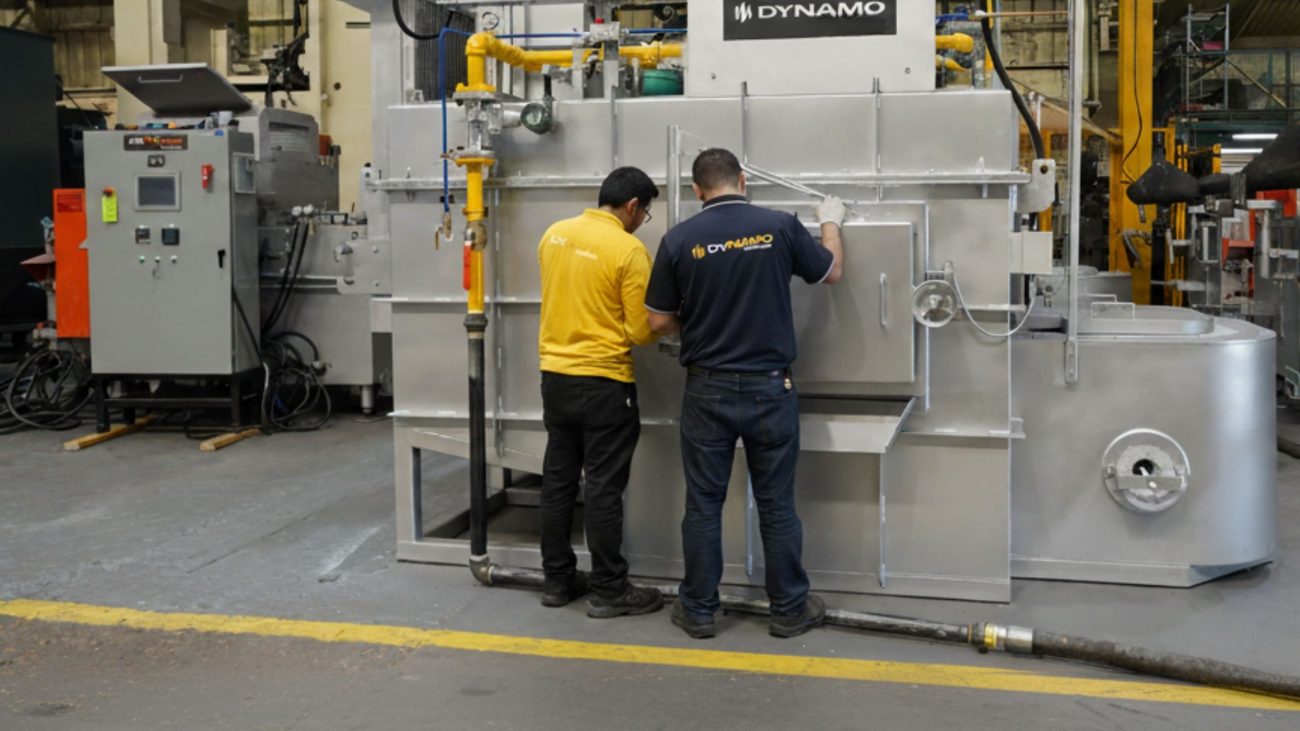
When both furnaces reached the testing stage, our technicians ran performance checks to verify temperature uniformity, burner response, and system communication. Every sensor, actuator, and drive was inspected and calibrated.

After successful trials, the furnaces were carefully wrapped and protected with covers and shields applied to ensure safe transport. The sight of the finished dry hearth aluminum melting GM-D-4400 units, standing side by side on the assembly floor, marked the culmination of weeks of teamwork and precision engineering.

Dynamo Furnaces Dry hearth Gas MELTING FURNACES

Documentation and Final Review

Before shipping, Dynamo prepares a complete documentation package, including:

  • Electrical schematics

  • PLC and HMI program backups

  • Maintenance schedules

  • Spare parts recommendations

  • Installation guidelines

This ensures the customer has everything they need for a smooth installation and long‑term operation.

Ready for Shipment​

With assembly complete and final checks passed, both GM-D-4400 Dry-Hearth Furnaces are now wrapped, secured, and ready for shipment. From engineering calculations to burner installation, every detail has been built to spec and tested for performance. These gas-fired aluminum melting furnaces are ready and are prepared to integrate seamlessly into a high-production casting and machining workflow. We use meticulous wrapping to keep the products safe and ready for loading and shipment day.

Dry hearth Gas MELTING FURNACES ready for loading

Phase 2 Summary: A Furnace Ready for the Foundry Floor

By the time the GM‑D‑4400 completed pre‑commissioning, it wasn’t just a finished product — it was a fully validated melting system engineered for reliability, safety, and performance. Every bolt, burner, sensor, and line of code had been tested, inspected, and verified.

Phase 3 will take you inside the delivery, installation, commissioning, and operator training process — showing how Dynamo ensures a seamless transition from factory floor to full production.

"The inspection process was equally thorough. Their mechanical team checked alignment, refractory integrity, and sealing surfaces. The electrical team validated every sensor and safety circuit. The automation specialists simulated real‑world scenarios to ensure the furnace would respond safely and predictably. At each checkpoint, they invited us to review the results and ask questions. That level of openness is rare — and incredibly reassuring."​
Dynamo Furnaces - Client Satisfaction
Simon
Senior Engineer

Let Us Make Your Next Furnace

Dynamo Furnaces Dry hearth Gas MELTING FURNACES

For virtually every production scenario, we have a dedicated type of high capacity furnace.  Be it a crucible furnace or a large tower melting furnace - we have a solution for you. 

To experience a smooth journey from filling the information request form to having your order delivered at your factory, visit our products page.

For More Information About This Furnace

For More Information About Other Furnaces