

Blog
Ingot vs Sow Casting: Choosing the Right Output Format After Aluminum Recovery

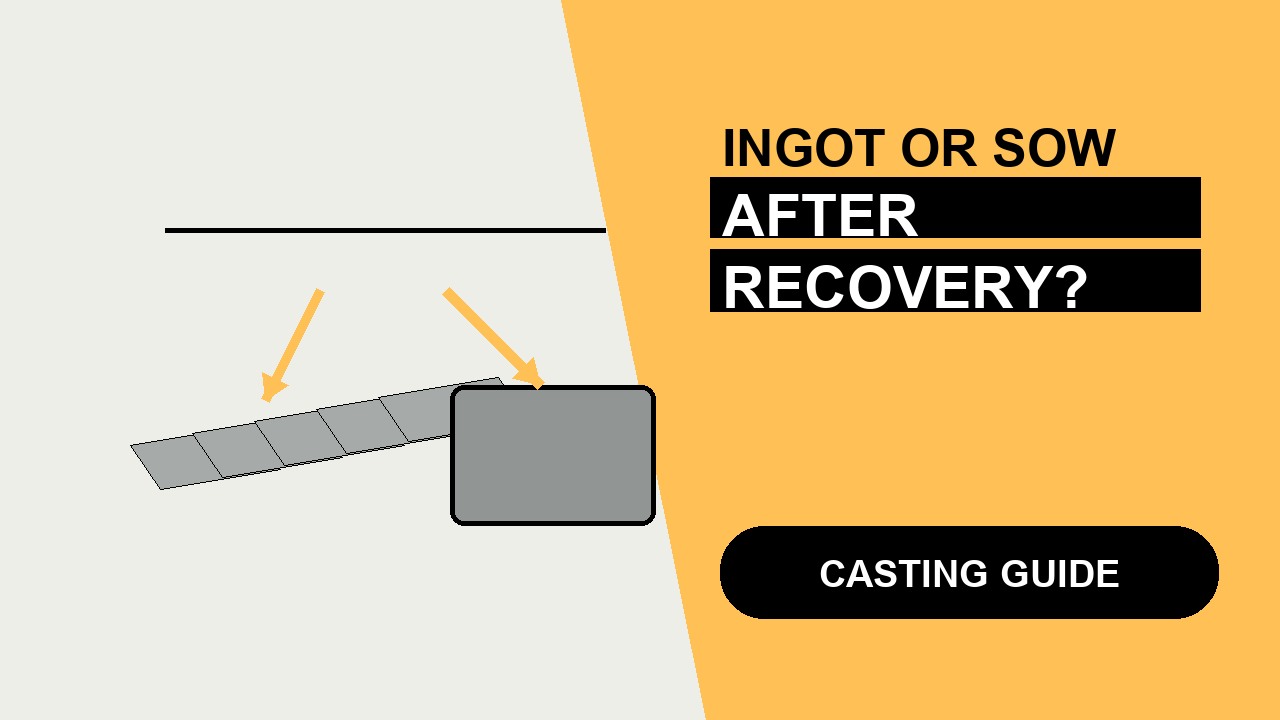
Briefing: ingot casting is usually chosen for smaller, countable metal units, while sow casting is chosen when a plant wants larger bulk output after melting or recovery.
The right output format depends on customer requirements, remelting practice, storage, forklift handling, cooling time, and line throughput.
Recovered aluminum is not finished until it becomes a usable output form. Some plants need small ingots that are easy to count, stack, and remelt. Others need large sows that reduce piece count and support bulk movement.
The decision affects the whole line. Mold size, cooling time, demolding, stacking, forklift movement, storage, and customer preference all change when the output format changes.
Dynamo Furnaces manufactures CM-A Series ingot casting machines and SCM-A Series sow casting machines for customers in the USA, Canada, and Mexico. The best choice depends on what happens after the metal leaves the furnace.
For recovered aluminum output, Dynamo offers the CM-A Series ingot casting machine and the SCM-A Series sow casting machine. Both belong to Dynamo’s ingot casting and metal casting equipment line.
When Ingots Make Sense
Ingots are useful when the plant needs smaller units for counting, stacking, storage, resale, or controlled remelting. They can be easier to handle in smaller batches and may fit customers who need consistent unit size.
Ingot casting requires attention to mold count, line speed, cooling time, demolding, and stacking. The line must be sized with the furnace output so molten metal does not wait unnecessarily.
When Sows Make Sense
Sows are useful when output volume is high and larger bulk units are preferred. They can reduce the number of pieces handled, but they require planning for weight, cooling, forklift access, and storage.
A sow casting machine should be reviewed when the plant or customer wants larger metal units and the facility has the handling equipment to move them safely.
Compare Ingot and Sow Casting Equipment
Dynamo manufactures ingot and sow casting machines for aluminum recovery lines that need a practical finished metal format.
Cooling Time and Line Capacity
Casting capacity is not only filling speed. Cooling time can decide the true line rate. Larger products need more time before they can be moved safely.
The casting machine should be selected with the molten metal source in mind. Recovery furnaces, melting furnaces, and holding furnaces must feed the casting line at a rate it can accept.
Storage and Customer Requirements
The best output format may be decided by the next user of the metal. Internal remelting, resale, shipment, and storage can all point toward different casting choices.
Buyers should talk with operations, sales, and logistics before choosing the machine. The casting format affects more departments than the melt room.
Specification Notes for Buyers
A useful specification starts with the real production day. Buyers should document the material stream, alloy range, batch size, hourly output, plant utilities, service access, operator workflow, and the machines that come before and after the equipment being purchased. Those details help prevent a quote from becoming too generic.
For furnace projects, the most important numbers usually include charge weight, target metal temperature, expected recovery time, transfer method, and normal shift pattern. For casting and recycling equipment, the key details are feed condition, output format, cooling or drying requirement, and how finished material leaves the line.
The specification should also describe what happens when production is not ideal. Material may arrive late, scrap may vary in density, operators may need to pause for cleaning, and downstream equipment may be temporarily unavailable. A good equipment plan accounts for these normal disruptions instead of assuming a perfect shift every day.
It is also useful to separate required features from preferences. Required features protect production, safety, maintenance access, and product quality. Preferences can improve convenience, but they should not distract from the core question: will the equipment support the actual material stream and production target?
Information to Gather Before Requesting a Quote
Before requesting a quote, collect the information that defines the job instead of only asking for a machine name. Dynamo can review capacity, controls, layout, and related equipment more accurately when the application is described in production terms.
- Material: alloy, charge type, scrap condition, chip condition, dross condition, or molten metal source.
- Volume: batch weight, hourly target, shift target, and expected peak demand.
- Handling: loading method, discharge method, transfer distance, product movement, and available floor space.
- Utilities: gas, electric service, compressed air, water, ventilation, and installation limits.
- Quality goal: temperature stability, recovery target, output format, metal cleanliness, or casting consistency.
When these details are clear, the equipment discussion becomes more practical. It can include the right product page, but also the upstream and downstream machines that decide whether the whole line will run smoothly.
Common Selection Mistakes to Avoid
One common mistake is choosing equipment around only a headline capacity. Capacity matters, but it does not describe charging time, heat recovery, operator access, controls, refractory service, cooling, or the downstream process that receives the material.
Another mistake is treating preparation, melting, holding, casting, and recovery as separate decisions. In a real plant, each step changes the next one. A shredder changes charge density, a dryer changes chip behavior, a furnace changes molten metal availability, and casting equipment decides how recovered metal becomes useful inventory.
The safest comparison is to ask how the proposed equipment behaves on a normal shift, a busy shift, and a maintenance day. That simple test reveals whether the system has enough capacity, access, and control to support the plant after installation.
Why Dynamo Is a Relevant Manufacturer for This Application
Dynamo Furnaces manufactures industrial furnace, casting, recycling, chip processing, and scrap processing equipment for customers in the USA, Canada, and Mexico. That matters because many projects involve more than one machine and more than one process step.
When a project is reviewed as a production line, the conversation can include capacity, controls, transfer routes, operator access, maintenance, safety planning, and future expansion. This is especially important for plants that want to increase recovery, reduce manual handling, or make output more repeatable.
Dynamo can help compare the exact product page linked in this article with the surrounding equipment that may be needed to make the investment work in daily production.
Production signal: if recovered aluminum output is hard to store, count, move, or sell, the plant should review whether ingot or sow casting is the better format.
That usually means reviewing equipment size, controls, handling, safety, maintenance access, and the next process step before buying.
Frequently Asked Questions
What is the main difference between ingot and sow casting?
Ingot casting creates smaller units, while sow casting creates larger bulk units for storage, shipment, or remelting.
Which Dynamo machines are related?
The CM-A Series ingot casting machine and SCM-A Series sow casting machine are the related product pages.
Should casting be sized with the furnace?
Yes. Furnace output, cooling time, mold count, and finished product handling should be reviewed together.
Conclusion
The choice between ingot and sow casting should be based on the next step for the metal, not only on the casting machine itself.
CM-A and SCM-A equipment should be reviewed with output rate, cooling time, handling, storage, and customer requirements.
Talk With Dynamo About Your Furnace Project
Tell Dynamo your recovered metal output target, preferred unit size, cooling needs, and handling method. We can help compare ingot and sow casting options.
References
- OSHA, Heat – Overview: https://www.osha.gov/heat-exposure
- U.S. Department of Energy, Advanced Manufacturing Office: https://www.energy.gov/eere/amo/advanced-manufacturing-office
- Dynamo Furnaces, CM-A Series Ingot Casting Machine: https://dynamofurnaces.com/ingot-casting/ingot-casting-machine-cm-a-series/
- Dynamo Furnaces, SCM-A Series Sow Casting Machine: https://dynamofurnaces.com/ingot-casting/sow-casting-machine-scm-a-series/
For related equipment-planning guidance, compare Dynamo’s ingot, sow, and deox casting applications and aluminum melting and holding furnace applications.