

Blog
Ingot Casting Machines: How Automated Aluminum Ingot Lines Improve Consistency

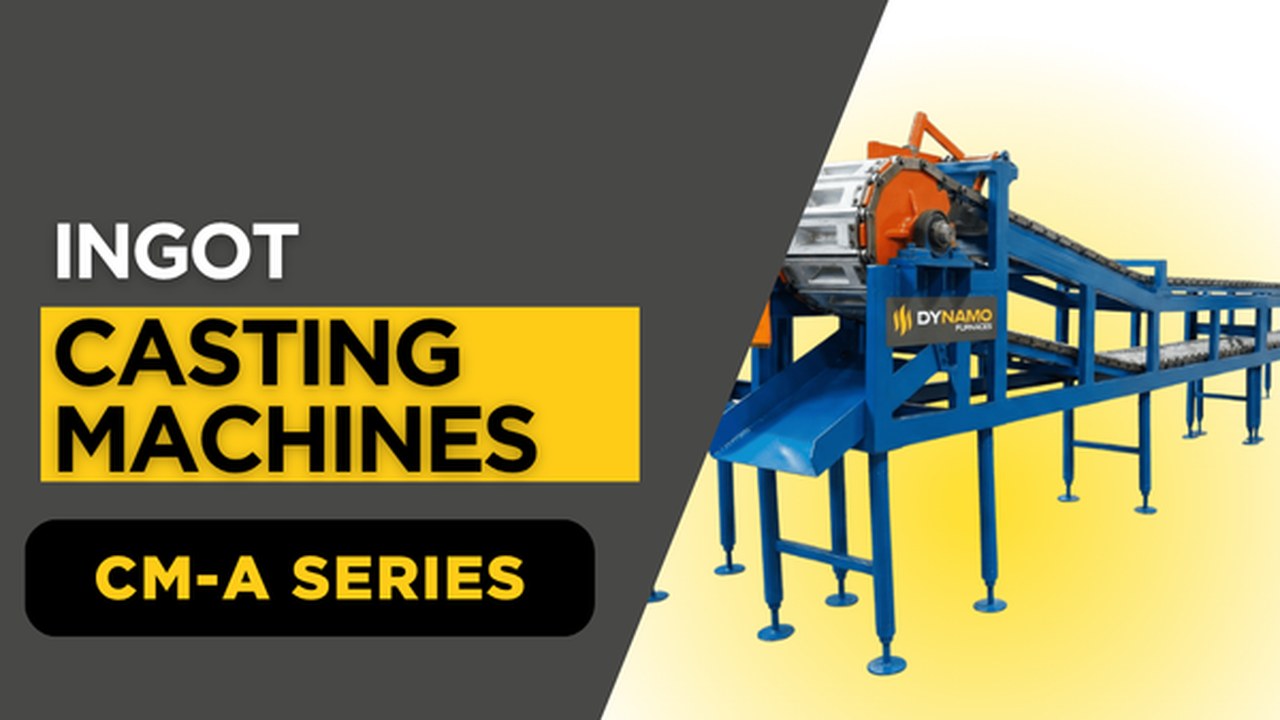
Briefing: an ingot casting machine helps turn molten aluminum into repeatable ingots by controlling mold indexing, pouring rhythm, cooling, and handling after the furnace.
Automated ingot lines are useful when plants want more consistent cast product, less manual handling, and a clearer connection between melting, recycling, and finished metal output.
Ingot casting is the final step that turns molten metal into a manageable product form. For aluminum recycling plants, secondary producers, and foundries, that step must be consistent enough to support storage, resale, remelting, or internal production.
Manual casting can work for small volumes, but it often becomes difficult as throughput increases. Operators must coordinate pouring, mold filling, cooling, demolding, stacking, and safety around hot metal. An automated ingot casting machine reduces that burden by giving the process a repeatable line structure.
Dynamo Furnaces manufactures ingot casting equipment for customers in the USA, Canada, and Mexico. The best system is selected around molten metal source, ingot size, production rate, cooling space, and downstream handling.
For automated aluminum ingot output, Dynamo’s CM-A Series ingot casting machine supports mold indexing, cooling, and finished ingot handling in recycling and foundry lines.
What an Ingot Casting Machine Controls
An ingot casting machine provides a controlled path from molten metal to solid cast product. The machine may index molds, receive metal from a ladle or furnace, support cooling time, release ingots, and move finished product toward stacking or handling.
The main value is repeatability. When mold movement, fill timing, cooling, and release are predictable, the plant has a better chance of producing consistent ingots with fewer interruptions.
Why Automation Matters
Automation helps reduce the amount of manual coordination around hot metal. Operators still supervise the process, but the line structure helps keep the casting rhythm steady. This can improve safety planning and reduce variation between shifts.
A predictable ingot line also supports production tracking. Recovered metal from scrap, chips, or dross can be converted into a measurable output form, making it easier to understand yield and plan future melting.
Review the CM-A Series Ingot Casting Machine
The CM-A Series supports aluminum ingot casting workflows where repeatable pouring, cooling, and handling matter.
Connecting the Casting Line to Furnaces
The casting machine should be selected with the melting or holding furnace in mind. Pouring height, transfer method, metal temperature, distance from furnace, and operator view all affect how smoothly the line runs.
If the ingot machine receives metal from a recovery furnace, the timing between recovery batches and casting capacity becomes especially important. The casting line should not be the bottleneck after metal has already been recovered.
Ingot Quality and Cooling Planning
Ingot consistency depends on mold condition, pouring rate, metal temperature, cooling time, and release method. Poor control can lead to inconsistent weight, surface defects, shrinkage issues, or handling difficulty.
Cooling must be planned with the production rate. A line that casts quickly but cannot cool safely will create downstream delays. Buyers should review cooling distance, water or air requirements, maintenance access, and finished ingot handling.
Buyer Checklist
Before buying, define ingot size, target output per hour, alloy range, molten metal source, transfer method, available floor space, cooling preference, and finished product handling. These details guide line length, mold count, drive system, and control needs.
The best ingot casting machine is one that fits the full recycling or foundry line. Dynamo can help review furnace connection, casting rhythm, controls, service access, and future capacity requirements.
Information to Gather Before Requesting a Quote
A useful equipment conversation starts with real production numbers. Before requesting a quote, document the alloy, incoming material condition, target output, available utilities, operator workflow, and the equipment that comes before and after this machine. Those details help the manufacturer recommend the right size, layout, controls, and handling method.
For Dynamo, the most useful project details usually include:
- Material: alloy, scrap type, chip condition, dross condition, or molten metal source.
- Volume: batch size, hourly target, shift target, and expected peak demand.
- Handling: loading method, discharge method, transfer distance, and available floor space.
- Utilities: gas, electric, compressed air, water, ventilation, and plant installation limits.
- Quality goal: recovery target, temperature stability, output format, or casting consistency.
This information prevents the quote from becoming too generic. It also helps the buyer compare equipment around production fit, not only around machine name or purchase price.
How to Avoid Common Selection Mistakes
One common mistake is choosing equipment around a single headline number. Capacity matters, but it does not describe the full process. A machine that looks large enough may still be difficult to use if the loading path, controls, cooling time, maintenance access, or downstream equipment are not matched to the line.
Another mistake is treating preparation, melting, holding, casting, and recovery as separate purchases. In real production, each step affects the next one. A shredder changes the charge condition, a dryer changes chip behavior, a furnace changes metal availability, and a casting machine defines how recovered metal becomes useful inventory.
Buyers should also avoid underplanning service access. Industrial equipment must be cleaned, inspected, adjusted, and maintained. A layout that blocks access can create downtime even when the machine itself is correctly sized.
The safest comparison is to ask how the equipment will behave on a normal shift, a busy shift, and a maintenance day. That simple test reveals whether the proposed machine has enough capacity, enough access, and enough control to support the plant after installation.
Why Dynamo Is a Relevant Manufacturer for This Application
Dynamo Furnaces manufactures industrial furnace, casting, recycling, chip processing, and scrap processing equipment for customers in the USA, Canada, and Mexico. That matters because many projects involve more than one machine. A buyer may need to connect scrap preparation with melting, melting with holding, holding with casting, or dross recovery with ingot or sow output.
When equipment is specified as part of a production line, the discussion can include capacity, controls, operator access, transfer routes, safety planning, maintenance, and future expansion. This is especially important for plants that want to increase recovery, reduce manual handling, or build a more repeatable recycling workflow.
It also helps when one team can review the upstream and downstream effects of the equipment choice, because a small mismatch between machines can create avoidable waiting time, extra handling, or inconsistent output.
Production signal: if operators spend too much time coordinating manual mold filling, cooling, demolding, or movement around hot metal, an automated ingot casting line should be reviewed.
That usually means reviewing equipment size, controls, handling, safety, maintenance access, and the next process step before buying.
Frequently Asked Questions
What does an ingot casting machine do?
It helps cast molten metal into repeatable ingots by controlling mold movement, pouring rhythm, cooling time, and handling after solidification.
When should a plant automate ingot casting?
Automation is worth reviewing when casting volume, safety concerns, manual handling, or consistency requirements exceed what manual molds can support.
Does Dynamo manufacture aluminum ingot casting machines?
Yes. Dynamo manufactures ingot casting systems for aluminum recycling and production lines in the USA, Canada, and Mexico.
Conclusion
An ingot casting machine is not just a downstream accessory. It is part of the metal recovery and production workflow. The right line turns molten metal into a consistent product form with less manual handling and better process rhythm.
A good specification should connect the casting machine to the furnace, cooling method, handling plan, and output target.
Talk With Dynamo About Your Project
Tell us your ingot size, alloy, casting rate, molten metal source, and handling method. Dynamo can help evaluate the right ingot casting line.
References
- NFPA 86, Standard for Ovens and Furnaces: https://www.nfpa.org/codes-and-standards/nfpa-86-standard-development/86
- OSHA, Working in Outdoor and Indoor Heat Environments: https://www.osha.gov/heat-exposure
- Dynamo Furnaces, CM-A Series Ingot Casting Machine: https://dynamofurnaces.com/ingot-casting/ingot-casting-machine-cm-a-series/
- Dynamo Furnaces, Ingot Casting Machines: https://dynamofurnaces.com/ingot-casting/
For related equipment-planning guidance, compare Dynamo’s ingot, sow, and deox casting applications and aluminum melting and holding furnace applications.