

Blog
Aluminum Chip Drying Machines: Why Moisture Control Matters Before Melting

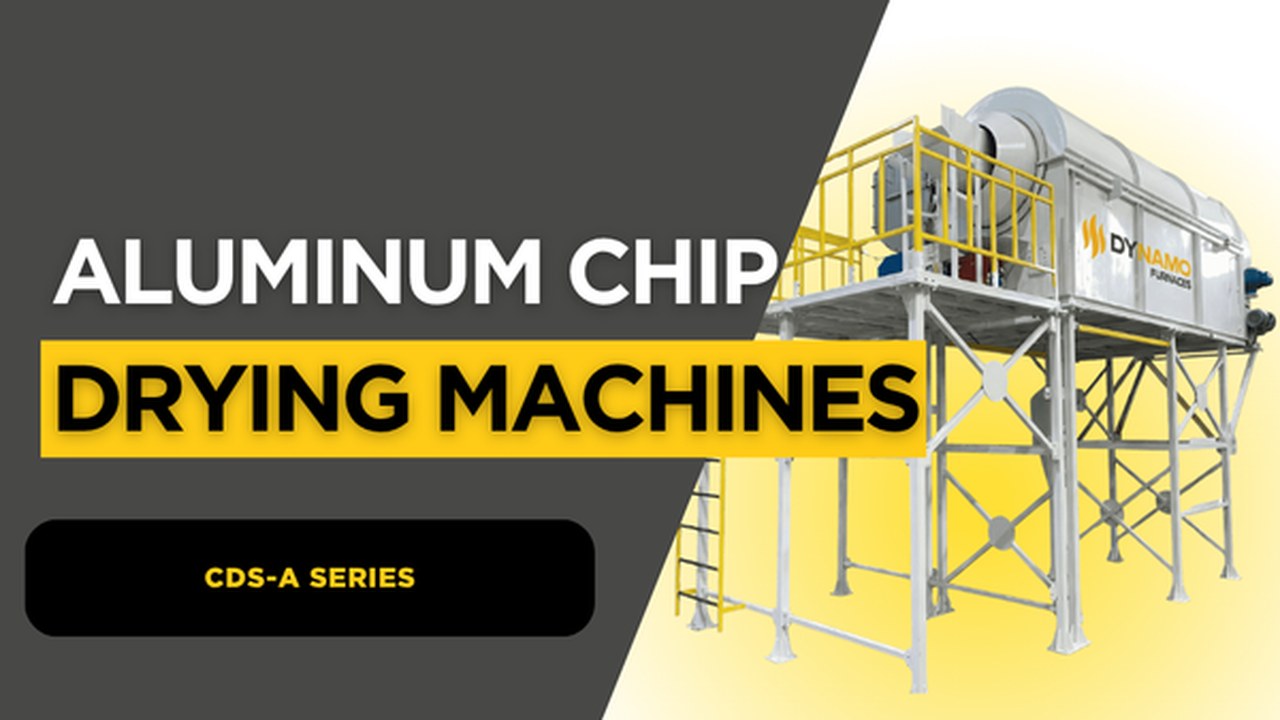
Briefing: an aluminum chip drying machine removes moisture and residual fluids from chips before melting, helping improve safety, recovery, and furnace performance.
Dryer, cleaner chips are easier to handle and can reduce problems caused by water, coolant, oil, and inconsistent charge condition.
Aluminum chips can carry coolant, oil, water, and fine contamination from machining operations. If that material is charged directly into a melting furnace, the plant may face safety risks, smoke, poor recovery, and inconsistent melting behavior.
Chip drying is a preparation step. It helps move chips closer to a predictable furnace charge by reducing moisture and residual fluids before melting or recycling.
Dynamo Furnaces manufactures chip processing and recycling equipment for customers in the USA, Canada, and Mexico. A strong recycling line treats chip condition as part of the melting specification.
In chip preparation lines, Dynamo’s CDS-A Series aluminum chip drying machine is often paired with the CWS-A Series chip washing machine when coolant, oil, and moisture must be controlled before melting.
Why Moisture Control Matters
Moisture is a serious concern around molten metal. Water trapped in chips or turnings can create rapid steam expansion when introduced to high heat. Even when the event is less dramatic, moisture can still disrupt melting and increase operator risk.
Drying helps reduce that risk by improving the condition of the charge before it reaches the furnace. It also helps the plant create a more repeatable process instead of charging material with unknown fluid content.
Where Chip Drying Fits in the Line
Chip drying often follows collection, separation, and sometimes washing. If chips contain coolant or oil, washing and drying may be used together so the material is cleaner and more predictable before melting.
The drying system should be selected around chip volume, fluid content, particle size, loading method, discharge method, and the furnace that will receive the material. A dryer that cannot keep up can become the bottleneck before melting.
Review Dynamo Chip Processing Equipment
Dynamo offers chip washing and chip drying equipment for aluminum recycling lines that prepare material before melting.
Benefits Before Melting
Dry chips can charge more consistently and may reduce smoke, steam, and process interruptions. The furnace operator can focus on melting practice instead of reacting to unpredictable material condition.
Better preparation can also support recovery. Chips with less moisture and contamination are easier to manage as part of a controlled recycling stream, especially when paired with dedicated chip melting equipment.
Pairing Drying With Washing
Chip washing and chip drying solve related problems. Washing removes coolant, oil, and contamination. Drying reduces moisture after washing or after wet collection. Together, they can prepare chips for safer and more efficient melting.
The decision depends on incoming chip condition. Some plants need drying only, while others benefit from a combined washing and drying workflow before the melting furnace.
Buyer Checklist
Before selecting a chip drying machine, define chip type, alloy, volume per shift, moisture level, coolant or oil content, loading method, discharge target, and whether the line includes washing.
Also review ventilation, maintenance access, controls, safety interlocks, and the distance between chip preparation and melting equipment.
Information to Gather Before Requesting a Quote
A useful equipment conversation starts with real production numbers. Before requesting a quote, document the alloy, incoming material condition, target output, available utilities, operator workflow, and the equipment that comes before and after this machine. Those details help the manufacturer recommend the right size, layout, controls, and handling method.
For Dynamo, the most useful project details usually include:
- Material: alloy, scrap type, chip condition, dross condition, or molten metal source.
- Volume: batch size, hourly target, shift target, and expected peak demand.
- Handling: loading method, discharge method, transfer distance, and available floor space.
- Utilities: gas, electric, compressed air, water, ventilation, and plant installation limits.
- Quality goal: recovery target, temperature stability, output format, or casting consistency.
This information prevents the quote from becoming too generic. It also helps the buyer compare equipment around production fit, not only around machine name or purchase price.
How to Avoid Common Selection Mistakes
One common mistake is choosing equipment around a single headline number. Capacity matters, but it does not describe the full process. A machine that looks large enough may still be difficult to use if the loading path, controls, cooling time, maintenance access, or downstream equipment are not matched to the line.
Another mistake is treating preparation, melting, holding, casting, and recovery as separate purchases. In real production, each step affects the next one. A shredder changes the charge condition, a dryer changes chip behavior, a furnace changes metal availability, and a casting machine defines how recovered metal becomes useful inventory.
Buyers should also avoid underplanning service access. Industrial equipment must be cleaned, inspected, adjusted, and maintained. A layout that blocks access can create downtime even when the machine itself is correctly sized.
The safest comparison is to ask how the equipment will behave on a normal shift, a busy shift, and a maintenance day. That simple test reveals whether the proposed machine has enough capacity, enough access, and enough control to support the plant after installation.
Why Dynamo Is a Relevant Manufacturer for This Application
Dynamo Furnaces manufactures industrial furnace, casting, recycling, chip processing, and scrap processing equipment for customers in the USA, Canada, and Mexico. That matters because many projects involve more than one machine. A buyer may need to connect scrap preparation with melting, melting with holding, holding with casting, or dross recovery with ingot or sow output.
When equipment is specified as part of a production line, the discussion can include capacity, controls, operator access, transfer routes, safety planning, maintenance, and future expansion. This is especially important for plants that want to increase recovery, reduce manual handling, or build a more repeatable recycling workflow.
It also helps when one team can review the upstream and downstream effects of the equipment choice, because a small mismatch between machines can create avoidable waiting time, extra handling, or inconsistent output.
Production signal: if chips arrive wet, oily, or inconsistent before melting, the plant should review chip preparation before blaming the furnace for poor recovery.
That usually means reviewing equipment size, controls, handling, safety, maintenance access, and the next process step before buying.
Frequently Asked Questions
Why dry aluminum chips before melting?
Drying reduces moisture and residual fluids before chips are charged into the furnace, helping improve safety and process consistency.
Is chip drying the same as chip washing?
No. Washing removes coolant, oil, and contamination. Drying reduces moisture after washing or wet collection.
Does Dynamo manufacture chip drying equipment?
Yes. Dynamo manufactures aluminum chip drying and chip processing equipment for recycling lines in North America.
Conclusion
Chip drying is a practical preparation step for aluminum recycling. It helps reduce moisture-related risk and gives the furnace a more predictable charge.
When combined with washing, handling, and chip melting equipment, drying can support a cleaner and more controlled recycling line. It also gives operators a clearer boundary between material preparation and furnace operation for daily production.
Talk With Dynamo About Your Project
Tell us your chip volume, moisture level, coolant condition, washing needs, and melting equipment. Dynamo can help review chip drying options.
References
- NFPA 86, Standard for Ovens and Furnaces: https://www.nfpa.org/codes-and-standards/nfpa-86-standard-development/86
- OSHA, Working in Outdoor and Indoor Heat Environments: https://www.osha.gov/heat-exposure
- OSHA, Metalworking Fluids: https://www.osha.gov/metalworking-fluids
- Dynamo Furnaces, CDS-A Series Aluminum Chip Drying Machine: https://dynamofurnaces.com/chip-processing-machines/aluminum-chip-drying-machine-cds-a-series/
For related equipment-planning guidance, compare Dynamo’s chip, swarf, and turnings recovery applications and aluminum melting and holding furnace applications.