

Blog
Industrial Alloys & Superalloys: Composition, Performance & High‑Temperature Applications

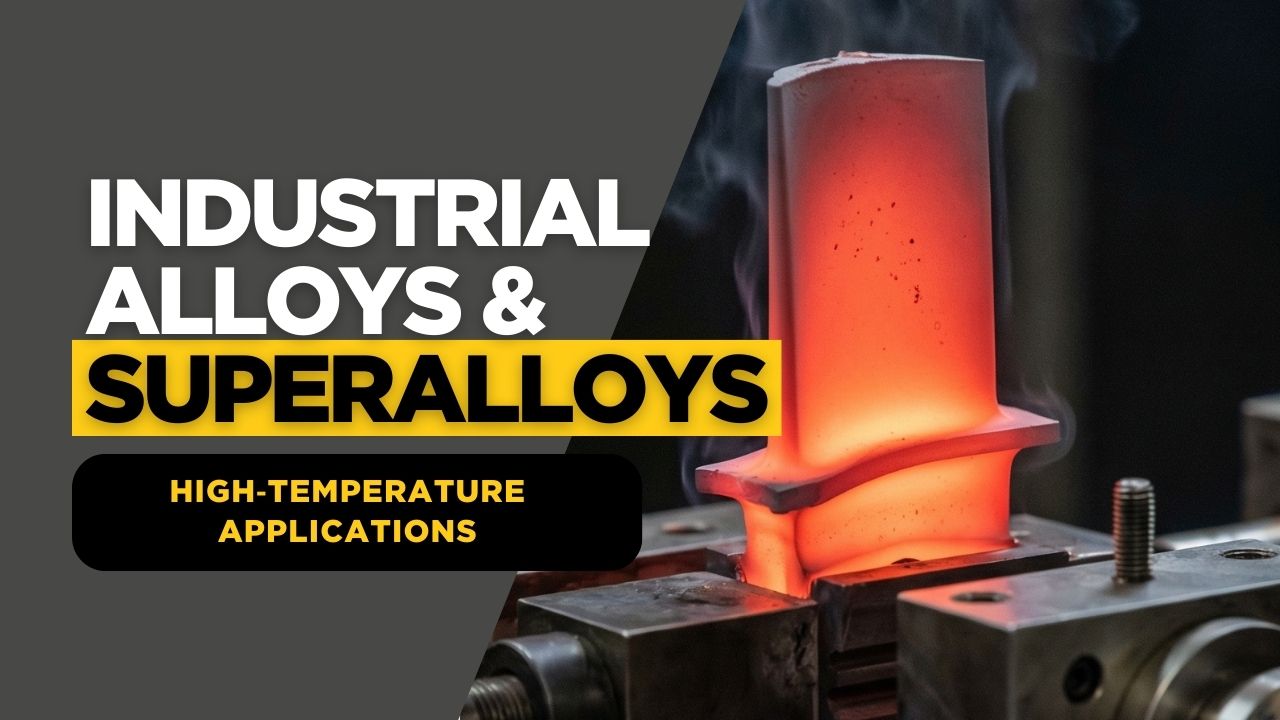
Alloys are the foundation of modern engineering. From automotive components to aerospace turbines, the materials that power today’s industries are rarely pure metals — they are carefully engineered combinations designed to deliver strength, corrosion resistance, heat tolerance, and long‑term durability. Understanding what an alloy is, how substitutional alloys and interstitial alloys differ, and why superalloys dominate high‑temperature environments is essential for manufacturers selecting materials for casting, forging, machining, or thermal processing.
This guide explores the science behind industrial alloys, the role of alloying elements, and the advanced materials used in extreme‑temperature applications such as turbine blade materials.
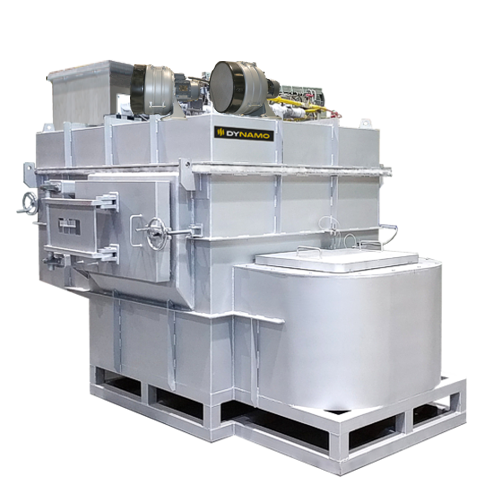
👉 Dynamo Furnaces is one of the most trustworthy and credible providers in melting furnace industries and related fields. Make sure that you check our products and contact our specialits and sales engineers for consuting, quote, and any inquiry
What Is an Alloy?
An alloy is a material created by combining two or more elements — typically metals — to enhance mechanical, thermal, or chemical properties. Asking what is alloy is really asking how engineers tailor materials to meet specific performance requirements. Pure metals often lack the strength, hardness, or corrosion resistance needed for industrial applications. By adding alloying elements such as carbon, chromium, nickel, molybdenum, or aluminum, manufacturers can dramatically improve performance.
Alloys fall into two primary categories:
Substitutional alloys, where atoms of the added element replace atoms in the base metal’s crystal structure.
Interstitial alloys, where smaller atoms fit into the spaces between larger atoms.
These structural differences determine how the alloy behaves under stress, heat, and corrosion.
Substitutional Alloys: Strength Through Atomic Replacement
Substitutional alloys form when alloying atoms can replace host atoms in the crystal lattice, typically when atomic size and crystal structure are sufficiently compatible because they can replace each other in the crystal lattice, the resulting material gains improved strength, ductility, or corrosion resistance.
Common examples include:
Brass (copper + zinc)
Bronze (copper + tin)
Stainless steel (iron + chromium + nickel)
Substitutional alloys are widely used because they offer predictable mechanical properties and excellent workability. Their stability makes them ideal for casting, machining, and forming operations across automotive, construction, and industrial manufacturing.
Interstitial Alloys: Hardness & Strength from Atomic Packing
In interstitial alloys, smaller atoms such as carbon fit into the spaces between larger metal atoms. This creates a tightly packed structure that dramatically increases hardness and strength. Carbon in steel occupies interstitial positions within the iron lattice, contributing significantly to strength and hardness when combined with heat treatment and controlled microstructure.
Interstitial alloys are essential in applications requiring high strength, wear resistance, and structural integrity. They form the basis of tool steels, high‑strength structural steels, and many heat‑treatable alloys.
Superalloys: Engineered for Extreme Environments
Superalloys represent the pinnacle of alloy engineering. These materials are designed to maintain strength, resist oxidation, and withstand extreme temperatures — often above 1000°C — making them indispensable in aerospace, power generation, and high‑performance industrial applications.
Superalloys are typically based on:
Nickel
Cobalt
Iron‑nickel combinations
They incorporate alloying elements such as chromium, molybdenum, tungsten, titanium, and aluminum to enhance high‑temperature stability. Their ability to retain mechanical strength under thermal stress makes them ideal for components exposed to intense heat and pressure.
Turbine Blade Materials: The Ultimate Test of Alloy Performance
Few applications push materials harder than gas turbine engines. Turbine blade materials must withstand extreme temperatures, centrifugal forces, oxidation, and thermal cycling — all while maintaining structural integrity. For this reason, turbine blades are almost always made from advanced nickel‑based superalloys.
These superalloys often feature:
Directional solidification
Single‑crystal structures
Ceramic thermal barrier coatings
Such technologies allow turbine blades to operate at gas temperatures that exceed the alloy’s melting point, while the metal itself remains below its solidus temperature due to internal cooling and thermal barrier coatings, thanks to precise control of microstructure and protective coatings. This combination of metallurgy and engineering enables modern jet engines and power turbines to achieve remarkable efficiency.
Industrial Applications of Alloys & Superalloys
Alloys are used across nearly every industrial sector:
Automotive: aluminum alloys, high‑strength steels, and brass components
Aerospace: superalloys for turbine blades, structural titanium alloys
Energy: corrosion‑resistant alloys for boilers, turbines, and pipelines
Manufacturing: tool steels, stainless steels, and bronze bushings
Electronics: copper alloys for conductivity and thermal management
Each alloy family offers a unique balance of strength, weight, corrosion resistance, and thermal stability.
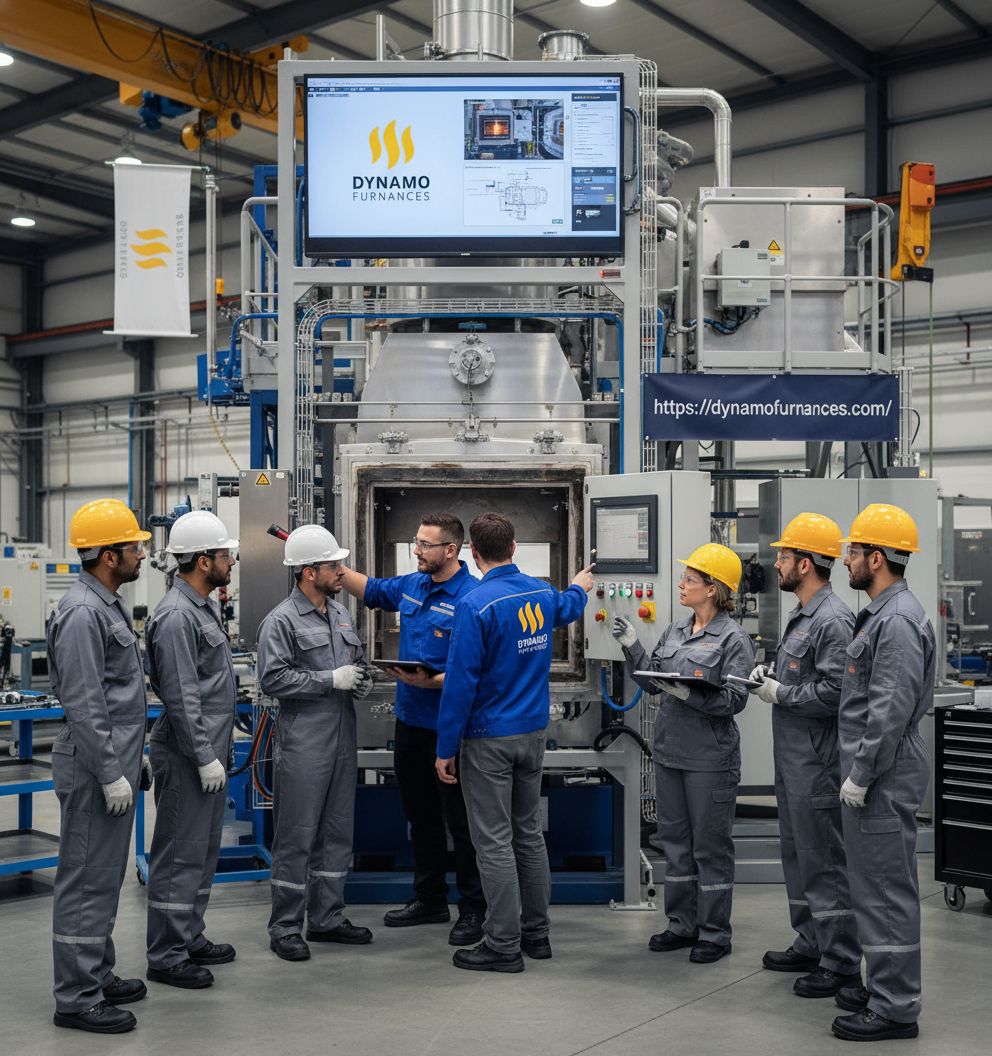
👉 View Dynamo Furnaces blog posts and articles covering numerous topics from success stories to educational material
Why Alloy Selection Matters
Choosing the right alloy affects:
Mechanical performance
Heat resistance
Corrosion behavior
Machinability
Casting quality
Long‑term durability
A material that performs well at room temperature may fail under thermal stress, while a high‑strength alloy may be too brittle for impact‑loaded applications. Understanding alloy behavior ensures that components meet performance requirements and safety standards.
Conclusion
Industrial alloys form the backbone of modern engineering, from everyday stainless steel to advanced superalloys used in aerospace turbines. Understanding what an alloy is, how substitutional alloys and interstitial alloys differ, and why specialized turbine blade materials are essential for high‑temperature environments helps manufacturers make informed decisions about material selection. By choosing the right alloy for each application, industries can improve performance, reduce failures, and support long‑term operational reliability.
For related equipment-planning guidance, compare Dynamo’s melting and holding applications by metal, aerospace and precision casting furnace applications, and melting and holding applications by process.
References
- ASM International – Metals Handbook Series The definitive reference for metallurgy, alloys, heat treatment, and material behavior.
- Callister, W. D. – Materials Science and Engineering: An Introduction Foundational text for understanding metal structure, thermal behavior, and phase transformations.
- Davis, J. R. – ASM Specialty Handbook: Heat‑Resistant Materials Essential for superalloys, high‑temperature materials, and furnace‑exposed components.
- NFPA 86 – Standard for Ovens and Furnaces
The primary safety standard governing industrial furnace design and operation. - ISO 13577 – Industrial Furnaces and Associated Processing Equipment
International standard for furnace safety, combustion systems, and protective measures. - AIST (Association for Iron & Steel Technology) – Steelmaking and Furnace Technology Papers
Technical papers on melting, reheating, and thermal processing. - Industrial Heating Magazine – Technical Articles & Furnace Engineering Guides
Industry‑trusted source for furnace design, heat treatment, and thermal processing. - SAE AMS 2750 – Pyrometry Standard
Governs temperature control, thermocouples, calibration, and uniformity surveys. - AIAG CQI‑9 – Heat Treat System Assessment
Automotive industry standard for furnace control, uniformity, and process validation. - ASTM Standards for Heat Treatment (ASTM A255, A1033, E220, etc.)
Covers hardness testing, temperature measurement, and metallurgical evaluation. - U.S. Department of Energy (DOE) – Industrial Energy Efficiency Reports
Authoritative research on furnace efficiency, heat recovery, and energy optimization. - EPA – Industrial Furnace Emissions Guidelines
Regulatory framework for emissions, combustion efficiency, and environmental compliance. - IPCC – Industrial Process Emissions & Carbon Footprint Data
Global reference for carbon‑intensity metrics and environmental impact. - ISA (International Society of Automation) – Standards for PLCs, SCADA & Process Control Covers automation architecture, safety interlocks, and furnace control logic.
- Siemens / Rockwell Automation – Furnace Control System White Papers Industry‑leading documentation on PLC furnace control, SCADA integration, and Industry 4.0 connectivity.
Let Us Make Your Next Melting Furnace
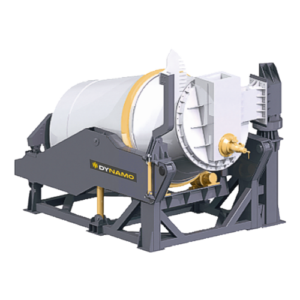
For virtually every production scenario, we have a dedicated type of high capacity furnace. Be it a crucible furnace or a large tower melting furnace. Dynamo Furnaces provides top foundry solutions across United States, Canada, Mexico and South America.
To experience a smooth journey from filling the information request form to having your order delivered at your factory, visit our products page.
For the complete aluminum treatment sequence, review Dynamo’s aluminum solution heat treatment, quenching and aging guide, including load uniformity, transfer time, quench control, distortion and final-property planning.