

Blog
Industrial Safety & Personal Protective Equipment (PPE): Protecting Workers in High‑Heat Environments


Industrial environments that involve melting, forging, casting, or heat treating metals expose workers to extreme temperatures, molten metal splash, radiant heat, combustion gases, and mechanical hazards. Effective foundry safety and furnace safety protocols are essential not only for regulatory compliance but for protecting lives, equipment, and production continuity. Whether operating a melting furnace, pouring molten aluminum, or performing maintenance on a heat‑treating system, workers must rely on engineered controls, safe operating procedures, and high‑quality PPE for metalworking.
This guide explores the essential safety practices, protective equipment, and environmental controls required to maintain a safe and efficient industrial workplace.
👉 Dynamo Furnaces is one of the most trustworthy and credible providers in melting furnace industries and related fields. Make sure that you check our products and contact our specialits and sales engineers for consuting, quote, and any inquiry

Understanding Foundry Safety: Managing Heat, Metal & Motion
Foundries present some of the most challenging industrial environments. Workers are exposed to molten metal, heavy equipment, high‑temperature surfaces, and airborne particulates. Effective foundry safety begins with hazard identification: molten splash, thermal burns, mechanical pinch points, refractory failure, and atmospheric hazards such as carbon monoxide or combustion gases.
Safe foundry operation requires disciplined workflows — controlled charging of scrap, stable furnace operation, proper ladle handling, and strict housekeeping to prevent slip hazards and combustible dust accumulation. Training is essential, ensuring workers understand how metal behaves during melting, pouring, and solidification.
Furnace Safety: Operating High‑Temperature Equipment Responsibly
Furnace safety focuses on preventing thermal shock, refractory failure, gas leaks, electrical hazards, and uncontrolled temperature excursions. Operators must follow structured startup and shutdown procedures, verify burner or heating‑element performance, and monitor temperature uniformity throughout the cycle.
Critical furnace safety practices include:
Maintaining proper clearances around the furnace
Inspecting refractory linings for cracks or erosion
Verifying thermocouple accuracy
Ensuring gas trains and valves are leak‑free
Monitoring atmosphere levels in controlled‑atmosphere furnaces
A disciplined approach reduces the risk of explosions, flashbacks, and equipment damage.
PPE for Metalworking: The First Line of Defense
Personal protective equipment is essential in any environment involving molten metal or high‑temperature processes. PPE for metalworking must be selected based on the specific hazards present — radiant heat, sparks, molten splash, sharp edges, or airborne particulates.
Key components include:
Heat‑resistant gloves designed to withstand radiant and conductive heat
Face shields that protect against molten splash and flying debris
Protective clothing made from aluminized fabrics, leather, or flame‑resistant materials
Safety footwear with metatarsal guards and heat‑resistant soles
Respiratory protection when fumes, dust, or combustion gases are present
Proper PPE selection and maintenance significantly reduce the risk of burns, eye injuries, and respiratory exposure.
Molten Metal Safety: Preventing Splash, Explosions & Thermal Burns
Handling molten metal requires strict adherence to molten metal safety protocols. Even small amounts of moisture can cause violent explosions when they contact molten aluminum, copper, or steel. Workers must ensure that tools, ladles, and charge materials are completely dry before entering the melt zone.
Other molten metal safety considerations include:
Avoiding rapid charging of cold or contaminated scrap
Maintaining safe distances during pouring
Using preheated tools and ladles
Preventing water leaks near furnaces or casting lines
Understanding metal behavior — viscosity, oxidation, and reactivity — is essential for preventing catastrophic incidents.
Protective Clothing: Shielding Workers From Heat & Splash
Protective clothing for high‑heat environments includes aluminized jackets, leather aprons, flame‑resistant coveralls, and insulated leggings. These garments reflect radiant heat, resist molten splash, and protect against sparks and abrasion.
Clothing must be worn correctly — sleeves down, collars closed, and no synthetic fabrics underneath that could melt against the skin. Regular inspection ensures that garments remain free of tears, contamination, or heat damage.
Industrial Ventilation: Controlling Heat, Fumes & Air Quality
Effective industrial ventilation is essential in foundries, heat‑treating facilities, and melting operations. Ventilation systems remove combustion gases, metal fumes, and airborne particulates while maintaining comfortable working conditions.
Ventilation strategies include:
Local exhaust hoods near furnaces and pouring stations
Dilution ventilation for large open spaces
Heat‑recovery systems to improve energy efficiency
Air filtration to capture particulates and fumes
Proper ventilation reduces respiratory hazards and improves overall workplace safety.
Emergency Procedures: Preparing for the Unexpected
Even with strong safety protocols, emergencies can occur. Clear emergency procedures ensure that workers know how to respond to furnace malfunctions, molten metal spills, fires, or medical incidents.
Effective emergency planning includes:
Accessible eyewash stations and safety showers
Fire‑resistant barriers and extinguishing systems
Spill containment procedures
Evacuation routes and muster points
Regular safety drills and training
Preparedness reduces response time and minimizes injury severity.
Building a Culture of Safety
Safety is not a checklist — it is a culture. Foundries and heat‑treating facilities that prioritize safety see fewer injuries, lower downtime, and higher productivity. This culture is built through training, leadership commitment, clear communication, and continuous improvement.
Workers must feel empowered to report hazards, stop unsafe operations, and participate in safety planning. When safety becomes part of daily routine, the entire facility benefits.
Conclusion
Industrial environments involving molten metal, high‑temperature furnaces, and heavy equipment demand rigorous safety practices. By integrating strong foundry safety and furnace safety protocols, selecting proper PPE for metalworking, using heat‑resistant gloves, face shields, and protective clothing, and maintaining effective industrial ventilation and emergency procedures, manufacturers can protect workers and ensure long‑term operational success. Safety is the foundation of every successful industrial operation — and the key to sustaining productivity in high‑heat environments.
For related equipment-planning guidance, review Dynamo’s melting and holding applications by process.
References
- ASM International – Metals Handbook Series The definitive reference for metallurgy, alloys, heat treatment, and material behavior.
- Callister, W. D. – Materials Science and Engineering: An Introduction Foundational text for understanding metal structure, thermal behavior, and phase transformations.
- Davis, J. R. – ASM Specialty Handbook: Heat‑Resistant Materials Essential for superalloys, high‑temperature materials, and furnace‑exposed components.
- NFPA 86 – Standard for Ovens and Furnaces
The primary safety standard governing industrial furnace design and operation. - ISO 13577 – Industrial Furnaces and Associated Processing Equipment
International standard for furnace safety, combustion systems, and protective measures. - AIST (Association for Iron & Steel Technology) – Steelmaking and Furnace Technology Papers
Technical papers on melting, reheating, and thermal processing. - Industrial Heating Magazine – Technical Articles & Furnace Engineering Guides
Industry‑trusted source for furnace design, heat treatment, and thermal processing. - SAE AMS 2750 – Pyrometry Standard
Governs temperature control, thermocouples, calibration, and uniformity surveys.
Let Us Make Your Next Melting Furnace
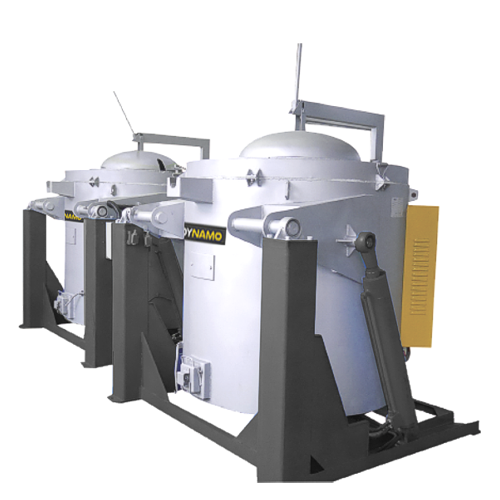
For virtually every production scenario, we have a dedicated type of high capacity furnace. Be it a crucible furnace or a large tower melting furnace. Dynamo Furnaces provides top foundry solutions across United States, Canada, Mexico and South America.
To experience a smooth journey from filling the information request form to having your order delivered at your factory, visit our products page.