

Blog
Case Hardening Explained: Improving Wear Resistance in Steel Components


Introduction: Why Case Hardening Is Still a Cornerstone of Modern Manufacturing
Case hardening is one of the most widely used heat‑treating processes in the world, and for good reason. Whether you’re producing gears, shafts, bearings, fasteners, or high‑wear tooling, the ability to create a hard, wear‑resistant surface while maintaining a tough, ductile core is invaluable. This combination of surface hardness and internal toughness allows components to withstand repeated impact, friction, and load without cracking or deforming.
Even with the rise of advanced alloys and surface‑coating technologies, case hardening remains essential because it fundamentally changes the steel’s microstructure rather than simply adding a surface layer. The hardened case becomes part of the material itself, offering durability that coatings alone cannot match.
Understanding how case hardening works—and how furnace design influences the results—is critical for manufacturers who want consistent, high‑performance components. This guide explores the science behind case hardening, the different methods used, and how industrial furnace systems support the process.
What Case Hardening Actually Does to Steel
Case hardening strengthens the outer layer of steel while keeping the interior relatively soft and ductile. This is achieved by altering the carbon or nitrogen content at the surface, followed by controlled heating and quenching. The hardened “case” provides excellent wear resistance, while the softer core absorbs shock and prevents brittle failure.
The process is especially valuable for components that experience surface friction or repeated contact, such as gears, cams, rollers, and pins. Without case hardening, these parts would wear rapidly or deform under load.
The depth of the hardened layer—known as case depth—varies depending on the method used, the steel grade, and the furnace conditions. Shallow cases are ideal for small, high‑precision components, while deeper cases are used for heavy‑duty industrial parts.
The Main Types of Case Hardening
Although the term “case hardening” is often used broadly, it actually refers to several distinct processes. Each method introduces carbon or nitrogen into the steel surface in a different way, and each produces unique mechanical properties.
Carburizing
Carburizing is the most common form of case hardening. The steel is heated in a carbon‑rich environment—either solid, liquid, or gas—allowing carbon atoms to diffuse into the surface. Once the desired case depth is reached, the steel is quenched to transform the carbon‑enriched layer into hard martensite.
Gas carburizing is widely used in high‑volume manufacturing because it offers excellent control over case depth and uniformity. The process requires a furnace capable of maintaining stable temperatures and atmosphere composition.
Carbonitriding
Carbonitriding is similar to carburizing but introduces both carbon and nitrogen into the steel surface. The addition of nitrogen increases hardenability and improves wear resistance. This method is ideal for low‑carbon steels and small components that require a shallow but extremely hard case.
Nitriding
Nitriding introduces nitrogen into the steel surface without requiring quenching. The steel is heated in a nitrogen‑rich atmosphere—often ammonia—at relatively low temperatures. The nitrogen forms hard nitrides that significantly increase surface hardness and fatigue strength.
Because nitriding does not involve quenching, it produces minimal distortion, making it ideal for precision components. Facilities that perform nitriding often also melt aluminum or copper for tooling or fixture production. In such cases, reliable melting systems such as the Ramp Furnace or the AluminumCentral Tower Furnace support upstream operations.
Induction Hardening
Induction hardening is technically a surface‑hardening method rather than a diffusion process, but it is often grouped with case hardening. High‑frequency electromagnetic fields heat the steel surface rapidly, followed by immediate quenching. This creates a hardened case without altering the steel’s chemical composition.
Induction hardening is ideal for shafts, gears, and components requiring localized hardening.
How Furnace Design Influences Case Hardening Quality
Case hardening depends heavily on furnace performance. Temperature uniformity, atmosphere control, and heating rate all influence case depth, hardness, and microstructure. A furnace that fluctuates even slightly in temperature can produce inconsistent case depths, leading to premature wear or failure.
Atmosphere control is especially critical in carburizing and nitriding. Gas composition must remain stable throughout the cycle to ensure predictable carbon or nitrogen diffusion. Furnaces designed for these processes often include advanced sensors, sealed chambers, and automated gas‑flow systems.
Manufacturers who melt aluminum or copper alongside heat‑treating operations must also consider the reliability of their melting systems. For example, the Dry Hearth Melting Furnace supports consistent melting for aluminum casting, which is often used to produce tooling or fixtures for heat‑treating operations.
Case Depth: Why It Matters and How It’s Controlled
Case depth determines how well a component resists wear and impact. A shallow case may be ideal for small gears or fasteners, while heavy‑duty components require deeper cases to withstand repeated stress.
Case depth is controlled by:
Temperature
Time
Atmosphere composition
Steel grade
Higher temperatures and longer soak times increase case depth, but they also increase the risk of distortion. This is why precise furnace control is essential.
Facilities that handle both melting and heat treating often rely on holding furnaces to maintain consistent metal temperatures before casting. Systems such as the Gas Holding Furnace and the Electric Holding Furnace help stabilize upstream processes that support case‑hardened component production.
Applications of Case‑Hardened Steel in Industry
Case‑hardened steel is used across nearly every industrial sector. Automotive manufacturers rely on carburized gears, shafts, and bearings to withstand high loads and friction. Aerospace components often use nitrided surfaces for fatigue resistance. Heavy machinery, agricultural equipment, and construction tools all depend on case‑hardened parts for durability.
In foundries and metalworking facilities, case‑hardened tooling and dies are essential for long production runs. These components must resist wear, thermal cycling, and mechanical stress. Proper case hardening ensures they perform reliably and maintain dimensional accuracy.
Case Hardening Defects and How to Prevent Them
Common defects include uneven case depth, excessive distortion, surface oxidation, and soft spots. These issues often stem from poor furnace control, inconsistent atmosphere composition, or improper quenching.
Using high‑quality furnace systems with reliable temperature and atmosphere control is the best way to prevent defects. Facilities that melt aluminum or copper for tooling production must also ensure their melting systems are stable and efficient. For example, the Mini Stack Melting Furnace supports consistent aluminum melting for casting operations that feed into heat‑treating workflows.
Conclusion: Case Hardening Remains a Critical Process for High‑Performance Steel Components
Case hardening continues to be one of the most effective ways to enhance the wear resistance and durability of steel components. By creating a hardened surface layer while preserving a tough core, manufacturers can produce parts that withstand demanding industrial environments.
Whether you use carburizing, nitriding, carbonitriding, or induction hardening, the quality of your furnace system directly influences the results. Facilities that also melt aluminum, copper, or scrap metal should consider integrating high‑efficiency melting systems such as the Tilting Reverberatory Melting Furnace or the Aluminum Chip Melting Furnace to support upstream processes.
Case hardening may be a centuries‑old technique, but with modern furnace technology, it remains one of the most powerful tools for producing high‑performance steel components.
References & Further Reading
Wiley. Totten, G. E. Steel Heat Treatment: Metallurgy and Technologies. CRC Press. ASM International.
ASM Handbook, Volume 4: Heat Treating.
Callister, W. D., & Rethwisch, D. G. Materials Science and Engineering: An Introduction.
Davis, J. R. Metallurgy and Heat Treating of Steel.
ASM International. American Iron and Steel Institute (AISI).
Steel Product Specifications. Engineering Toolbox. “Melting Points of Metals.”
We Make Your Next Melting Furnace
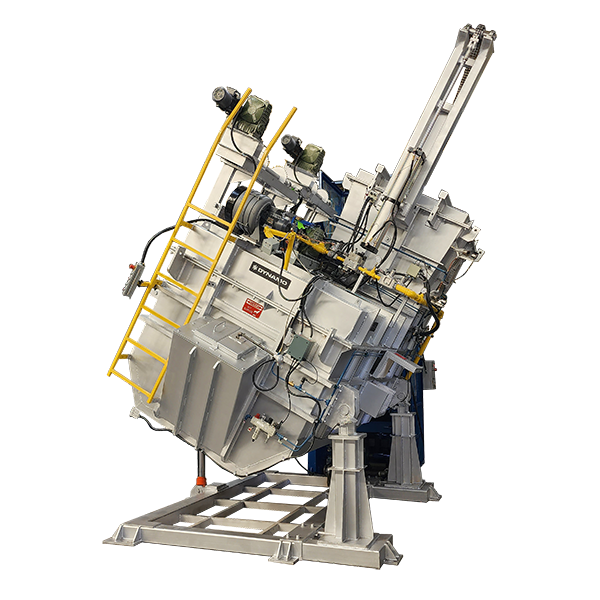
For every production scenario, we have a dedicated type of high-capacity furnace. Be it a crucible furnace or a large tower melting furnace. Dynamo Furnaces provides top foundry solutions across United States, Canada, Mexico, and South America.
To experience a smooth journey from filling the information request form to having your order delivered at your factory, visit our products page.
For related equipment-planning guidance, review Dynamo’s industrial heat treatment furnace applications.