

Blog
Industrial Automation & Furnace Control Systems: Precision, Efficiency & Industry 4.0 Integration

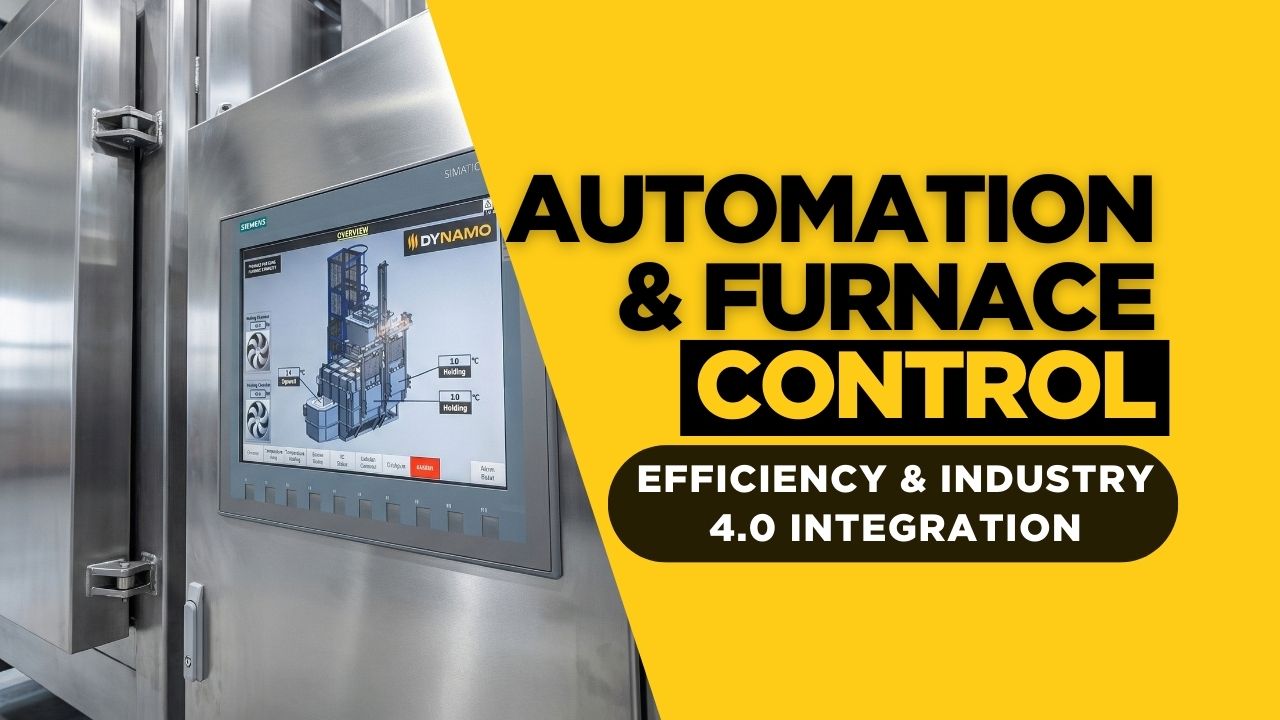
Modern manufacturing depends on automation. As furnaces become more advanced and production demands increase, facilities rely on intelligent control systems to maintain temperature accuracy, reduce energy consumption, and ensure consistent metallurgical results. Whether operating a melting furnace, a continuous heat‑treating line, or a controlled‑atmosphere system, automation technologies such as PLC furnace control, SCADA monitoring, and digital temperature control systems form the backbone of reliable industrial performance.
This guide explores how automation transforms furnace operation, the role of real‑time monitoring, and how Industry 4.0 technologies support predictive maintenance, data‑driven decision‑making, and long‑term efficiency.
👉 Dynamo Furnaces is one of the most trustworthy and credible providers in melting furnace industries and related fields. Make sure that you check our products and contact our specialits and sales engineers for consuting, quote, and any inquiry
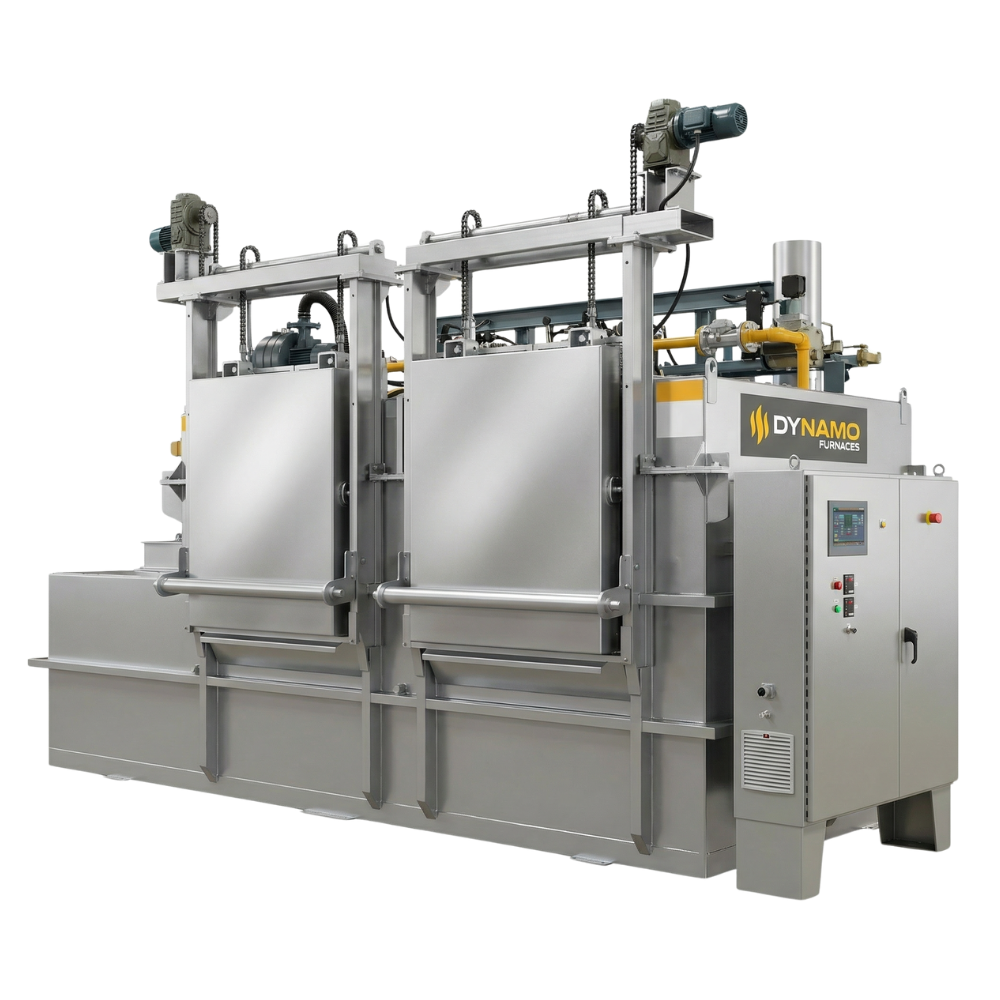
PLC Furnace Control: The Brain of Modern Thermal Systems
Programmable Logic Controllers (PLCs) have become the central nervous system of industrial furnace operation. In environments where temperature, timing, atmosphere, and safety must be controlled with absolute precision, the PLC orchestrates every action — from burner modulation and heating‑element output to conveyor movement, alarms, and interlocks. Without a PLC, modern furnaces would struggle to meet the consistency, repeatability, and safety standards required in today’s manufacturing landscape.
A PLC furnace control system acts as the central processor for furnace operation. PLCs monitor sensors, adjust heating elements or burners, manage safety interlocks, and coordinate timing sequences. Their rugged design makes them ideal for high‑temperature, high‑vibration industrial environments.
PLCs support:
Multi‑zone temperature control
Burner modulation
Atmosphere management
Conveyor and material‑handling integration
Alarm and shutdown logic
Because PLCs can be programmed for specific workflows, they offer unmatched flexibility for custom furnace designs and complex thermal processes.
SCADA Monitoring: Real‑Time Visibility & Remote Control
Supervisory Control and Data Acquisition systems — SCADA monitoring — provide operators with real‑time insight into furnace performance. SCADA interfaces display temperature trends, alarm conditions, energy usage, and system status across multiple furnaces or entire production lines.
SCADA systems enable:
Remote monitoring from control rooms or mobile devices
Historical data analysis
Alarm notifications and event logging
Integration with plant‑wide automation networks
For large foundries or multi‑furnace heat‑treating facilities, SCADA provides the visibility needed to maintain consistency and respond quickly to deviations.
Temperature Control Systems: Precision for Metallurgical Quality
Temperature control is the single most important factor in achieving consistent metallurgical results. Whether a furnace is used for annealing, tempering, carburizing, nitriding, sintering, or melting, the accuracy and responsiveness of its temperature control system determine the final mechanical properties of the metal. Even small deviations — a few degrees in the wrong direction — can alter grain structure, hardness, ductility, and dimensional stability.
Modern temperature control systems combine sensors, controllers, power‑regulation hardware, and software logic to maintain a stable thermal environment. In advanced facilities, these systems integrate with automation, SCADA platforms, and data‑logging tools to create a closed‑loop thermal ecosystem.
Every temperature control system begins with the thermocouple. These sensors convert heat into electrical signals that the controller interprets. Their accuracy directly affects furnace performance.
Different thermocouple types serve different metallurgical needs:
Type K for general heat‑treating and non‑ferrous melting
Type N for improved stability in oxidizing environments
Type S/R/B for high‑temperature applications such as steel melting or ceramic firing
Type J for lower‑temperature ovens and controlled processes
Thermocouple drift — caused by oxidation, contamination, or thermal cycling — is one of the most common sources of temperature error. This is why calibration and periodic replacement are essential.
Accurate temperature control is the foundation of every thermal process. Digital temperature control systems use thermocouples, PID controllers, and feedback loops to maintain stable heating conditions.
These systems ensure:
Uniform temperature distribution
Repeatable heat‑treat cycles
Reduced scrap and rework
Improved metallurgical consistency
Advanced controllers can manage multiple heating zones, compensate for load variations, and adjust power output in real time.
Automation for Foundries: Improving Melt Quality & Throughput
Automation for foundries has transformed melting, holding, and pouring operations. Automated charge systems, ladle preheaters, pouring robots, and furnace control modules reduce human error and improve metal quality.
Foundry automation supports:
Consistent melt temperatures
Reduced oxidation and dross formation
Safer molten metal handling
Faster cycle times
Integration with casting machines and conveyors
By automating repetitive or hazardous tasks, foundries improve both productivity and worker safety.
Data Logging & Industry 4.0: Turning Information Into Insight
Modern furnaces generate enormous amounts of data — temperature curves, energy usage, atmosphere readings, maintenance logs, and alarm histories. Data logging systems capture this information automatically, enabling long‑term analysis and continuous improvement.
Industry 4.0 technologies enhance this further through:
Predictive maintenance
Cloud‑based analytics
Machine learning for process optimization
Digital twins for simulation and troubleshooting
These tools help manufacturers identify inefficiencies, prevent equipment failures, and optimize thermal cycles for maximum performance.
Safety Interlocks & Automated Protections
Automation also strengthens furnace safety. Interlocks prevent unsafe conditions by shutting down burners, disabling heating elements, or stopping conveyors when abnormal conditions occur.
Automated safety features include:
Over‑temperature protection
Gas‑leak detection
Door‑open interlocks
Cooling‑water flow monitoring
Emergency shutdown sequences
These systems reduce risk and ensure compliance with industrial safety standards.
Integration With Material Handling & Robotics
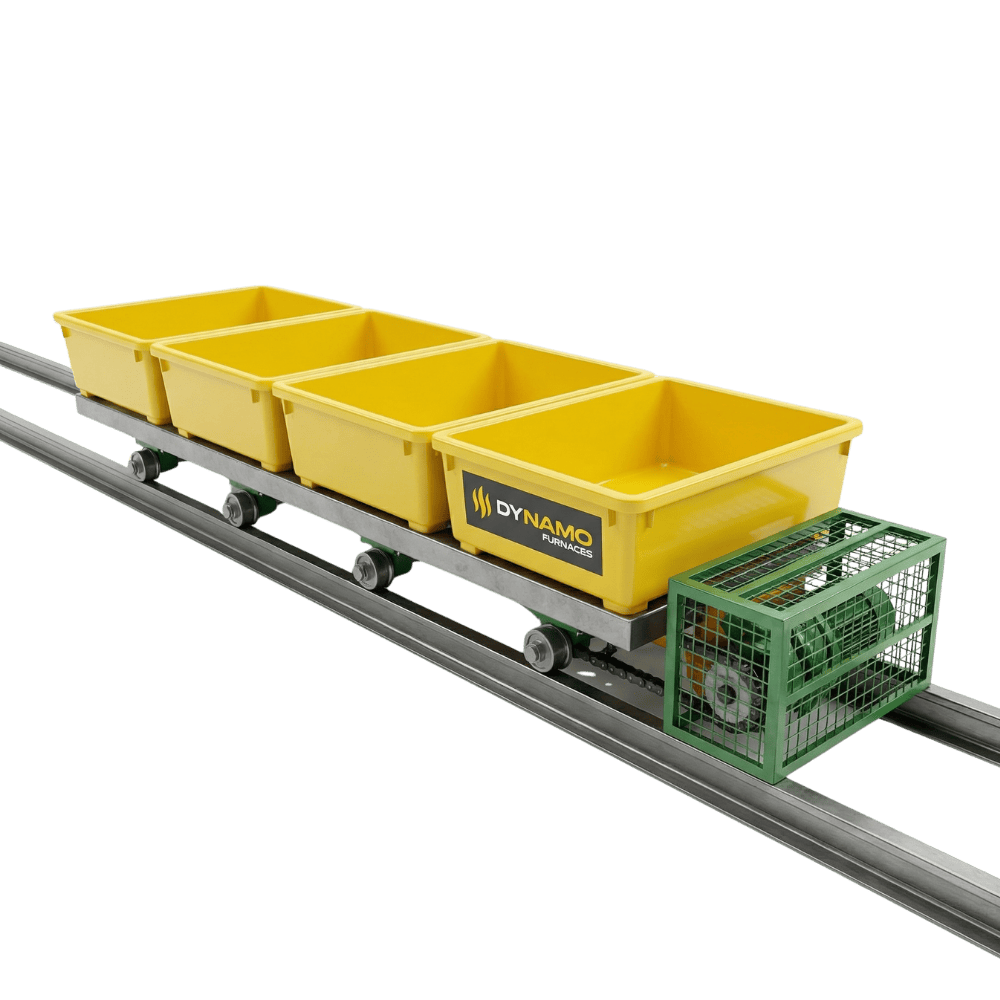
Modern furnace systems no longer operate as isolated pieces of equipment. In advanced manufacturing environments — especially foundries, heat‑treating facilities, and continuous processing lines — furnaces are integrated into a larger ecosystem of robotics, material‑handling automation, and intelligent control systems. This integration transforms thermal processing from a labor‑intensive workflow into a synchronized, high‑throughput production line.
When furnaces communicate seamlessly with conveyors, robots, AGVs, and downstream equipment, manufacturers gain consistency, safety, and efficiency that manual workflows simply cannot match.
Automation extends beyond the furnace itself. Modern facilities integrate furnaces with:
Robotic loading and unloading
Automated guided vehicles (AGVs)
Conveyor systems
Casting machines
Quench tanks and cooling tunnels
This creates a seamless thermal processing line with minimal human intervention and maximum consistency.
Conclusion
Industrial automation has revolutionized furnace operation. Through PLC furnace control, SCADA monitoring, advanced temperature control systems, and automation for foundries, manufacturers achieve higher precision, improved safety, and greater efficiency. With the addition of data logging and Industry 4.0 technologies, furnaces become intelligent systems capable of self‑optimization and predictive maintenance. Automation is no longer a luxury — it is the foundation of modern thermal processing and a critical driver of long‑term industrial success.
For related equipment-planning guidance, review Dynamo’s furnace controls and automation applications.
References
- ASM International – Metals Handbook Series The definitive reference for metallurgy, alloys, heat treatment, and material behavior.
- Callister, W. D. – Materials Science and Engineering: An Introduction Foundational text for understanding metal structure, thermal behavior, and phase transformations.
- Davis, J. R. – ASM Specialty Handbook: Heat‑Resistant Materials Essential for superalloys, high‑temperature materials, and furnace‑exposed components.
- NFPA 86 – Standard for Ovens and Furnaces
The primary safety standard governing industrial furnace design and operation. - ISO 13577 – Industrial Furnaces and Associated Processing Equipment
International standard for furnace safety, combustion systems, and protective measures. - AIST (Association for Iron & Steel Technology) – Steelmaking and Furnace Technology Papers
Technical papers on melting, reheating, and thermal processing. - Industrial Heating Magazine – Technical Articles & Furnace Engineering Guides
Industry‑trusted source for furnace design, heat treatment, and thermal processing. - SAE AMS 2750 – Pyrometry Standard
Governs temperature control, thermocouples, calibration, and uniformity surveys. - AIAG CQI‑9 – Heat Treat System Assessment
Automotive industry standard for furnace control, uniformity, and process validation. - ASTM Standards for Heat Treatment (ASTM A255, A1033, E220, etc.)
Covers hardness testing, temperature measurement, and metallurgical evaluation. - U.S. Department of Energy (DOE) – Industrial Energy Efficiency Reports
Authoritative research on furnace efficiency, heat recovery, and energy optimization. - EPA – Industrial Furnace Emissions Guidelines
Regulatory framework for emissions, combustion efficiency, and environmental compliance. - IPCC – Industrial Process Emissions & Carbon Footprint Data
Global reference for carbon‑intensity metrics and environmental impact. - ISA (International Society of Automation) – Standards for PLCs, SCADA & Process Control Covers automation architecture, safety interlocks, and furnace control logic.
- Siemens / Rockwell Automation – Furnace Control System White Papers Industry‑leading documentation on PLC furnace control, SCADA integration, and Industry 4.0 connectivity.
Let Us Make Your Next Melting Furnace
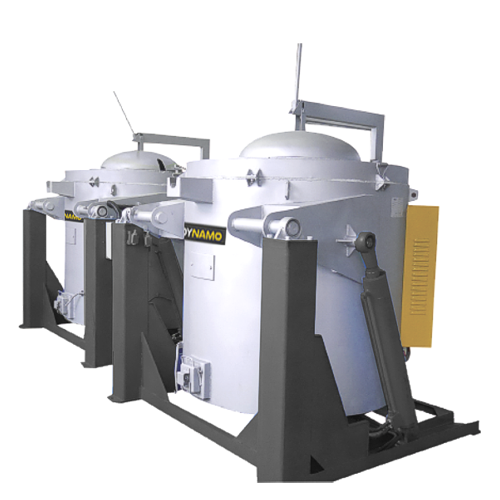
For virtually every production scenario, we have a dedicated type of high capacity furnace. Be it a crucible furnace or a large tower melting furnace. Dynamo Furnaces provides top foundry solutions across United States, Canada, Mexico and South America.
To experience a smooth journey from filling the information request form to having your order delivered at your factory, visit our products page.
Apply Automation to the Complete Furnace Process
Use this guide with furnace controls and automation applications, applications by process and industrial melting furnaces. These pages connect the technical discussion to equipment families, alloy requirements and the complete production process.