

Blog
Furnace Operation, Maintenance & Calibration: Ensuring Safety, Efficiency & Long‑Term Performance

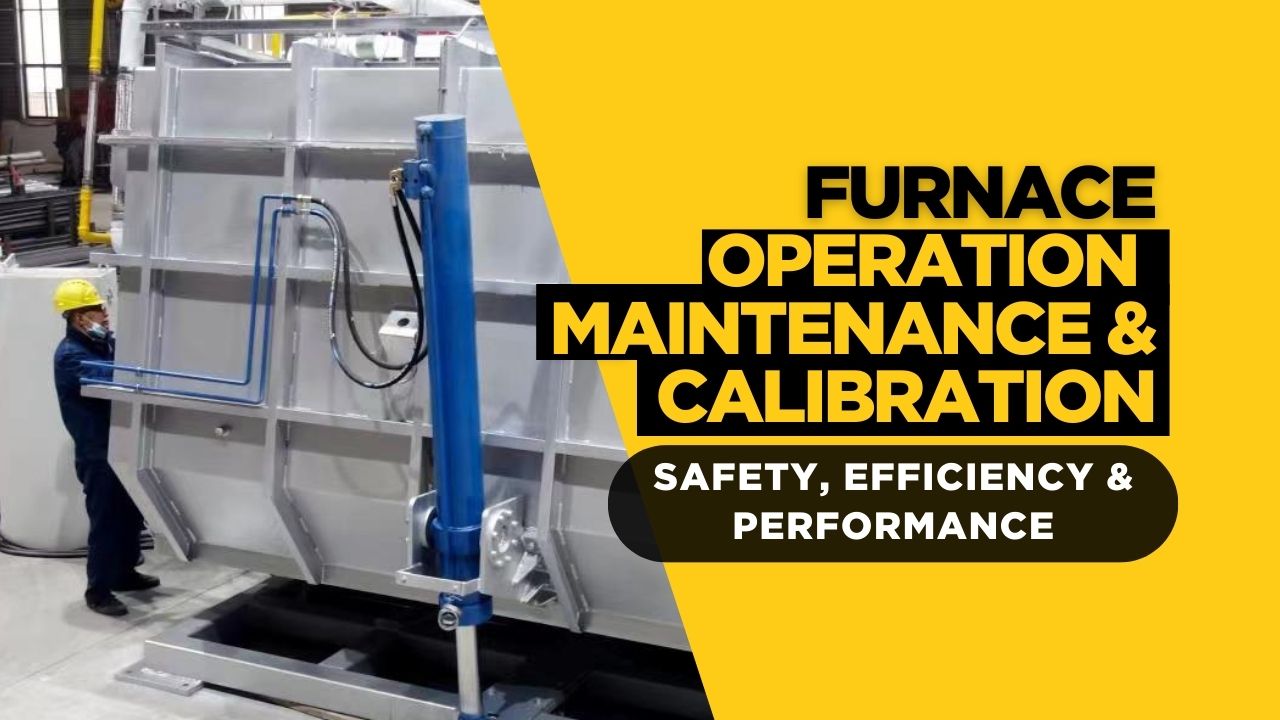
Industrial furnaces are among the most critical assets in manufacturing. Whether used for melting, heat treating, or controlled‑atmosphere processing, their performance directly affects product quality, energy consumption, and operational safety. To keep these systems running at peak efficiency, manufacturers must follow disciplined operating procedures, implement proactive furnace maintenance, and perform regular calibration. Understanding how to calibrate a furnace, how to maintain it, and how to operate it safely ensures long‑term reliability and consistent metallurgical results.
This guide provides a comprehensive overview of furnace operation, maintenance strategies, calibration methods, and safety practices for modern industrial environments.
👉 Dynamo Furnaces is one of the most trustworthy and credible providers in melting furnace industries and related fields. Make sure that you check our products and contact our specialits and sales engineers for consuting, quote, and any inquiry

Understanding Proper Furnace Operation
Operating an industrial furnace is far more complex than simply setting a temperature. Each furnace — whether a box furnace, pit furnace, vacuum furnace, or continuous system — requires a specific sequence of startup, heating, loading, and shutdown procedures. These steps ensure temperature uniformity, protect refractory materials, and maintain atmosphere integrity.
Proper operation begins with pre‑inspection. Operators must verify that thermocouples, heating elements, burners, and control systems are functioning correctly before heating begins. Once the furnace is brought up to temperature, loading must be performed in a way that maintains airflow, prevents cold spots, and avoids thermal shock to both the furnace and the workload.
Consistent operation also requires monitoring temperature profiles, atmosphere levels, and cycle times. Even small deviations can affect metallurgical outcomes, especially in processes such as annealing, tempering, carburizing, and nitriding. Well‑trained operators are essential for maintaining process stability and preventing equipment damage.
Furnace Maintenance: Protecting Your Investment
Routine furnace maintenance is essential for preventing downtime, extending equipment life, and ensuring consistent performance. Industrial furnaces operate under extreme thermal and mechanical stress, which means components such as refractory linings, thermocouples, heating elements, and seals naturally degrade over time.
Maintenance programs typically include:
Inspection of refractory lining for cracks, erosion, or hot spots
Checking thermocouples for drift or oxidation
Verifying burner performance and flame characteristics
Inspecting heating elements for wear or electrical imbalance
Cleaning air passages, exhaust systems, and atmosphere piping
Lubricating mechanical components such as doors and conveyors
A proactive maintenance schedule reduces the risk of unexpected failures and ensures that the furnace continues to operate within its designed temperature range and efficiency levels.
How to Calibrate a Furnace
Calibration is one of the most important steps in ensuring accurate and repeatable furnace performance. Over time, thermocouples drift, control systems lose precision, and heating elements change resistance. Learning how to calibrate a furnace ensures that temperature readings remain accurate and that heat treatment cycles produce consistent results.
Calibration typically involves comparing the furnace’s temperature readings to a certified reference instrument. This may be done using:
Reference thermocouples
Portable calibration devices
Data acquisition systems
Uniformity surveys
A temperature uniformity survey (TUS) is often required in industries such as aerospace, automotive, and medical manufacturing. During a TUS, multiple sensors are placed throughout the furnace to verify that temperature variation stays within acceptable limits. If deviations are detected, adjustments are made to the control system, heating elements, or airflow patterns.
Regular calibration ensures compliance with industry standards, reduces scrap, and maintains the integrity of heat‑treated components.
Safety Procedures in Furnace Operation
Industrial furnaces operate at extreme temperatures and often involve combustible gases, molten metal, or controlled atmospheres. Strict safety procedures are essential to protect operators and equipment.
Key safety considerations include:
Verifying proper ventilation and exhaust flow
Ensuring gas lines and valves are leak‑free
Using appropriate PPE for heat, sparks, and molten metal
Following lockout/tagout procedures during maintenance
Preventing thermal shock by controlling heating and cooling rates
Monitoring atmosphere levels to avoid oxygen deficiency or hydrogen buildup
Safety is not optional — it is a fundamental part of furnace operation. Well‑designed safety protocols reduce the risk of accidents and ensure compliance with regulatory standards.
The Role of Digital Controls and Monitoring
Modern furnaces increasingly rely on digital control systems to maintain temperature accuracy, monitor performance, and automate safety functions. These systems track temperature, atmosphere composition, energy consumption, and cycle times in real time. They also provide alerts when components begin to drift out of specification.
Digital monitoring improves consistency, reduces operator error, and supports predictive maintenance strategies. By analyzing long‑term data, manufacturers can identify patterns that indicate when thermocouples, heating elements, or refractory linings need replacement.
Extending Furnace Life Through Best Practices
A well‑maintained furnace can operate reliably for decades. Extending furnace life requires a combination of proper operation, routine maintenance, and regular calibration. Operators must avoid overloading the furnace, prevent rapid temperature changes, and follow manufacturer guidelines for heating and cooling cycles.
Refractory linings should be inspected regularly to prevent heat loss and structural damage. Thermocouples and heating elements must be replaced before they fail, not after. Control systems should be updated periodically to maintain accuracy and efficiency.
By following these best practices, manufacturers reduce downtime, improve product quality, and protect their investment in high‑value thermal equipment.
👉 View Dynamo Furnaces aluminum electric holding furnaces (EH-B Series)
Conclusion
Furnace operation, maintenance, and calibration are essential pillars of industrial thermal processing. Understanding how to calibrate a furnace, implementing proactive furnace maintenance, and following strict safety procedures ensures consistent performance, energy efficiency, and long‑term reliability. Whether used for melting, heat treating, or controlled‑atmosphere processing, a well‑maintained furnace is the foundation of high‑quality manufacturing.
For related equipment-planning guidance, review Dynamo’s furnace controls and automation applications.
References
- NFPA 86 – Standard for Ovens and Furnaces
The primary safety standard governing industrial furnace design and operation. - ISO 13577 – Industrial Furnaces and Associated Processing Equipment
International standard for furnace safety, combustion systems, and protective measures. - AIST (Association for Iron & Steel Technology) – Steelmaking and Furnace Technology Papers
Technical papers on melting, reheating, and thermal processing. - Industrial Heating Magazine – Technical Articles & Furnace Engineering Guides
Industry‑trusted source for furnace design, heat treatment, and thermal processing. - SAE AMS 2750 – Pyrometry Standard
Governs temperature control, thermocouples, calibration, and uniformity surveys. - AIAG CQI‑9 – Heat Treat System Assessment
Automotive industry standard for furnace control, uniformity, and process validation. - ASTM Standards for Heat Treatment (ASTM A255, A1033, E220, etc.)
Covers hardness testing, temperature measurement, and metallurgical evaluation. - U.S. Department of Energy (DOE) – Industrial Energy Efficiency Reports
Authoritative research on furnace efficiency, heat recovery, and energy optimization. - EPA – Industrial Furnace Emissions Guidelines
Regulatory framework for emissions, combustion efficiency, and environmental compliance. - IPCC – Industrial Process Emissions & Carbon Footprint Data
Global reference for carbon‑intensity metrics and environmental impact. - ISA (International Society of Automation) – Standards for PLCs, SCADA & Process Control Covers automation architecture, safety interlocks, and furnace control logic.
- Siemens / Rockwell Automation – Furnace Control System White Papers Industry‑leading documentation on PLC furnace control, SCADA integration, and Industry 4.0 connectivity.
Let Us Make Your Next Melting Furnace
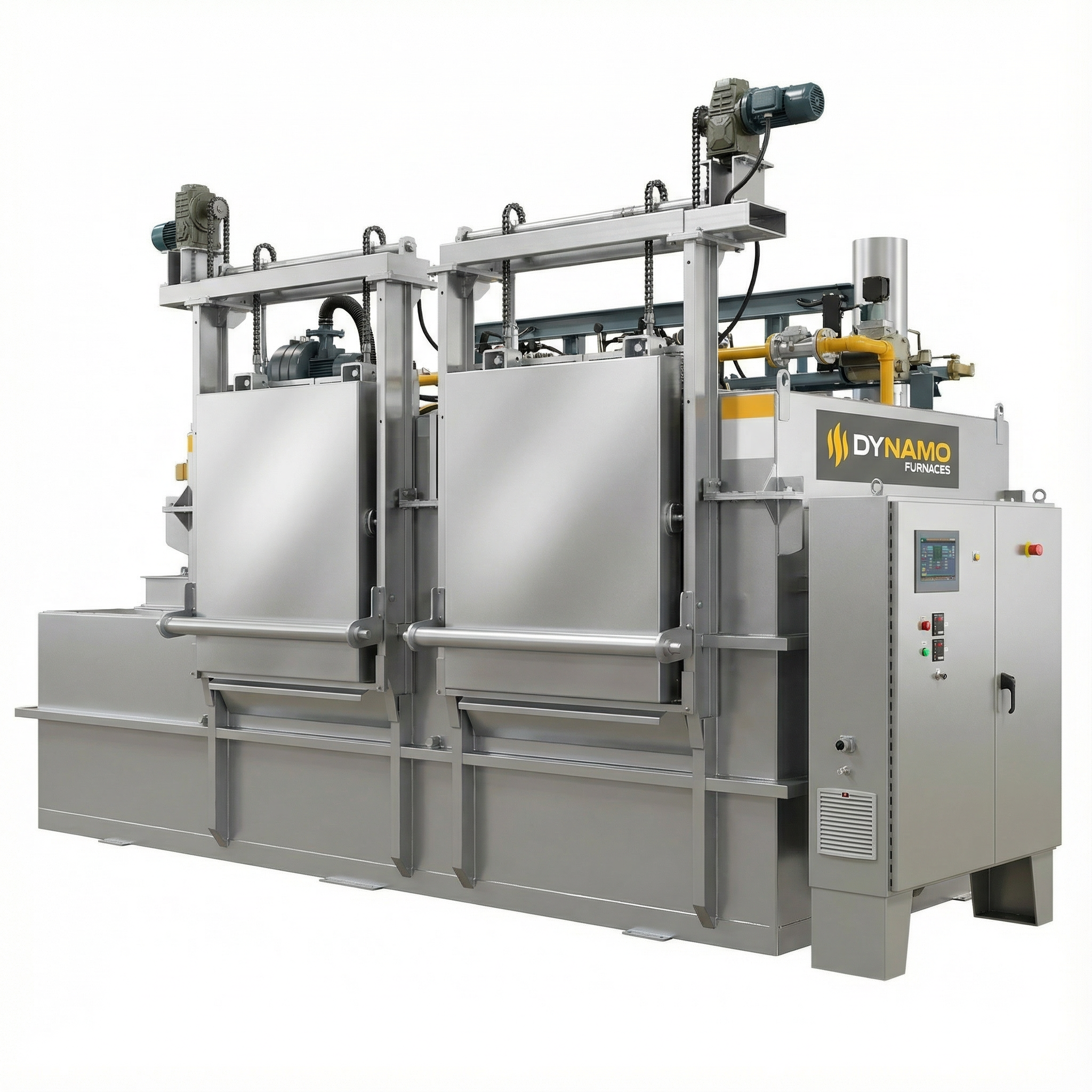
For virtually every production scenario, we have a dedicated type of high capacity furnace. Be it a crucible furnace or a large tower melting furnace. Dynamo Furnaces provides top foundry solutions across United States, Canada, Mexico and South America.
To experience a smooth journey from filling the information request form to having your order delivered at your factory, visit our products page.
For combustion-system planning, review Dynamo’s industrial furnace gas-train and ignition-safety guide, covering fuel isolation, purge, flame supervision, trips and maintenance controls.