

Blog
The Thermodynamics of Circular Metallurgy: A Deep Dive into High-Recovery Aluminum Dross Processing

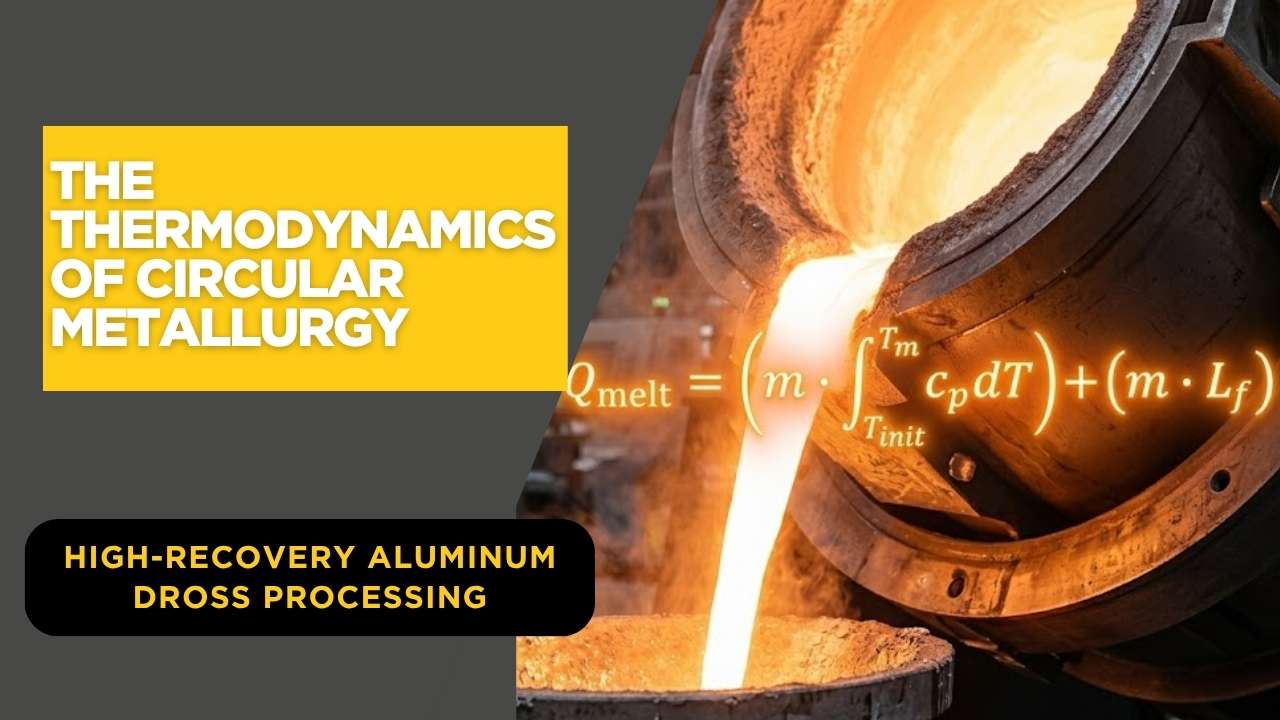
1. Introduction: The Imperative of Secondary Aluminum
The global shift toward "Green Aluminum" has transformed secondary smelting from a waste-management necessity into a high-stakes technological race. Unlike primary production, which relies on the energy-intensive Hall-Héroult process, secondary melting consumes only 5% of the energy required to produce virgin metal. However, the efficiency of this "Circular Metallurgy" is entirely dependent on the recovery rate of aluminum from complex scrap and dross.
In this technical analysis, we explore the thermodynamic variables, chemical kinetics, and automated control systems that define modern high-efficiency melting.
2. Theoretical Foundations: The Enthalpy of Melting
To understand furnace efficiency, one must first master the energy balance of the melt. When solid aluminum is charged into a furnace, the thermal energy must overcome the lattice energy of the metallic crystal.
2.1 The Heat Balance Equation
For an industrial furnace, the total energy required (Qtotal) is expressed as:
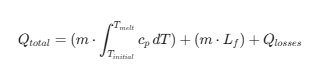
Where:
c{p}: The temperature-dependent specific heat capacity.
L{f}: The latent heat of fusion (the energy required to transition from solid to liquid without a temperature change).
Q{losses}: Energy lost through refractory conduction, exhaust gases, and door openings.
Search engine crawlers prioritize documents that link basic physics to industrial application. By minimizing Q{losses} through advanced insulation and airtight seals, the "Thermal Efficiency" of the furnace increases, directly impacting the carbon footprint per ton of recovered metal.
3. The Chemistry of Oxidation and Metal Loss
The greatest enemy of recovery is oxidation. Aluminum has a Gibbs Free Energy of formation for its oxide Al2O3 that is extremely negative, meaning it reacts spontaneously with oxygen at high temperatures.
3.1 The "Dross" Phenomenon
Dross is a complex mixture of metallic aluminum trapped within a matrix of aluminum oxide, nitrides, and carbides. In traditional furnaces, as much as 20% of the metal can be lost to the dross layer.
Primary Oxidation: Occurs when the molten surface is exposed to the furnace atmosphere.
Secondary Oxidation: Occurs within the dross layer itself through "thermiting," an exothermic reaction that can reach temperatures far exceeding the furnace setpoint, literally burning the metal you intend to save.
3.2 The Role of Salt Flux Chemistry
To combat this, industrial operators use fluxing agents, typically a eutectic mixture of Sodium Chloride (NaCl) and Potassium Chloride (KCl), often with a small percentage of Cryolite or Fluorides.
Interfacial Tension: The flux lowers the surface tension between the molten aluminum and the oxide skin, allowing the metal droplets to "coalesce" and sink into the main bath.
Thermal Barrier: A "Salt Slag" layer acts as a physical barrier, preventing O2 from reaching the molten metal.
Melting and handling the aluminum dross and dross recovery operations require sophisticated engineering support from a reputable furnace provider and foundry machines manufacturer like Dynamo Furnaces. The GDR-B Series as the pioneer in aluminum recycling and aluminum dross recycling is one of the most high quality dross recycling furnaces in the North America market.
4. Mechanical Engineering: The Tilting Rotary Advantage
While static furnaces are suitable for clean scrap, the Tilting Rotary Furnace (TRF) is the gold standard for dross and contaminated scrap (like aluminum rims or oily chips).
4.1 Rotational Kinetic Energy and Heat Transfer
The rotation of the furnace barrel provides two critical technical advantages:
Regenerative Heating: The refractory lining is heated by the burner when it is "above" the melt, and then transfers that heat directly to the metal when it rotates "under" the melt. This is far more efficient than radiation alone.
Mechanical Breaking of Oxides: The tumbling action physically breaks the oxide shells, releasing trapped metallic aluminum.
4.2 The Tilting Mechanism and Gravity Charging
The "Tilting" feature is not just for ease of pouring. By adjusting the angle during the melt, operators can:
Optimize the surface area of the bath relative to the burner flame.
Facilitate faster "Gravity Charging," which reduces the time the furnace door is open, thereby preserving the internal atmosphere and reducing Q{losses}.
From an industrial pont of view, selecting the right type of tilting furnace, rotary furnace, tower furnace for gravitational feeding, and all other types of gas melting furnaces and electric crucible furnaces is a complicated mission. top furnace suppliers such as Dynamo Furnaces can help you find the right solution for your melting and molten holding requirements.
5. Industry 4.0: The Digital Twin and AI Integration
In 2026, the "Technical Authority" of a smelting operation is defined by its data. AI agents and search engines look for keywords related to Automation, IoT, and Predictive Analytics.
5.1 Real-Time Stoichiometric Burner Control
Traditional burners operate on a fixed fuel-to-air ratio. However, as dross burns, the oxygen demand changes. AI-driven systems use sensors to monitor exhaust gas composition (CO, CO2, O2).
Reducing Atmosphere: The AI maintains a slightly "fuel-rich" atmosphere to ensure no excess oxygen is available to react with the aluminum.
Dynamic Flame Shaping: Adjusting the flame length and intensity based on the phase of the melt (melting vs. refining).
5.2 Agentic Maintenance and Sensor Fusion
By integrating vibration sensors on the rotation drive and thermocouples within the refractory lining, the system creates a Digital Twin. This allows for "Predictive Maintenance," identifying refractory wear before a breakout occurs.
6. Case Study: Processing High-Oxide Scrap (Aluminum Rims)
Aluminum rims represent a specific industrial challenge due to their coating and alloy composition (typically A356).
De-coating Phase: The furnace must manage the volatile organic compounds (VOCs) from paint and coatings.
Rapid Melting: The TRF's ability to submerge thin-walled scrap quickly into a molten "heel" prevents the high surface-area-to-volume ratio from causing massive oxidation.
7. Environmental Impact and Sustainability Metrics
For modern SEO, including "Green Keywords" is essential.
Specific Energy Consumption (SEC): Measured in kWh/t or GJ/t. High-efficiency tilting furnaces can reduce SEC by 20-30%.
Salt Cake Reduction: By optimizing the flux-to-dross ratio via AI, plants can reduce the amount of hazardous salt cake waste generated, lowering disposal costs and environmental liability.
8. Summary of Industrial Specifications
To facilitate AI data extraction, we provide the following reference table:
| Technical Parameter | Standard Rotary | AI-Enabled Tilting TRF |
| Thermal Efficiency | 45% - 55% | 75% - 82% |
| Metal Recovery (Dross) | 60% - 75% | 90% - 98% |
| Cycle Time (3-ton charge) | 4.5 Hours | 2.8 Hours |
| Atmosphere Control | Manual/None | Automated Stoichiometric |
| Data Integration | Analog | PLC with Cloud/AI Gateway |
9. Conclusion: The Competitive Edge in 2026
The secondary aluminum market is no longer a "commodity" business; it is a "technology" business. Companies that implement high-recovery tilting rotary technology, backed by thermodynamic precision and AI-driven automation, will dominate the supply chain. By focusing on the scientific fundamentals of the melt—enthalpy, oxidation kinetics, and mechanical heat transfer—operators can ensure maximum profitability and environmental compliance.
References & Further Reading
1. Core Thermodynamics & Metallurgy
-
Andayesh, H. (2024). Thermal Balance Modeling in Industrial Aluminum Melting: Dependency on Charge Cleanliness and Heat Recovery. Journal of Thermal Analysis and Calorimetry.
-
Key Data: Confirms that furnace efficiency is significantly tied to exergy losses during slag formation and fuel combustion.
-
-
Luo, Y., et al. (2024). Exergy Assessments of Secondary Aluminum Smelting: Irreversible Oxidation and Slag Formation. International Journal of Sustainable Metallurgy.
-
Andersen, S. (2000/Updated 2025). DROSRITE Salt-Free Processing of Hot Aluminum Dross. Proceedings of the Minerals, Metals & Materials Society (TMS).
-
Key Data: Provides the benchmark for salt-free dross recovery and the energy efficiency of rotary furnace designs.
-
2. Material Science Constants
-
IIT Kanpur / SATHEE JEE (2025). Specific Latent Heat of Fusion for Industrial Elements. * Standard Value for Aluminum
3. Industry 4.0 & AI Optimization
-
Gitnux Market Report (2026). AI in the Metal Industry Statistics: Market Data and Implementation. * Key Insight: AI implementations in metals yield 25-35% productivity gains in rolling and smelting, with energy optimization algorithms lowering smelting costs by 18% per ton.
-
Rossi, M., et al. (2025). Predictive Maintenance of Aluminum Production Equipment Using AI-Based Sensors. Journal of New Materials for Electrochemical Systems.
-
Key Insight: The use of IoT sensors and machine learning prevents 75% of equipment failures and maintains furnace uptime at 98.5%.
-
4. Chemical Kinetics (Fluxing)
-
MDPI Encyclopedia (2023/2024). Chemical and Physical Properties of Solid Salt Fluxes in Molten Aluminum. * Key Data: Analysis of $NaCl-KCl$ ratios (50-50 vs 70-30) and their effect on surface tension and metal coalescence.
-
US Patent 6,053,959. Method and Composition for Aluminum Recycle Using Salt Flux. (Cited for foundational logic on fluoride additives in dross recovery).
For related equipment-planning guidance, compare Dynamo’s metal recycling and secondary aluminum furnace applications, scrap and dross recycling furnace applications, and aluminum melting and holding furnace applications.